
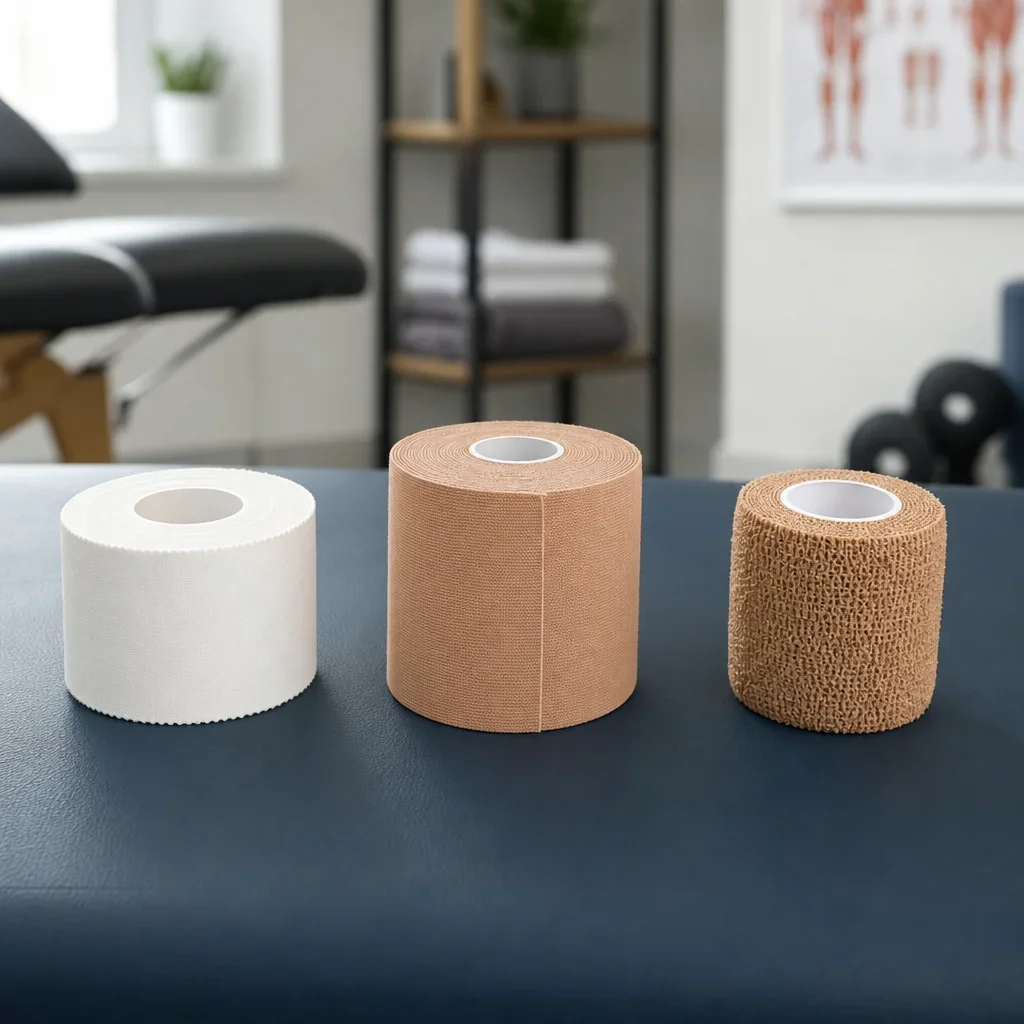
The main types of tape for athletic training are easier to sort out than most people think. The right choice depends on one thing first: do you want to limit movement, cue movement, add compression, protect skin, or secure a pad.
Quick answer: the main types of tape for athletic training
Athletic trainers and clinicians usually use five broad categories of sports tape, not one universal tape for everything. Those categories are rigid athletic tape, kinesiology tape, elastic adhesive bandage, cohesive wrap, and firmer corrective systems such as Leukotape used over a protective base like Cover-Roll.
Athletic tape, in plain English, usually means the more supportive tape that helps restrict motion around a joint. In consumer language, athletic tape and sports tape are often used interchangeably, but in clinic use we separate rigid support tape from stretchier options because they do different jobs.
Kinesiology tape is the tape athletes often wear on muscles or around joints when they want light support without fully blocking motion. It stretches, moves with the body, and is usually chosen for movement cueing, symptom relief, or light support during training and rehab.
Rigid athletic tape, including white athletic tape and zinc oxide tape, is used when the goal is firmer joint support and more movement restriction. We see it used most around ankles, wrists, fingers, and some return-to-play situations where a joint needs extra control.
Elastic adhesive bandage, often shortened to EAB, is a more conforming support tape with stretch built in. It is commonly used when you want compression or support that still has some give instead of a hard bracing feel.
Cohesive bandage is a self-adherent wrap that sticks to itself rather than strongly to skin. It works best for light compression, overwrap, finger support, and holding pads or dressings in place.
Leukotape with Cover-Roll is a stronger corrective setup often used by clinicians when they want a firmer mechanical effect and a skin-protection layer underneath. That combination is usually chosen for more specific unloading or alignment goals rather than general do-it-yourself taping.
Athletic tape vs kinesiology tape vs wrap: how to tell them apart
Rigid athletic tape has low stretch and high support, so it is the better pick when you need to limit joint motion. Kinesiology tape has much more stretch and lower support, so it is better when you want movement to continue with lighter guidance.
White athletic tape and zinc oxide tape sit in the same practical family for most readers: firm support tape for joints. The exact fabric and adhesive can vary by product, but the main point is that these tapes are meant to hold, not glide.
Kinesiology tape feels lighter on the skin and is often used over muscles, around the knee, shoulder, or calf, or alongside rehab exercise. It is not the same thing as rigid athletic tape, and treating them as interchangeable is one of the easiest ways to pick the wrong tape.
Elastic adhesive bandage sits between rigid support and soft wrap because it stretches but still adheres to skin. That makes it useful where some compression and some movement are both acceptable.
Cohesive wrap is different again because it mainly grips itself. That makes it useful over pads, around fingers, or for light compression when you do not want aggressive adhesive directly on the skin.
Leukotape and Cover-Roll are best thought of as a corrective tape system, not just a single roll of tape. Cover-Roll protects the skin, and the firmer tape on top creates a stronger mechanical pull than kinesiology tape usually provides.
Comparison table: which tape is best for support, movement, compression, and skin comfort?
Different types of tape for injuries solve different problems, so a side-by-side table is the fastest way to choose.
| Tape type | Stretch / flexibility | Support level | Best for | Not ideal for | Typical wear approach | Skin sensitivity considerations | Common body parts | Quick pick |
|---|---|---|---|---|---|---|---|---|
| Rigid athletic tape | Low | High | Limiting motion, joint support, bracing feel | Long wear, high-motion skin areas, fragile skin | Usually for a session or same day, depending on purpose and skin tolerance | Stronger adhesive can irritate some skin | Ankle, wrist, fingers, thumb | Choose this if you need firmer support to play or train |
| Kinesiology tape | High | Low to medium | Light support, movement cueing, symptom modulation | Strong immobilization | Commonly worn about 3 to 5 days if skin tolerates it well | Better tolerated by some people, but adhesive reactions still happen | Shoulder, knee, calf, back, quad | Choose this if you want support without losing much motion |
| Elastic adhesive bandage (EAB) | Medium | Medium | Compression with support, conforming wrap | Rigid control of unstable joints | Often short-term for sport or activity | Adhesive contact can still bother sensitive skin | Ankle, knee, elbow, thigh | Choose this if you want some give with compression |
| Cohesive bandage | Medium | Low | Light compression, overwrap, securing pads | Direct structural support | Usually short-term and changed as needed | Often useful when less skin adhesive is preferred | Fingers, hand, foot, over dressings | Choose this if you need a quick wrap or overwrap |
| Leukotape with Cover-Roll | Low stretch top layer with protective base | High | Corrective or unloading taping with firmer effect | Casual self-application without knowing the goal | Often trialled for shorter wear first to check skin tolerance | Strong adhesive makes the protective base important | Foot, kneecap region, shoulder blade, posture-related setups | Choose this if a clinician wants a stronger mechanical correction |
Choose tape by your goal
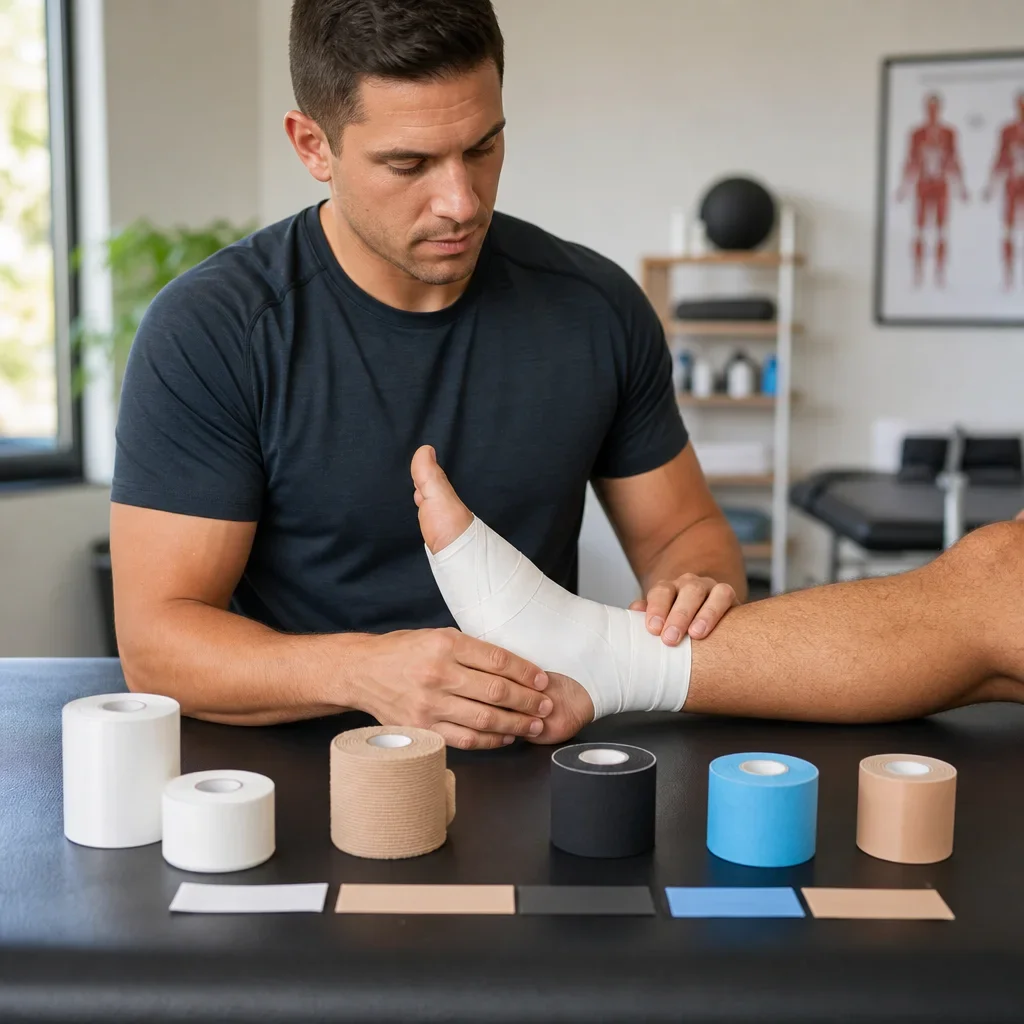
If your goal is ankle support, rigid athletic tape is usually the first category to consider because the point is to limit unwanted motion. Later in recovery, kinesiology tape or a lighter wrap may make more sense if the goal shifts from restricting movement to cueing it.
If your goal is light support without limiting motion, kinesiology tape is usually the better fit. That is why it is commonly used on muscles and around joints during running, gym training, and rehab exercise.
If your goal is compression or swelling control, elastic adhesive bandage or cohesive wrap usually makes more sense than rigid tape. Compression-style options can contour better and are easier to adjust if the area changes during the day.
If your goal is blister prevention or skin protection, the best tape may be a protective base or dressing-friendly layer rather than support tape. Cover-Roll, pads, gauze, and cohesive overwrap are often more useful here than trying to force white athletic tape into a job it was not built for.
If your goal is sweaty training, tape choice matters less than adhesion strategy. Clean, dry skin, clipped hair when appropriate, and using the right category for the job all matter more than assuming one tape is universally sweat-proof.
If your goal is finger or wrist support, rigid athletic tape or a supportive overwrap is often preferred because these areas usually need control more than cueing. Cohesive bandage can still help as a lighter option or overwrap in some sports.
If your goal is posture or movement cueing, kinesiology tape or a clinician-applied corrective setup may be used, but tape should be treated as feedback, not a fix. If the same area needs repeated retaping, the movement problem usually needs assessment and rehab, not just another roll of tape.
Severe pain, major swelling, visible deformity, numbness, new weakness, or inability to bear weight are red flags that need assessment rather than guesswork with tape. Those signs can point to a more significant injury where self-taping is the wrong first step.
If you are unsure which tape is appropriate, keep re-taping the same area, or want sport-specific taping guidance, a physiotherapy, sports medicine, or chiropractic assessment at Studio Athletica in downtown Toronto can help tie the tape choice to diagnosis, movement, and a rehab plan.
What each tape type is used for
Rigid athletic tape is used for joint support and motion restriction, especially at the ankle, wrist, thumb, and fingers. White athletic tape and zinc oxide tape fall into this practical category for most users, and the reason people choose them is simple: they create a braced feeling that lighter tape cannot.
Kinesiology Tape is used for lighter support while preserving movement. We see kinesiology tape used over muscles, around the knee or shoulder, and in rehab settings where the goal is cueing, comfort, or light assistance rather than immobilizing a joint.
Elastic adhesive bandage, or EAB, is used when you want support with stretch. It conforms better than rigid tape and is commonly chosen where a fully stiff tape would be too restrictive.
A cohesive bandage is used for light compression, finger wrapping, securing dressings, and overwrapping another tape job. Because it sticks to itself, it can be a useful option when direct adhesive on the skin is not ideal.
Leukotape is used for firmer corrective or unloading strategies, usually with Cover-Roll underneath to protect the skin. That combination is better suited to targeted biomechanical goals than general consumer taping.
Cover-Roll is used as a protective base layer under stronger adhesive tape or to help secure dressings. It is not a joint-support tape by itself, but it matters because skin tolerance often decides whether a tape setup is wearable at all.
Brand names matter less than tape category and purpose. A good taping decision starts with the job you need the tape to do, not the logo on the roll.
Best tape by body part and common injury
Body part matters, but the stage and severity of the injury matter just as much. The same ankle may need rigid support early, then lighter cueing later.
| Body part or issue | Tape category that often fits | Why it may fit | Limits |
|---|---|---|---|
| Ankle sprain | Rigid athletic tape early; kinesiology tape later | Early support may help limit unwanted motion; later cueing may suit rehab and return to activity | Major swelling, inability to bear weight, or suspected fracture need assessment |
| Wrist support | Rigid athletic tape or EAB | Wrist tasks often need more control than muscle cueing | Numbness or hand weakness should not be taped through |
| Fingers or thumb | Rigid tape or cohesive overwrap | Small joints often respond better to firmer support or buddy-style stabilization | Circulation must be checked after taping |
| Knee tape | Kinesiology tape, EAB, or clinician-directed corrective tape | Knee taping depends heavily on diagnosis and movement pattern | Knee pain is not one condition, so copying a generic pattern can miss the cause |
| Shoulder tape | Kinesiology tape or corrective setup | Shoulder taping is often about cueing and comfort more than true immobilization | Repeated instability or weakness needs assessment |
| Foot or arch discomfort | Leukotape with Cover-Roll or rigid support tape | Firmer unloading strategies can be useful for targeted foot mechanics | Skin tolerance matters because foot taping can be adhesive-heavy |
| Achilles or calf support | Kinesiology tape or light support wrap | These areas often need load management and cueing more than rigid restriction | Persistent tendon pain needs rehab, not tape alone |
| Elbow support | Kinesiology tape, EAB, or strap-style support | The right choice depends on whether the issue is compression, cueing, or joint support | Nerve symptoms should be assessed |
What tape should I buy for my sport?
Runners usually do best with tape that preserves motion, because running depends on repeated range and rhythm rather than rigid bracing at every step. Kinesiology tape or selective support tape can make sense, but repeated taping for the same running pain is a sign to look at biomechanics, load, and strength.
Basketball and volleyball players often need ankle, finger, or thumb support because cutting and landing create repeated joint stress. Rigid athletic tape or supportive wraps are common here because the sport demands quick lateral control.
Soccer players often need a balance between support and mobility, especially at the ankle and foot. A tape choice that is too rigid can feel bulky in a boot, while a tape choice that is too light may not give enough control.
Football and rugby players usually need tape that can handle contact, repeated impact, and sweat. That often pushes the decision toward firmer support, stronger overwrap strategies, and shorter expected wear.
Boxing, MMA, and grip-heavy sports place a lot of value on wrist, hand, and thumb support. Here, rigid support and wrapping strategy usually matter more than muscle tape because force transfer through the hand is the real issue.
Climbers often care more about fingers, pulleys, and skin than big-joint bracing. That usually means targeted finger support and protective strategies, not covering the whole hand in broad tape.
CrossFit and mixed gym training can require different tape on different days because the movement demands change quickly. A tape that works for barbell lifting may not be the one you want for running, jumping, or high-sweat conditioning.
Sand sports and water-heavy sessions challenge adhesion more than almost any dry indoor training. In those settings, skin prep, correct tape choice, and accepting shorter wear can matter more than chasing a product marketed as waterproof tape.
When not to use tape and when to get assessed
Tape should not be used to hide a serious injury so you can keep playing. Suspected fracture, dislocation, severe swelling, major bruising right after injury, open wounds, skin infection, numbness, tingling, circulation concerns, or worsening pain under tape all need proper assessment.
Kinesiology tape should be used cautiously or avoided if you have adhesive allergy, fragile skin, active skin irritation, or an unclear diagnosis. If the tape burns, itches, or changes skin colour, it should come off.
Unexplained calf swelling is not a self-taping problem. Symptoms involving unusual swelling, heat, tenderness, or circulation concerns should be assessed promptly because tape can delay the right next step.
The wrong type of tape can cost you in three ways: poor support, skin damage, and false confidence. A tape job that lets you push through an injury you should be resting or assessing can set recovery back.
How long can sports tape stay on?
Kinesiology tape is commonly worn about 3 to 5 days if the skin tolerates it and the product instructions allow it. Some products market longer wear, but your actual wear time depends on sweat, showering, friction, body area, and skin response.
Rigid athletic tape is usually a shorter-term option and is commonly removed after activity or the same day. That is because its job is support during a session, not staying on the body for several days.
Leukotape or other stronger corrective tape setups are often trialled more cautiously at first because skin tolerance matters. If you are new to a stronger adhesive, shorter first wear is the safer approach.
Any tape should be removed sooner if you get itching, burning, numbness, skin colour change, increased swelling, or rising pain. Those signs matter more than the number of hours the tape has been on.
Beginner taping basics: underwrap, anchors, tension, and removal
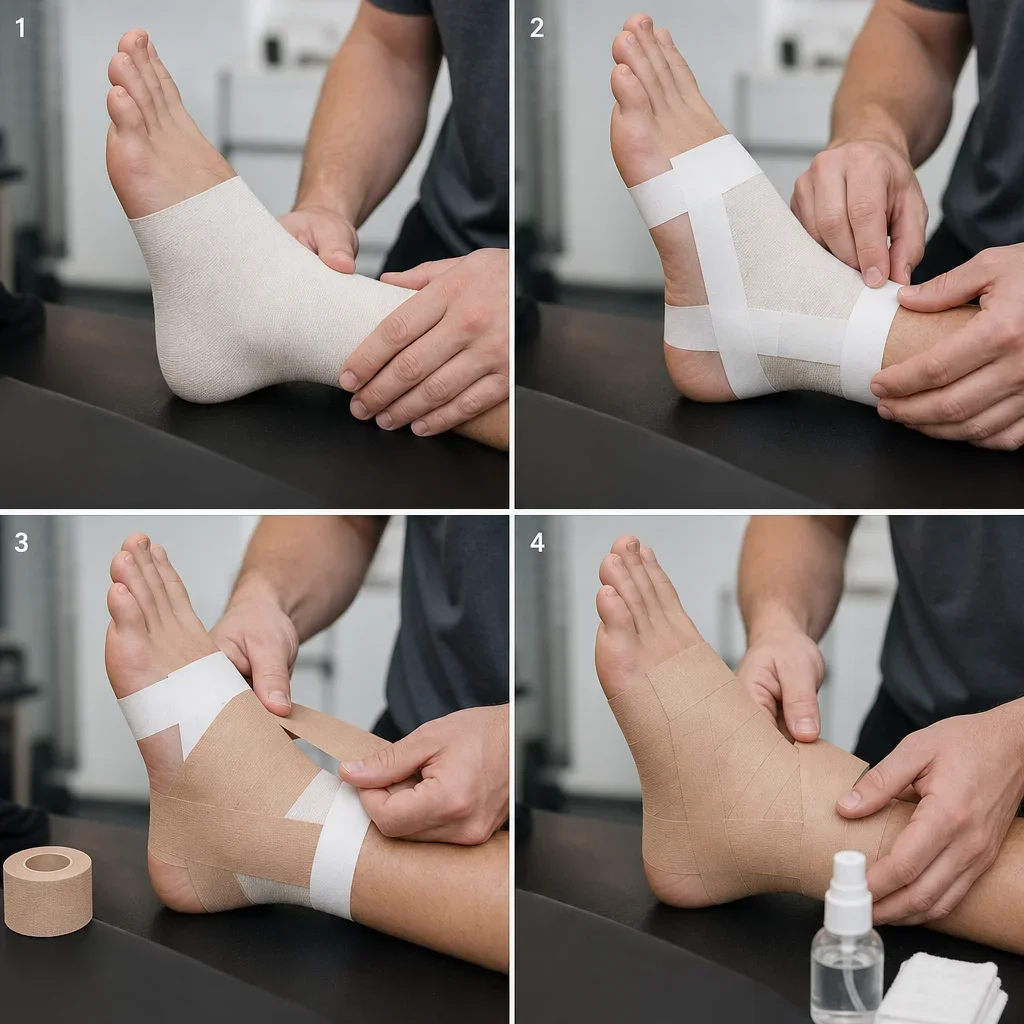
Safe taping starts with clean, dry skin and a simple plan for what the tape is supposed to do. Lotion, damp skin, and rushed application are some of the biggest reasons a tape job fails before the activity even starts.
Underwrap or a protective base layer can help when skin is sensitive or a stronger adhesive is going on top. Cover-Roll is one example of a protective layer used under corrective tape systems.
Anchors help start and finish a tape job without putting the most tension at the edges. That matters because edges that are overstretched tend to peel first and irritate skin fastest.
More tension is not better. Tape that is too tight can create pressure points, increase pain, or affect circulation, especially around fingers, hands, feet, and ankles.
A simple circulation check is non-negotiable after joint taping: the taped area should not go numb, tingle, turn pale, or swell more. If it does, remove the tape.
Safe removal means peeling slowly, supporting the skin, and using adhesive remover if needed. Pulling tape off fast, especially after sweat or showering, is one of the easiest ways to irritate healthy skin.
Why tape fails: peeling, sweating, bunching, and skin irritation
Tape usually peels because the skin was damp, oily, hairy, sandy, or moving too much at the tape edge for that tape type. The fix is usually better prep, better matching of tape to task, or a cleaner overwrap strategy, not simply using more tape.
Kinesiology tape often bunches when it is applied with poor tension control or placed across a high-friction area without enough planning for movement. Bunching usually means the tape is not going to stay comfortable or effective for long.
Sweat, water, and sand can all shorten wear because they challenge the adhesive and contaminate the edges. Once a tape edge is dirty, trying to press it back down usually works poorly and can irritate the skin more.
Skin irritation is usually a sign to stop, not push through. Common causes include adhesive sensitivity, too much stretch, trapped moisture, friction, and wearing tape longer than the skin can tolerate.
Persistent skin reactions mean that tape type, skin prep, wear duration, or the whole taping plan needs to change. At that point, getting guidance from a clinician is usually more useful than trying a stronger adhesive.
Tape is support, not a substitute for rehab
Tape can help with short-term support, load management, comfort, and movement cueing, but it does not rebuild strength or restore control by itself. If a problem keeps returning, the missing piece is usually diagnosis, progressive rehab, or a return-to-sport plan.
In sports medicine and physiotherapy, tape is usually one tool inside a bigger plan. Lasting recovery usually depends on strength, mobility, motor control, training load, and how the body moves under stress.
If you need repeated taping for the same knee, ankle, shoulder, or wrist issue, that is usually a sign to assess the mechanics rather than keep chasing a temporary patch. A biomechanics-led assessment can clarify whether the problem is joint stability, tendon load, movement pattern, or something else entirely.
What to keep in a basic athletic taping kit
A basic taping kit should cover support, light cueing, compression, skin protection, and safe removal. For most active adults, that means one rigid athletic tape, one kinesiology tape, one cohesive wrap, underwrap or a skin-protection layer, small scissors, adhesive remover, and gauze or blister pads as needed.
The exact kit depends on your sport, skin sensitivity, and the injuries you manage most often. A runner and a rugby player may both use sports tape, but the rest of the kit around that tape can look very different.
FAQ
What type of tape do athletic trainers use?
Athletic trainers use multiple tape types depending on the goal. The main categories are rigid athletic tape, kinesiology tape, elastic adhesive bandage, cohesive wrap, and firmer corrective systems such as Leukotape with Cover-Roll.
Which tape is used by athletes?
Athletes use more than one kind. Kinesiology tape is common for muscles and light support, while rigid athletic tape is common for ankles, wrists, fingers, and stronger joint support.
What are the three types of tapes?
If you want the simplest breakdown, think of three broad groups: rigid support tape, kinesiology tape, and compression or wrap-style tape. A more complete sports medicine list adds cohesive wrap and corrective systems like Leukotape with Cover-Roll.
Is there a difference between athletic tape and sports tape?
In everyday language, not much. In clinical use, athletic tape often means firmer, lower-stretch support tape, while sports tape is a broader umbrella that can include kinesiology tape and wrap products too.
What tape do athletes use on their muscles?
Usually kinesiology tape. It is designed for light support and movement cueing while allowing more normal motion than rigid athletic tape.
When should you not use kinesiology tape?
Avoid or use caution if you have adhesive allergy, fragile or damaged skin, active skin irritation, open wounds, uncertain diagnosis, or symptoms that worsen under tape. Severe pain, major swelling, deformity, or numbness need assessment first.
What type of tape is best for an ankle sprain?
Rigid athletic tape is often used when the ankle needs firmer support and movement restriction. Later in recovery, a lighter tape may be used for cueing, but severe swelling or inability to bear weight should be assessed rather than taped through.
How long can kinesiology tape stay on?
A common wear range is about 3 to 5 days if your skin tolerates it well and the product instructions allow it. Remove it sooner if it itches, burns, peels aggressively, or causes skin changes.
How do I remove athletic tape without irritating my skin?
Peel slowly, support the skin with your other hand, and use adhesive remover if needed. Do not rip it off quickly, especially from sweaty or sensitive skin.
Can tape replace rehab exercises?
No. Tape can support comfort and movement short term, but recovery usually depends on diagnosis, strengthening, mobility work, motor control, and progressive return to activity.
The best takeaway is simple: match the tape to the job, not the trend. If the same area keeps needing tape, get it assessed before the roll runs out.