
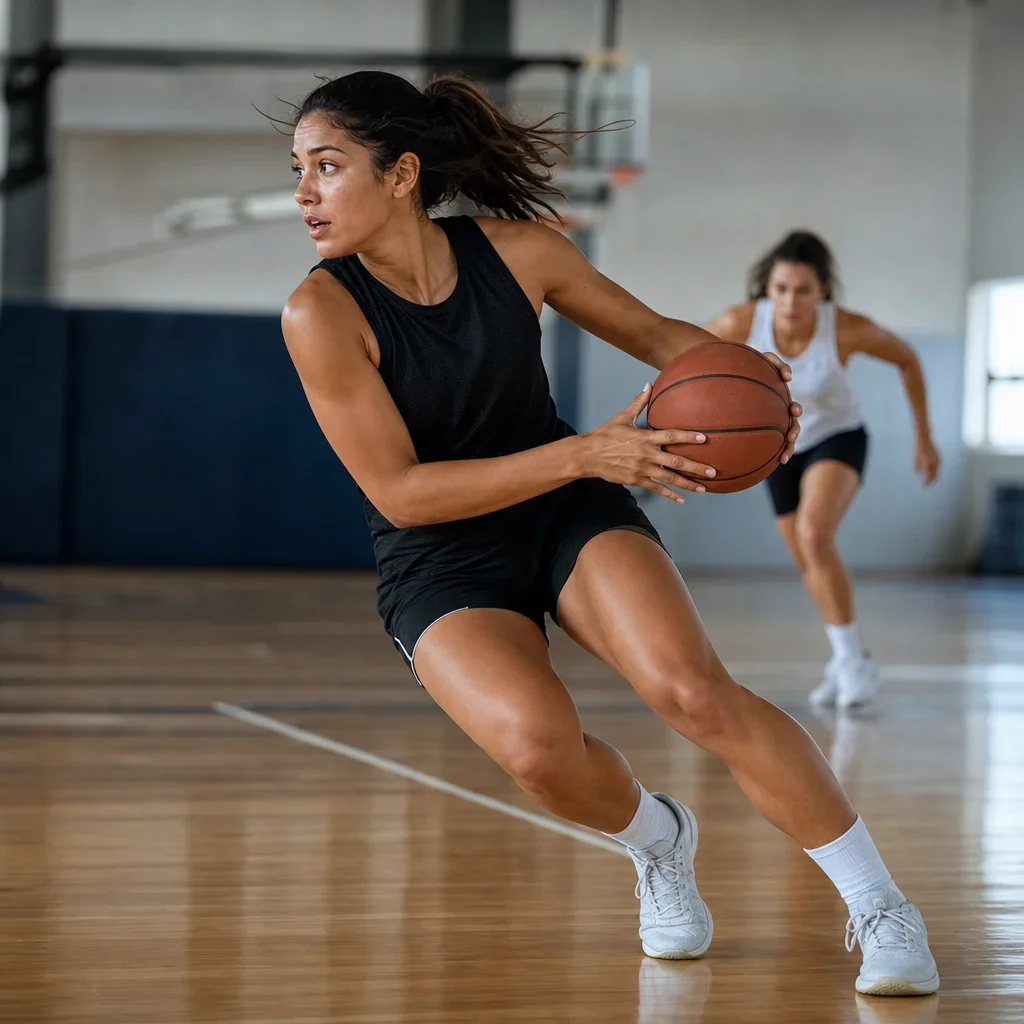
Female ACL injury prevention is not about one magic exercise or one brace. It is about lowering risk with better strength, landing mechanics, deceleration control, neuromuscular training, and early assessment when a knee starts to feel unstable or painful.
What female athletes need to know about ACL injury prevention
Female athletes can reduce ACL risk, but no program can guarantee prevention. The highest-risk moments usually involve pivoting, cutting, sudden deceleration, awkward landing, or contact layered onto poor body position .
A good prevention plan trains how the body moves, not just how strong it is. That means glute and hamstring strength, trunk control, single-leg balance, landing practice, and a repeatable ACL prevention warm-up done consistently before sport .
Individual screening can add value when an athlete has a prior knee injury, obvious side-to-side asymmetry, repeated knee collapse on landing, or trouble controlling speed. A biomechanics-led assessment can help identify movement patterns that are trainable, but this is general information, not a diagnosis or a treatment recommendation for your situation.
Why female athletes are at higher ACL risk
Female athletes ACL risk is higher because several factors can stack together at once. Research commonly reports females in pivoting sports have a higher ACL injury rate than males, with literature often describing a relative risk in the broad range of 2–8 times depending on sport and exposure metric .
Some risk factors are not modifiable. Anatomy, developmental stage, prior ACL injury, and generalized joint laxity can affect how much passive stability a knee has and how much control an athlete needs from muscle and movement strategy .
Some risk factors are modifiable, and those are where prevention work matters most. Poor deceleration, stiff landings, reduced hip control, quadriceps-dominant strategies, delayed hamstring contribution, fatigue, low training quality, and under-fueling can all raise stress across the knee during sport .
Dynamic knee valgus matters, but it is not the whole story. That term describes the knee drifting inward during landing or cutting, usually along with hip adduction, hip internal rotation, trunk sway, or foot position changes, and the real issue is uncontrolled movement at speed rather than a single joint angle seen in isolation .
Modifiable vs non-modifiable ACL risk factors in female athletes
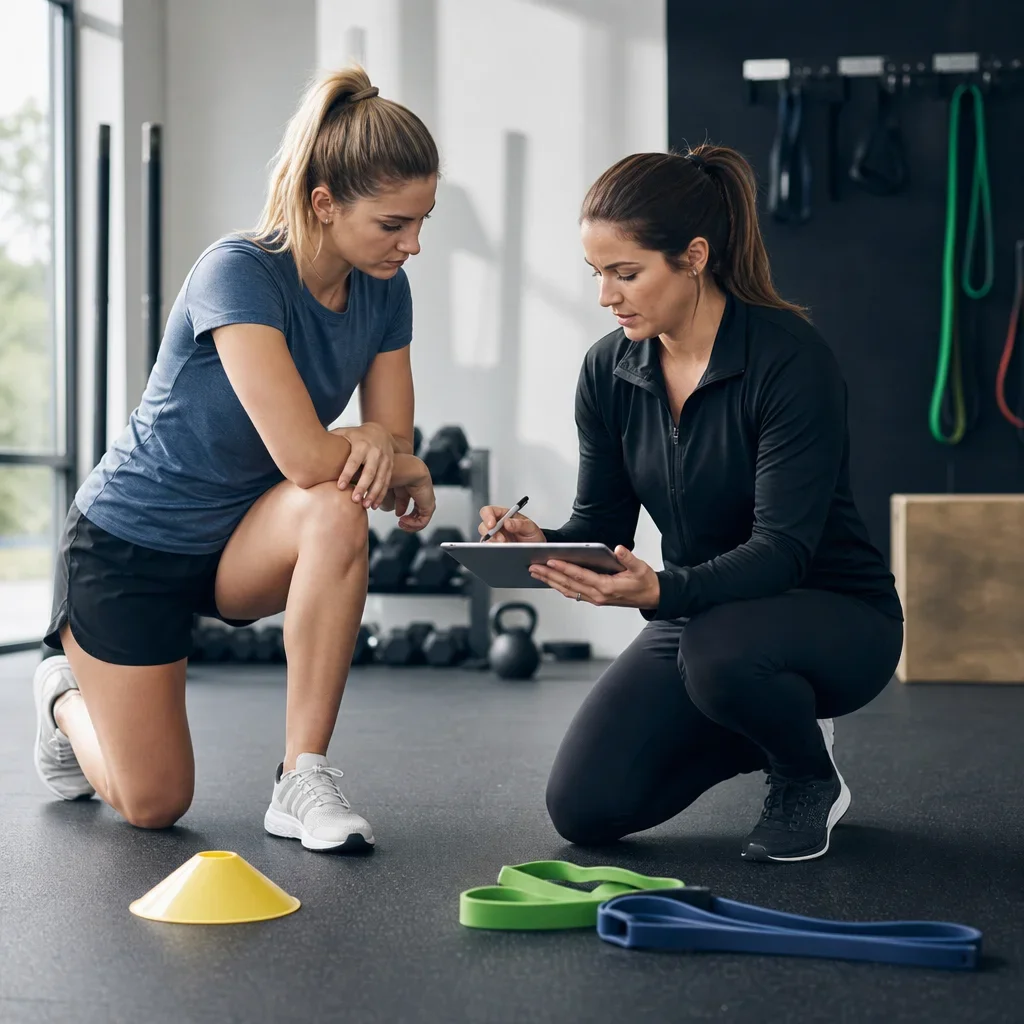
Some risk factors can be trained, and some cannot. The key is to stop treating non-modifiable risk as fate and start building the strongest movement system possible around it.
| Modifiable risk factors | Non-modifiable risk factors |
|---|---|
| Jump-landing mechanics | Anatomy and bony structure |
| Cutting and deceleration technique | Prior ACL injury |
| Glute, hamstring, calf, and trunk strength | Age and developmental stage |
| Single-leg balance and proprioception | Generalized joint laxity or hypermobility |
| Fatigue management and recovery | Sport and position demands |
| Warm-up compliance | Growth and puberty-related changes |
| Training load, sleep, and fueling | Family and injury history context |
The practical takeaway is simple. Female ACL injury prevention should target the trainable side first, then adapt volume, coaching, and return-to-sport decisions around the factors that cannot be changed.
Which sports put female athletes at the highest ACL risk?
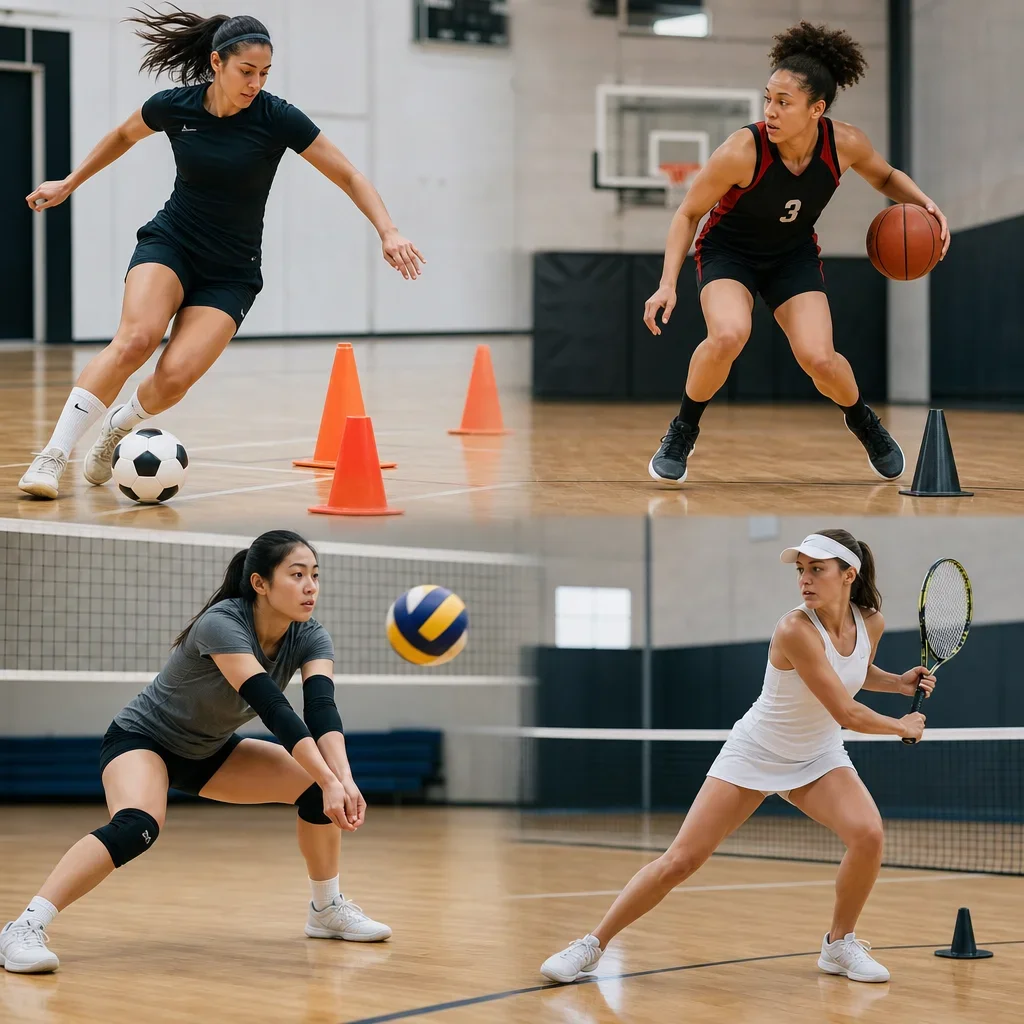
ACL risk is highest in sports that demand repeated cutting, pivoting, landing, and rapid deceleration. Soccer, basketball, handball, volleyball, lacrosse, rugby, skiing, and racquet sports all belong in the discussion, but the exact order changes by age group, level of play, and whether researchers measure total injuries or injuries per exposure .
Female soccer ACL prevention gets the most attention because the sport combines cutting, deceleration, contact, and fatigue over long sessions. Female basketball ACL prevention matters for the same reason, with frequent single-leg landings, rebounding, close-space changes of direction, and unplanned cuts .
Badminton deserves more attention than it usually gets. How to prevent ACL injury in badminton comes down to controlling lunges, split-step landings, and sharp direction changes from an upright or off-balance position, because repeated deceleration on one leg can expose poor knee and trunk control .
Football presents a similar problem in a different pattern. How to prevent ACL tears in football means teaching safer deceleration and cutting mechanics, strengthening the posterior chain, and preparing athletes for reactive play rather than only straight-line speed .
There is no single universal answer to which women’s sport has the most ACL tears. The better answer is that pivoting and jumping sports with high-speed unplanned movement create the greatest exposure, and that is where prevention work earns its place.
The movement mistakes most linked to ACL injury risk
The riskiest movement pattern is losing control during deceleration, landing, or a cut. Common red flags are a knee collapsing inward, a stiff or loud landing, an upright torso during braking, poor trunk control, and a foot planted too far outside the body’s centre of mass .
Safer landing starts with absorbing force through the hips, knees, and ankles together. Athletes usually do better with cues like hips back, chest controlled, land softly, knee tracks over foot, and own the stop before the cut .
Single-leg control matters because many ACL injuries happen when the body has to accept force on one side. Soccer, basketball, and racquet sports all create moments where a rushed plant, late trunk correction, or unstable hip position turns a routine movement into a high-risk one .
Not every inward knee movement is dangerous on its own. Speed, fatigue, trunk position, contact, and the athlete’s ability to control rotation all shape whether that motion becomes a problem .
The muscles and qualities female athletes should train for ACL prevention
The best ACL injury prevention exercises train the hamstrings, glutes, calves, trunk, adductors, and single-leg control together. Each group plays a different role in managing landing force, controlling femur and pelvis position, and resisting unwanted tibial motion .
Hamstrings matter because they help resist forward movement of the tibia relative to the femur. Glutes and trunk muscles matter because they help control hip adduction, rotation, and trunk sway that can feed poor knee mechanics .
Calves and foot control matter because the ankle is the first contact point with the ground. If the athlete cannot absorb and redirect force well at the foot and ankle, the knee often pays for it higher up the chain .
Strength alone is not enough. Neuromuscular training for ACL prevention adds timing, balance, body awareness, and reaction control so athletes can use that strength during real sport, not just in the weight room .
A practical ACL prevention workout for female athletes
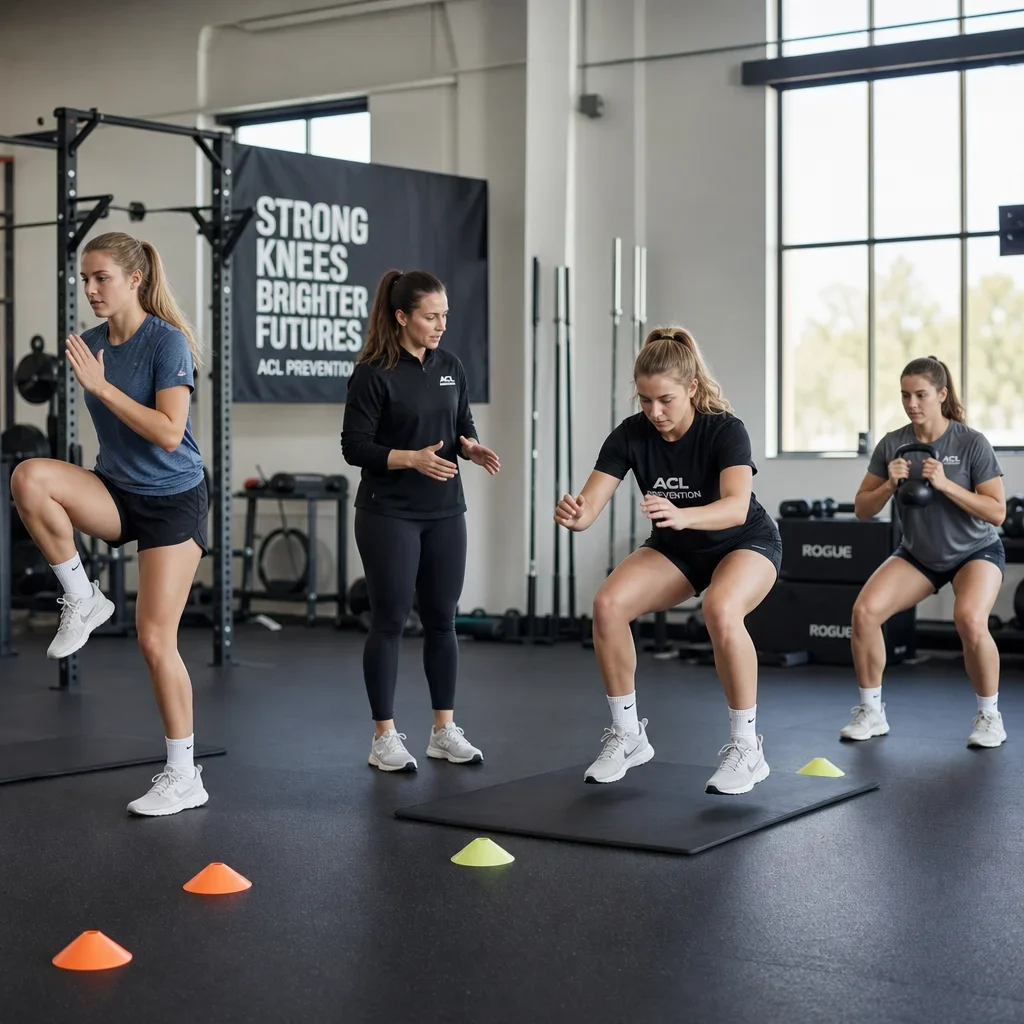
A useful ACL prevention program for female athletes should take about 15–30 minutes when used as a focused session, or about 10–20 minutes when built into a team warm-up . The goal is quality first, then speed, then unpredictability.
This sample plan works well 2–3 times per week for prevention work, with at least 2 sessions weekly as a practical minimum in many training settings . Younger athletes usually need simpler drills and tighter coaching, while advanced athletes can handle more speed and complexity.
Phase 1: Warm-up and activation
Start with 5–8 minutes of movement prep to raise temperature and rehearse position. Use marching, skipping, leg swings, lateral shuffles, bodyweight squats, and walking lunges for 1–2 rounds of 10–20 metres or 6–10 reps each .
Add control drills next. Lateral band walks for 2–3 sets of 8–12 steps each way, single-leg balance reaches for 2–3 sets of 4–6 reaches each side, and calf raises for 2–3 sets of 10–15 reps build awareness before faster work .
Phase 2: Strength block
Use 2–4 sets of 5–10 reps for the main lower-body lifts. Good choices are goblet squat, split squat, Romanian deadlift, step-up, or trap-bar deadlift, depending on age, training history, and equipment .
Use 2–3 sets of 8–12 reps for accessory work that supports control. Hamstring curls, glute bridges, lateral lunges, Copenhagen plank variations, and anti-rotation trunk drills fit well here .
Progress hamstring work slowly if you use Nordic variations. A beginner may start with assisted eccentrics for 2 sets of 3–5 reps before building range or volume, especially in youth athletes who are still learning control .
Phase 3: Plyometrics and landing control
Start with low-to-moderate contacts and crisp coaching. Use 2–4 sets of 3–6 reps for each drill, such as snap-down to stick, drop landing, hop-and-stick, lateral bound and hold, or single-leg landing from a low box .
The coaching target is quiet, controlled landings with no loss of trunk position or uncontrolled knee drift. Do not progress height, speed, or reactivity until the athlete can own the landing at slower speeds .
Phase 4: Deceleration and cutting
Deceleration drills teach the athlete to lower the centre of mass before change of direction. Start with 2–4 sets of 3–5 reps of sprint-to-stop, shuffle-to-stick, and planned angle cuts at submaximal speed .
Add reactive cutting only after the athlete shows clean planned mechanics. That progression can move from pre-planned cuts, to coach-pointed cuts, to ball or shuttle reaction drills, because the knee has to tolerate decision-making speed as well as force .
Simple weekly progression
Week 1 and 2 should build movement quality and consistency. Week 3 and 4 can add speed, single-leg demand, or reactive elements, but only one variable at a time .
If you want to turn this into an ACL prevention program PDF for your team, keep it to one page. Include warm-up, 4–6 key drills, 2–3 coaching cues, and a simple box for session compliance.
Dynamic warm-up and prehab checklist
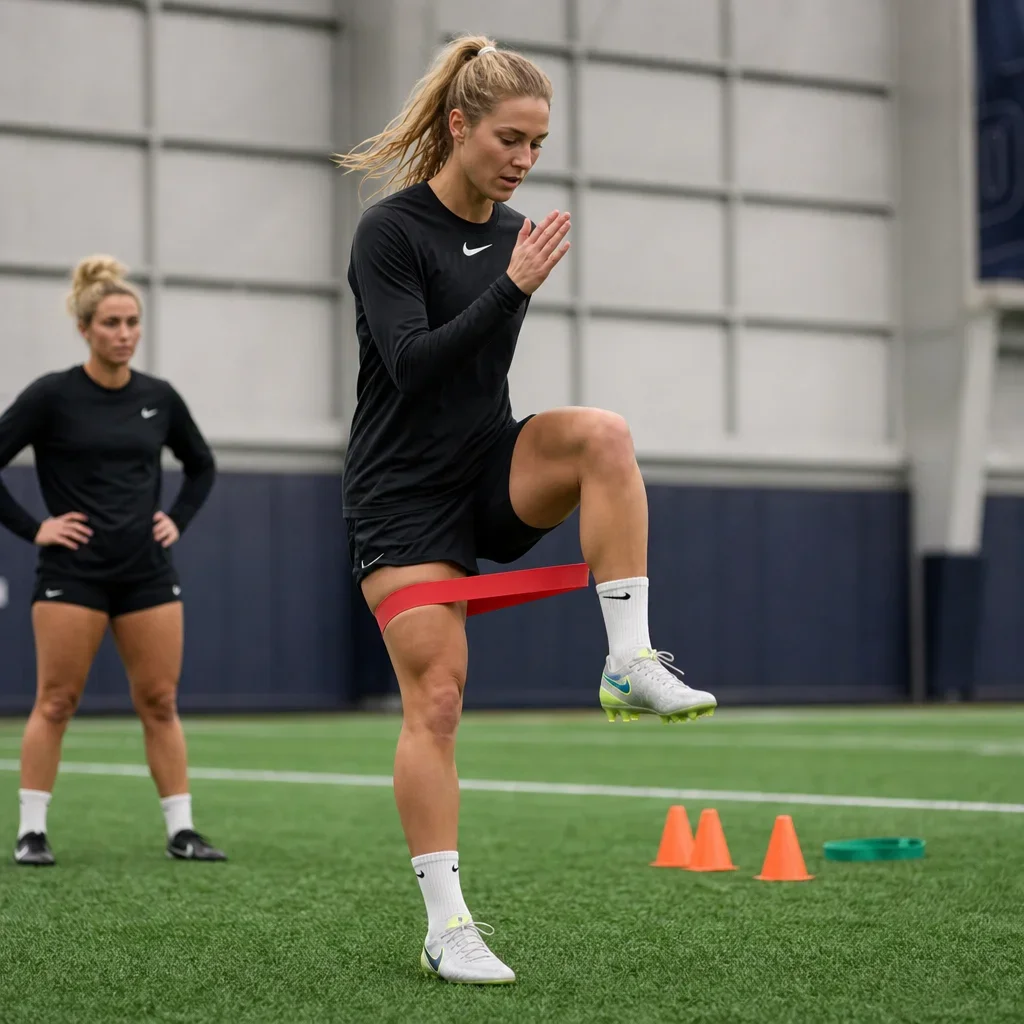
A practical ACL prevention warm-up should be short enough to get done and specific enough to matter. Most team-based warm-ups that work well in practice run about 10–20 minutes .
Use this checklist before training or games:
- 2–3 minutes of light jogging, skipping, or shuffles
- Dynamic mobility for hips, ankles, and thoracic rotation for 4–6 reps each
- Bodyweight squat or split squat patterning for 6–8 reps
- Lateral band walk or mini-band activation for 8–12 steps each way
- Single-leg balance or reach drill for 20–30 seconds or 4–6 reps each side
- Jump, land, and stick drill for 3–5 reps
- Deceleration or planned cut drill for 3–5 reps each side
Consistency beats perfection here. A simple routine done before every session usually has more value than a longer routine done once in a while.
Best ACL warm-up programs: FIFA 11+, Perform+ and custom physio-led options
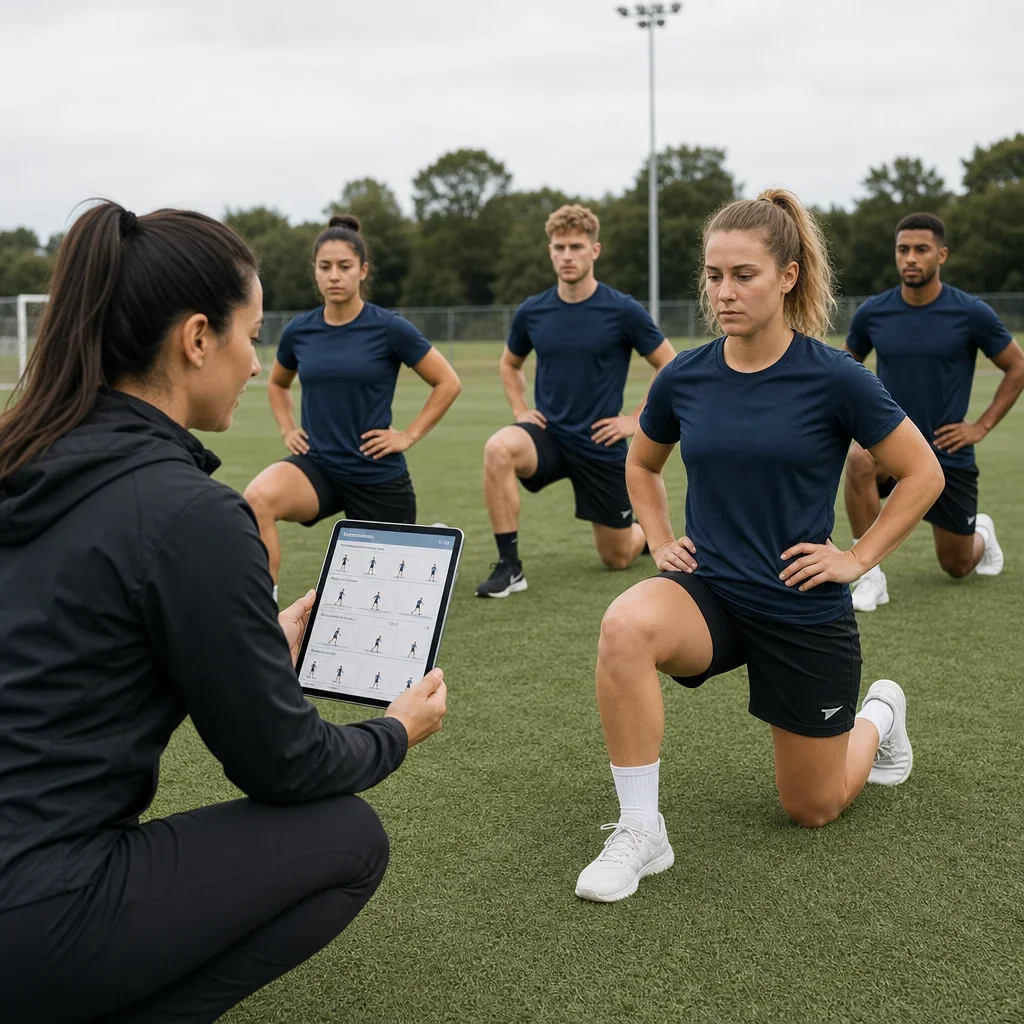
Structured warm-up programs can help because they make compliance easier. FIFA 11+ is one of the best-known examples for field-sport teams and typically fits into a roughly 10–20 minute block when used as designed .
Off-the-shelf programs work best when the athlete has no major asymmetry, no recent knee injury, and no clear instability pattern. They give teams a shared structure for landing, strength, balance, and running mechanics without needing custom programming for every player .
Custom physio-led options earn their place when an athlete has previous ACL injury, marked hypermobility, a large side-to-side strength gap, repeated pain with cutting, or sport-specific demands that a general warm-up misses. A custom screen can then adjust drill choice, volume, and progression based on what the athlete actually does poorly.
The best program is the one the athlete or team will follow at least 2 times per week and ideally 2–3 times weekly across the season . That matters more than chasing a perfect protocol and not doing it.
Youth athletes vs adult athletes: prevention priorities change with age
Young female athletes are absolutely at risk for ACL injuries too. Prevention should start before a major problem shows up, especially during growth spurts when coordination, limb length, and movement timing can change quickly .
Youth athletes usually benefit most from movement literacy, supervised landing drills, lower training monotony, and gradual progression. They do not need complex or aggressive programming to get safer; they need repetition, coaching, and enough rest to absorb training .
Older or higher-level athletes usually need more speed-specific deceleration work, heavier strength training where appropriate, and more demanding single-leg control. Return-to-sport planning also gets more detailed after injury because competition speed and exposure are higher .
Parents should pay attention when a young athlete repeatedly lands stiffly, cannot control one-leg balance, or looks much less stable on one side. Early screening can catch trainable issues before they become a bigger performance or injury problem.
Menstrual cycle, hormones, RED-S and female athlete health
The evidence on whether women are more likely to tear their ACL on their period is mixed, and it is not precise enough to predict risk for an individual athlete. That means athletes should not fear one specific cycle day as a guaranteed danger point .
A better approach is to track symptoms that clearly affect movement quality. If fatigue, cramps, dizziness, pain, poor sleep, or slower recovery change how an athlete cuts, lands, or tolerates load, training can be adjusted without turning the cycle into a fear-based story .
RED-S stands for Relative Energy Deficiency in Sport. It describes low energy availability that can affect recovery, performance, hormonal function, bone health, and tissue resilience, which makes it relevant to recurrent injuries and stalled progress .
Persistent fatigue, recurrent soft-tissue injury, menstrual irregularities, stress fractures, or clear under-fueling patterns justify medical or sports medicine review. Hormonal contraceptives are also an evidence-limited topic in ACL research, so medication choices should be discussed with the appropriate physician, not decided from a general article.
Joint hypermobility and the Beighton score: when laxity may matter
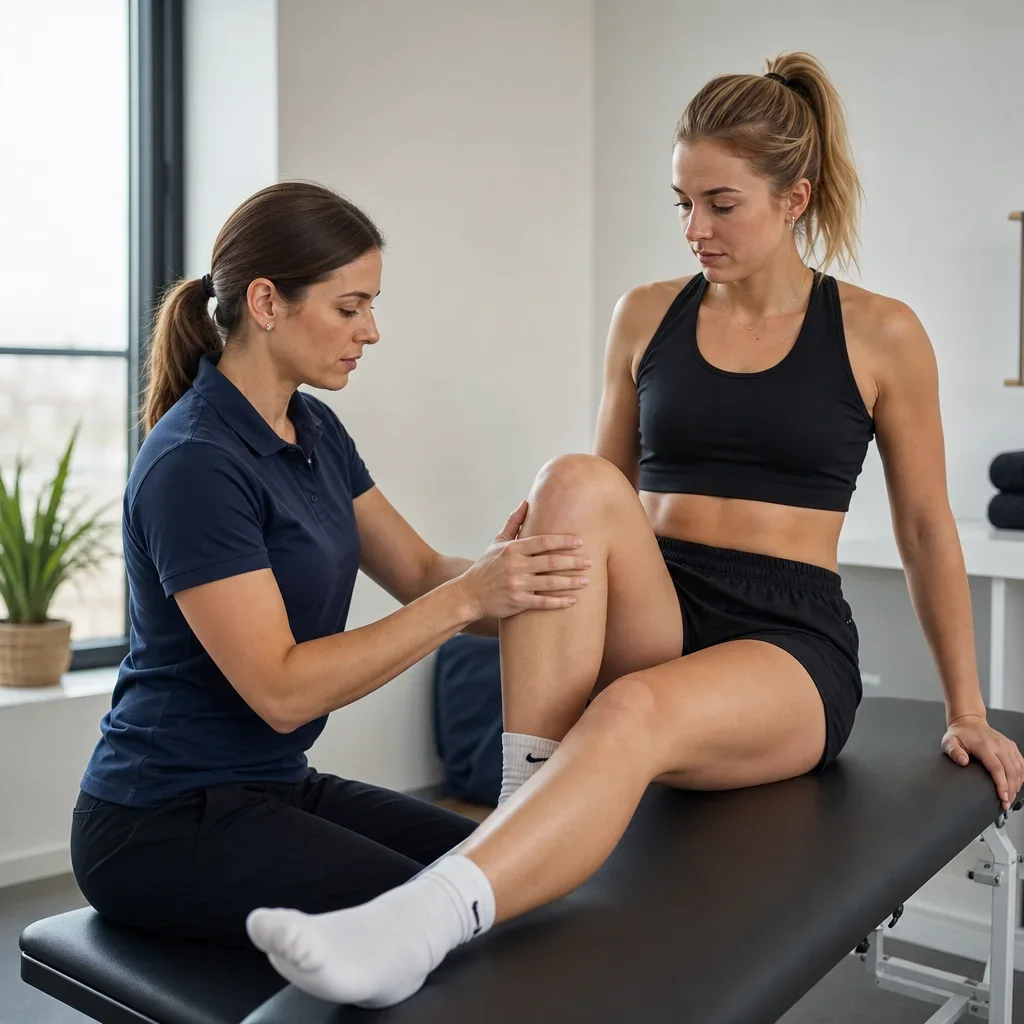
A Beighton score is a simple screening tool used to look at generalized joint hypermobility. It checks several joints for excessive range, but the cutoffs used to define hypermobility can vary by age and context, so the score should be interpreted by a qualified clinician rather than self-diagnosed from the internet .
Loose joints do not automatically mean an ACL tear is coming. They do mean the athlete may need extra strength, control, and load management to create stability that passive tissue does not provide as easily .
Formal assessment makes sense when an athlete feels unstable, sprains multiple joints, struggles to control end-range positions, or seems to move well in low speed but loses control when speed rises. That is where screening can separate flexibility from instability.
Do braces, footwear and playing surfaces help prevent ACL tears?
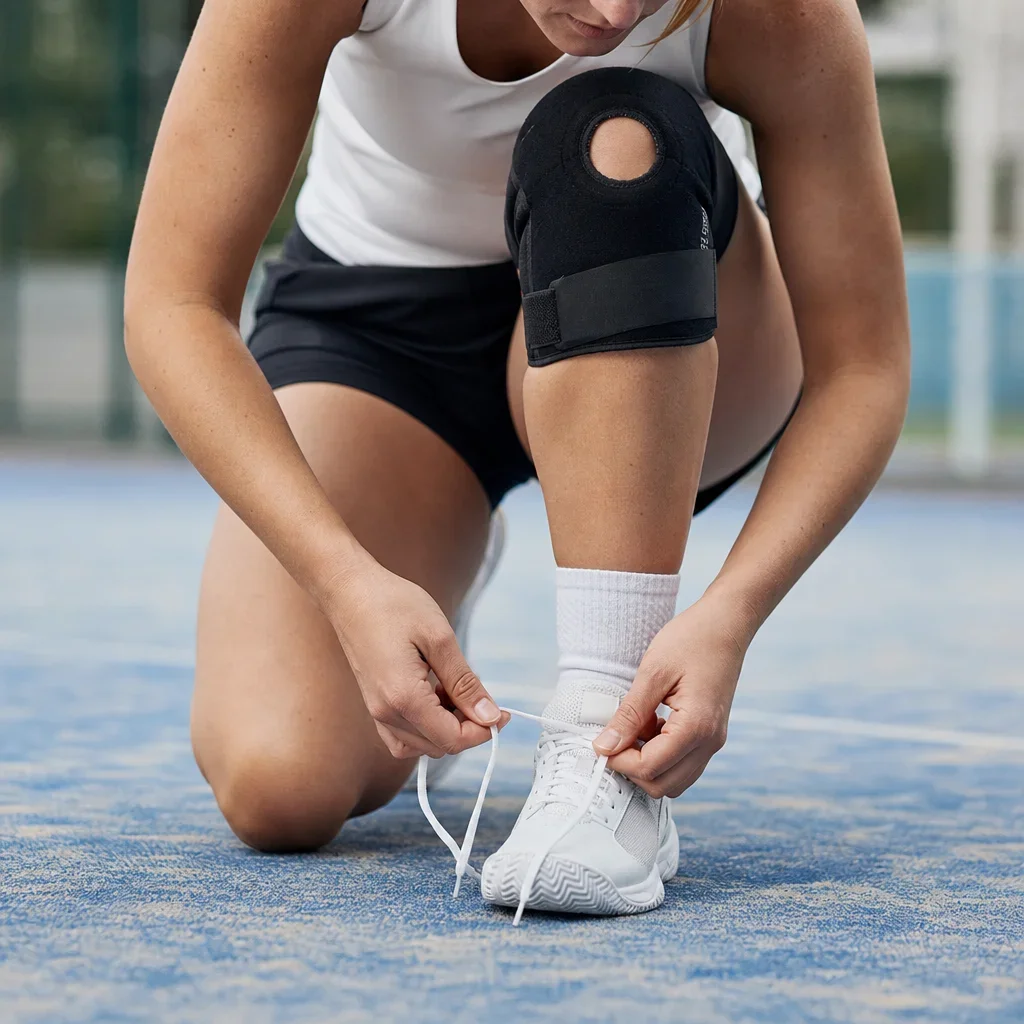
A brace to prevent ACL injury is not a complete solution, and it should not replace training. Braces may help confidence or support certain return-to-play situations, but they do not reliably solve the movement and force-control problems that drive many first-time ACL tears .
Footwear matters because traction changes force transfer into the lower limb. Shoe fit, stud pattern, sole condition, and surface match all influence how easily the foot releases or sticks during a cut, and poorly matched traction can increase rotational stress at the knee .
Playing surface matters for the same reason. Wet grass, dry turf, worn shoes, slippery courts, and fatigue late in a session all change how the athlete brakes and turns, so equipment checks and field awareness belong beside strength and warm-up planning .
Movement cue checklist for athletes and coaches
Simple cues work better than complex anatomy lectures during practice. Use phrases the athlete can repeat under fatigue and at speed.
Try this movement cue checklist:
- Hips back before the stop
- Lower before you cut
- Knee tracks over the middle of the foot
- Chest stays controlled, not whipping side to side
- Land quietly and absorb the floor
- Own the first step after landing
- Stop clean before changing direction faster
- Match left and right sides as closely as possible
These cues help because they simplify trunk control, force absorption, and deceleration strategy into actions the athlete can actually use in sport.
Parent and coach checklist: what risky mechanics to watch for
Parents and coaches can spot useful red flags without trying to diagnose the knee. What matters is repeated movement breakdown, especially late in practice or after growth spurts .
Use this checklist during games and training:
- Knee repeatedly collapses inward on landing or cutting
- Landings look stiff, loud, or upright
- One-leg balance is clearly worse on one side
- Athlete cannot slow down under control before changing direction
- Trunk sways hard over the planted leg
- Form breaks down noticeably with fatigue
- Athlete avoids loading one leg after a twist or awkward landing
- Return from injury shows obvious side-to-side difference
Refer for assessment if the athlete has previous ACL injury, repeated giving-way, recurrent swelling, pain with pivoting, or obvious asymmetry that is not improving. That is true even if they can still finish practice.
Signs of an ACL injury and what to do next
The warning signs of an ACL tear usually include a pop, immediate pain, swelling within hours, instability or giving way, reduced range of motion, and loss of trust in pivoting movements .
Some athletes can still walk after an ACL tear, so walking does not rule it out. Straight-line walking is usually less stressful than twisting, pivoting, jumping, or cutting, which are the movements that should be avoided until the knee is assessed .
Stop sport right away after a suspected ACL injury. Avoid return to play, avoid testing the knee with cutting or jumping, and get assessed promptly if the knee swells, feels unstable, or cannot fully move .
Urgent assessment matters if the athlete cannot bear weight, the knee locks, swelling is severe, or there is concern for fracture, dislocation, or major associated injury. Those situations need more than home rest and internet advice.
How ACL injuries are assessed and diagnosed
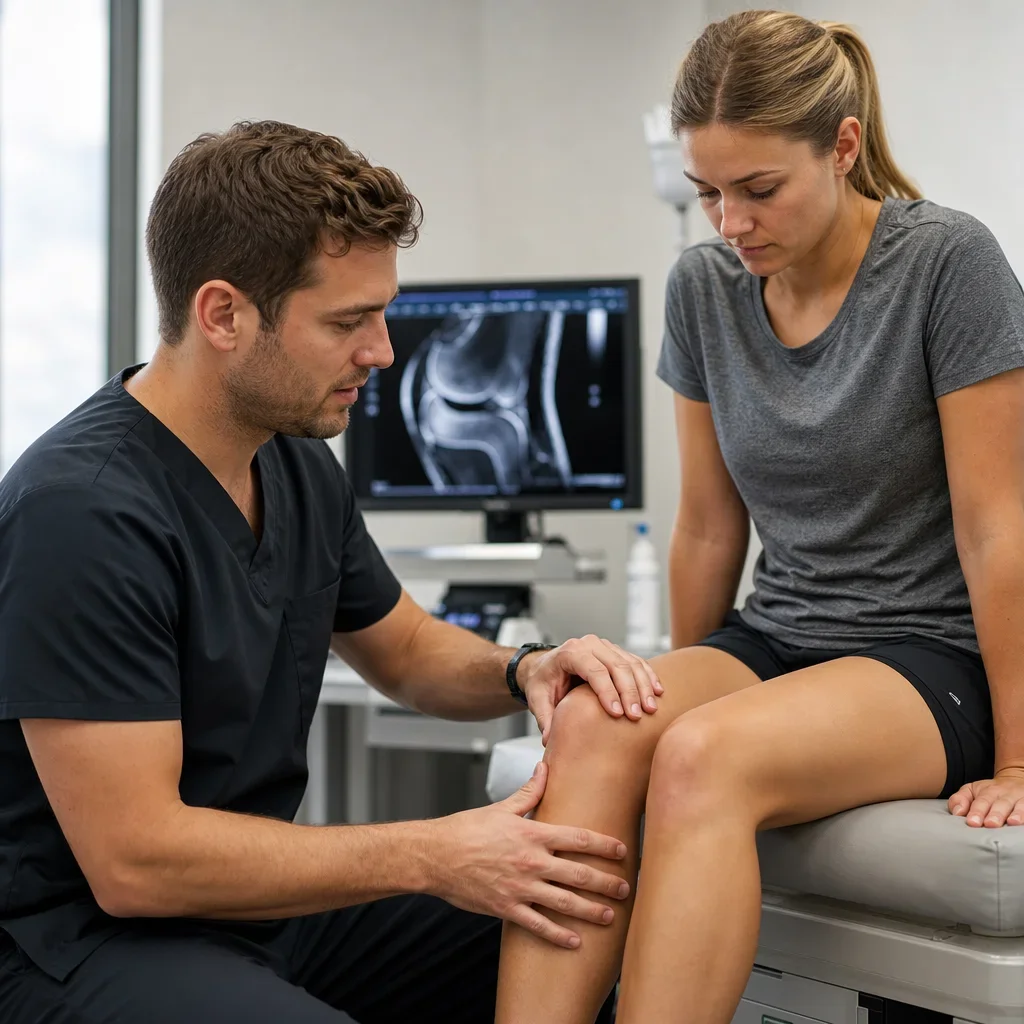
ACL injuries are assessed through the story of how the injury happened, a physical exam, and imaging when needed. The mechanism matters because a non-contact pivot with collapse and swelling tells a different story than a direct blow or slow overuse pain pattern .
Clinicians commonly use tests such as the Lachman and Pivot Shift as part of the physical exam. Those tests look at how the tibia moves relative to the femur and whether the knee shows instability patterns typical of ACL injury, but they should be done by a trained examiner rather than self-tested .
MRI can help confirm an ACL injury and identify associated meniscus, cartilage, bone bruise, or other ligament damage. Imaging supports the full picture, but the exam and history still matter because not every painful knee after sport is an ACL tear .
Early sports medicine Toronto or physiotherapy Toronto assessment is useful after a twisting injury because the first decision is not surgery versus no surgery. The first decision is what structure is likely injured, what movements are safe, and what the next step should be.
Treatment options after an ACL injury: rehab, surgery and decision-making
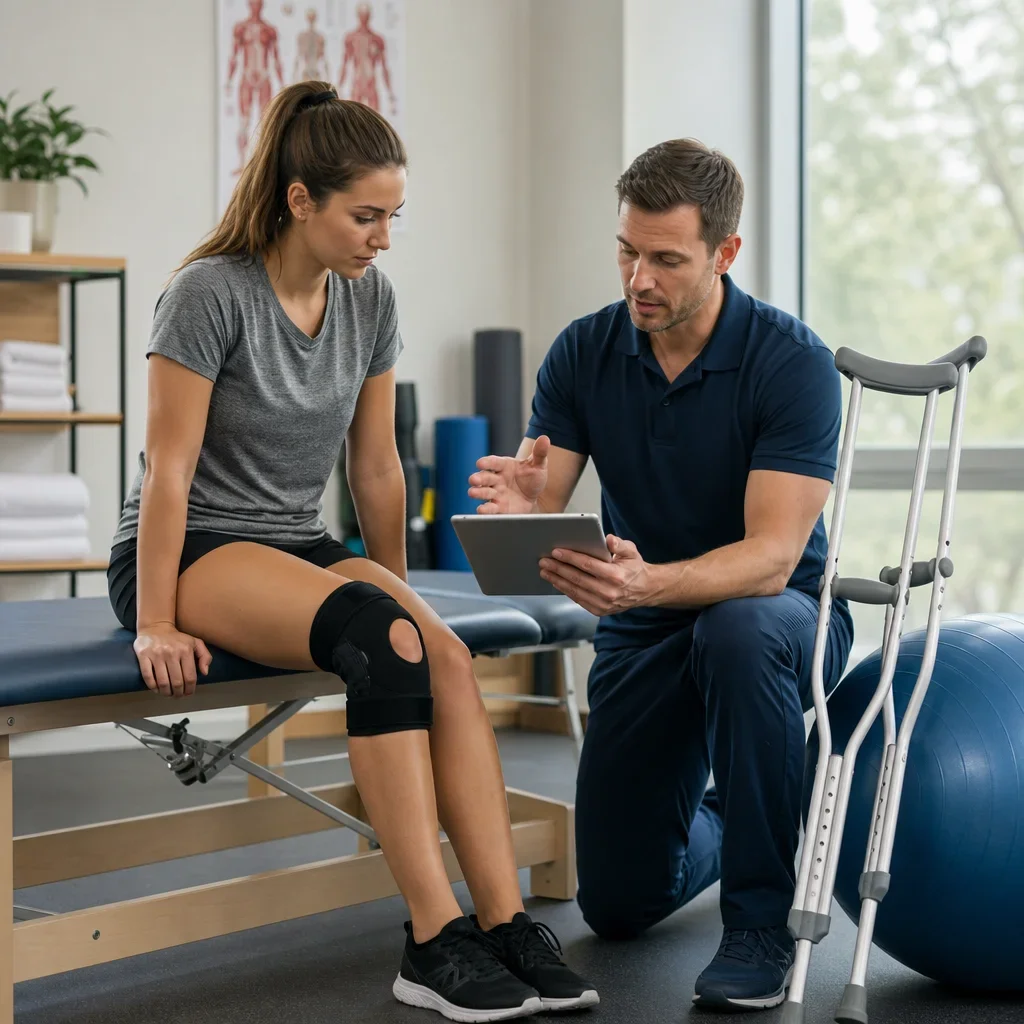
Treatment depends on instability, sport demands, associated injuries, goals, and how the athlete responds to rehabilitation. Some athletes are managed non-operatively with structured physical therapy, while others consider reconstruction, especially if they play pivoting sports or have repeated giving-way episodes .
Rehabilitation usually focuses on swelling control, range of motion, strength, gait, quadriceps recovery, hamstring and glute strength, balance, and progressive return to running and sport skills. That process is active and staged, not just rest and waiting .
Surgery is not automatically the right answer for every ACL tear, and rehab is not automatically enough for every athlete. The decision needs sports medicine, surgical, and physiotherapy input matched to the athlete’s goals and knee behaviour. If timelines are discussed, broad return-to-sport windows after reconstruction are often framed in months rather than weeks, commonly around 6–12 months, but your actual timeline depends on healing, testing, and the demands of your sport .
Can you come back 100% from an ACL tear?
Many athletes return to high performance after an ACL tear, but 100% is not a fixed promise. It depends on knee function, strength, movement quality, confidence, sport demands, and whether the athlete can tolerate cutting, landing, and contact again .
Time alone is not enough to define recovery. A knee can be months out from surgery or rehab and still not have the strength symmetry, hop control, deceleration quality, or psychological readiness needed for safe return .
Confidence matters more than people think. Athletes who do not trust the knee often change how they cut or land, and those compensations can affect both performance and re-injury risk .
Return-to-sport criteria after ACL rehab or a near-miss injury
Return to sport after ACL injury should be based on function, not just the calendar. The athlete should show full or near-full range of motion, controlled swelling, sport-relevant strength, clean landing and deceleration mechanics, and enough confidence to perform without guarding .
Testing should look beyond one isolated muscle group. Useful categories include strength symmetry, hop or landing control, single-leg balance, deceleration quality, cutting mechanics, conditioning, and the ability to progress from planned drills to reactive sport tasks .
This also applies to a near-miss knee injury. An athlete who had a scare, instability episode, or repeated poor mechanics without a confirmed tear may still need movement retraining before full return, because the same patterns that caused the near miss can still be present .
A biomechanics screen can help uncover residual risk before return to full speed. That is especially useful after ACL rehabilitation, recurring giving-way, or a long layoff where strength and coordination have drifted apart.
Can female athletes fully prevent ACL tears or only reduce risk?
Risk can be reduced, but not fully erased. Sport is chaotic, contact happens, and even very well-trained athletes can still get hurt, so the honest goal of female ACL injury prevention is lower risk, better movement quality, and faster recognition when a knee needs assessment .
That is still worth doing. Better neuromuscular training, stronger deceleration, improved landing control, and more consistent warm-ups can improve performance as well as injury resilience, which is a better message than pretending one program makes anyone bulletproof.
FAQ
How to prevent ACL injuries in female athletes?
Build a routine around strength, landing control, deceleration drills, single-leg balance, and a neuromuscular warm-up done 2–3 times per week . Focus on hamstrings, glutes, trunk, and movement quality, not just general fitness.
Why are females more prone to ACL tears?
The answer is multifactorial. Anatomy, joint laxity, growth-related changes, sport exposure, landing strategy, trunk control, hamstring contribution, fatigue, and training quality can all play a role .
What female sport has the most ACL injuries?
There is no single universal winner across all studies. Soccer, basketball, handball, volleyball, skiing, lacrosse, and other pivoting sports all show meaningful ACL risk, and the ranking changes by level and exposure type .
What muscles should female athletes strengthen to help prevent ACL tears?
Prioritize hamstrings, glutes, calves, trunk, adductors, and single-leg stabilizers. Then train those muscles in landing, braking, and cutting tasks so the strength transfers to sport .
How often should ACL prevention exercises be done?
A practical target is at least 2 times per week, with 2–3 sessions weekly used often in prevention plans . Sessions can be full workouts or shorter warm-up blocks.
Can a brace prevent an ACL injury?
A brace is not a stand-alone prevention tool. It may help confidence in some settings, but it does not replace strength, neuromuscular training, and movement retraining .
Are women more likely to tear their ACL on their period?
Current evidence is mixed and not precise enough to predict individual risk by cycle phase . Track symptoms and performance patterns, but avoid fear-based assumptions.
What is a Beighton score?
It is a screening score used to assess generalized joint hypermobility. The result needs context because thresholds can vary by age and assessment setting .
What are the warning signs of an ACL tear?
Common signs include a pop, swelling within hours, pain, instability, reduced range of motion, and difficulty trusting the knee during twists or pivots .
Can you come back 100% from an ACL tear?
Many athletes return to a high level, but no article or clinic should promise that outcome. Recovery depends on strength, movement quality, confidence, sport demands, and how the knee performs under full-speed loading .
When to seek physiotherapy or sports medicine help in Toronto
Assessment makes sense if you have had a recent twisting injury, repeated knee pain, giving-way, swelling, poor landing mechanics, or difficulty getting back to training without fear or asymmetry. At a downtown Toronto clinic, a sports medicine or physiotherapy assessment can look at biomechanics, strength, movement quality, and return-to-sport readiness to build a more specific plan. If you are in that group, booking a knee or ACL risk screen is a reasonable next step.
The practical takeaway is simple: train the movement, not just the muscle. If your knee already feels unreliable, get it assessed before the next hard cut or landing.