
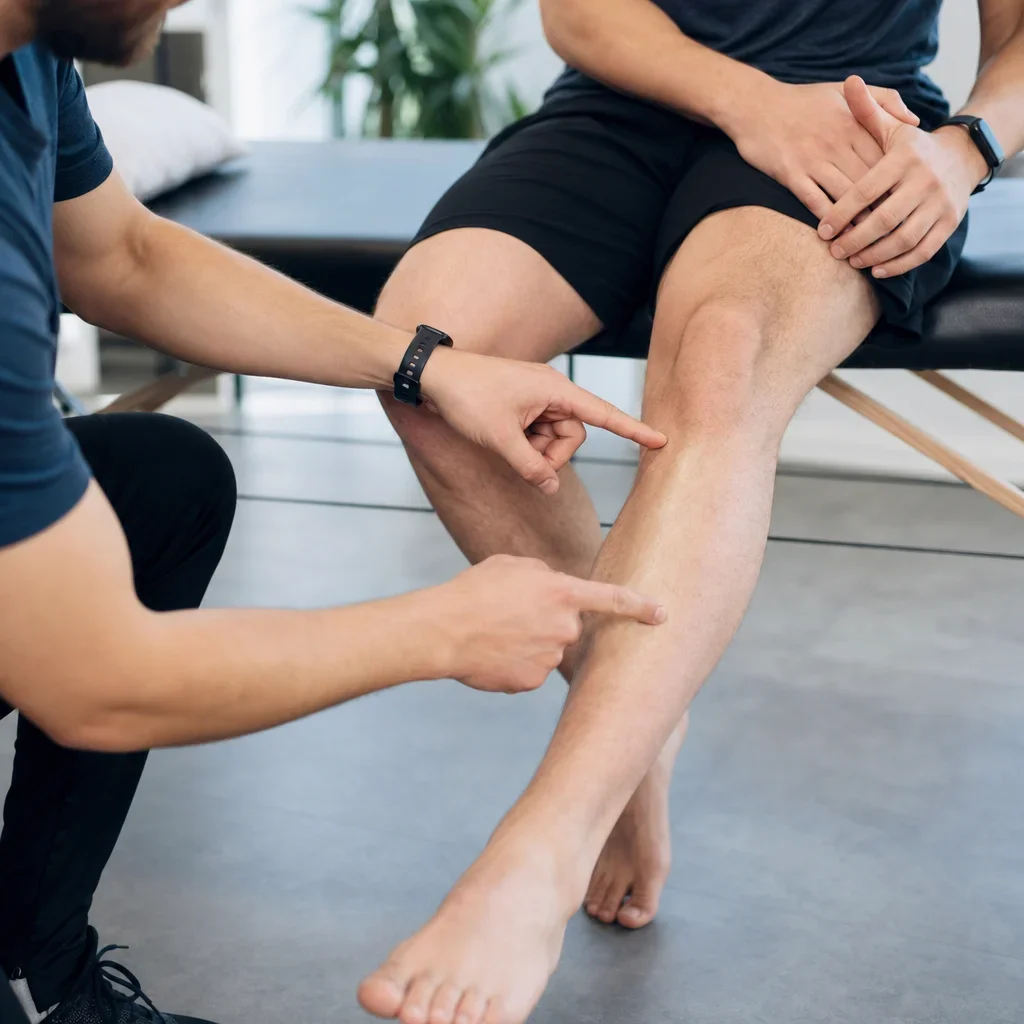
Shin splints KT tape can help with comfort, body awareness, and short-term symptom support. It does not fix the reason your shin hurts, and kinesiology tape for shin splints should never be used to push through worsening pain.
What this guide helps you do
KT tape is best treated as a short-term support tool, not a standalone treatment. This guide explains what shin splints are, how shin splints taping works, how to tape shin splints step by step, how location changes the taping approach, and when shin pain needs a proper assessment instead of more tape.
This article is general education, not individual medical advice. If your pain is severe, very focal, or keeps returning, a physiotherapy assessment is the safer next step.
Does KT tape help shin splints?
KT tape may help some people with shin splints feel more comfortable during daily activity or modified training. The proposed effect is symptom modulation and proprioceptive feedback, which means the tape gives the skin and nervous system extra input without immobilizing the leg .
The evidence for tape as a treatment on its own is limited and mixed. That matters because relief is not the same thing as tissue recovery, so tape can feel useful while the real driver of pain, usually load, strength, mobility, or mechanics, stays unchanged.
Kinesiology tape shin splints setups tend to work best when they are combined with load modification, calf and foot strengthening, and a gradual return to impact. If pain is climbing during runs, lingering into everyday walking, or becoming easier to provoke, tape is not enough.
What shin splints are and what gets mistaken for them
Shin splints usually refers to medial tibial stress syndrome, which is exercise-related pain along the inner border of the tibia, or shin bone . The classic pattern is a more diffuse ache or tenderness along the lower inside shin that builds with repeated loading.
Pain location matters because not all shin pain is the same problem. Inside shin pain often fits medial tibial stress syndrome, front or anterior shin pain may involve the tibialis anterior area, and lateral or deeper posterior shin pain can point to different tissues being overloaded.
Several conditions get mistaken for shin splints because the symptoms overlap early. Stress fracture, chronic exertional compartment syndrome, tendon irritation, calf strain, nerve-related pain, vascular issues, and referred pain can all produce lower-leg pain during activity .
When shin pain needs assessment instead of more tape
Very focal bony pain is a red flag because true shin splints are usually more spread out along the bone. If you can point to one small spot with one fingertip, especially if hopping, walking, or night pain aggravates it, stress injury needs to be ruled out rather than covered with tape.
Pain that shows up at rest, wakes you at night, causes limping, or keeps worsening despite reduced training needs assessment. Those features are not typical for a simple overload pattern and should change your plan quickly.
Swelling that looks unusual, pain with everyday walking, or inability to tolerate a single-leg hop are stronger reasons to stop self-treatment. Tape should never be used to mask escalating symptoms in order to keep running or playing.
A simple decision rule helps here. Diffuse inner shin pain linked to training load can fit shin splints, while focal bone pain, rest pain, night pain, or sharp worsening points toward something more serious and deserves a sports medicine or physiotherapy assessment.
If your shin pain keeps returning, feels focal, or changes your gait, book a physiotherapy assessment in downtown Toronto to get clarity on the cause. A biomechanics-led exam can help sort out medial tibial stress syndrome from tendon overload, stress reaction concerns, and training-load errors.
Why shin splints happen
Shin splints usually happen when tissue load rises faster than the lower leg is ready for. Common triggers are a fast jump in mileage, sudden hill work, more speed sessions, return to sport after time off, harder surfaces, and not enough recovery between impacts.
Lower-leg capacity also matters because the calf, foot, and shin muscles help absorb force every step. Limited ankle dorsiflexion, calf endurance deficits, foot strength issues, and poor lower-limb control can all increase local stress during running, jumping, and court-sport changes of direction .
Footwear can contribute, but shoes are rarely the whole story. Worn-out shoes, abrupt changes in shoe type, and big changes in training surfaces can shift load enough to irritate the shin, especially when training volume rises at the same time.
Before you tape: who should not use KT tape
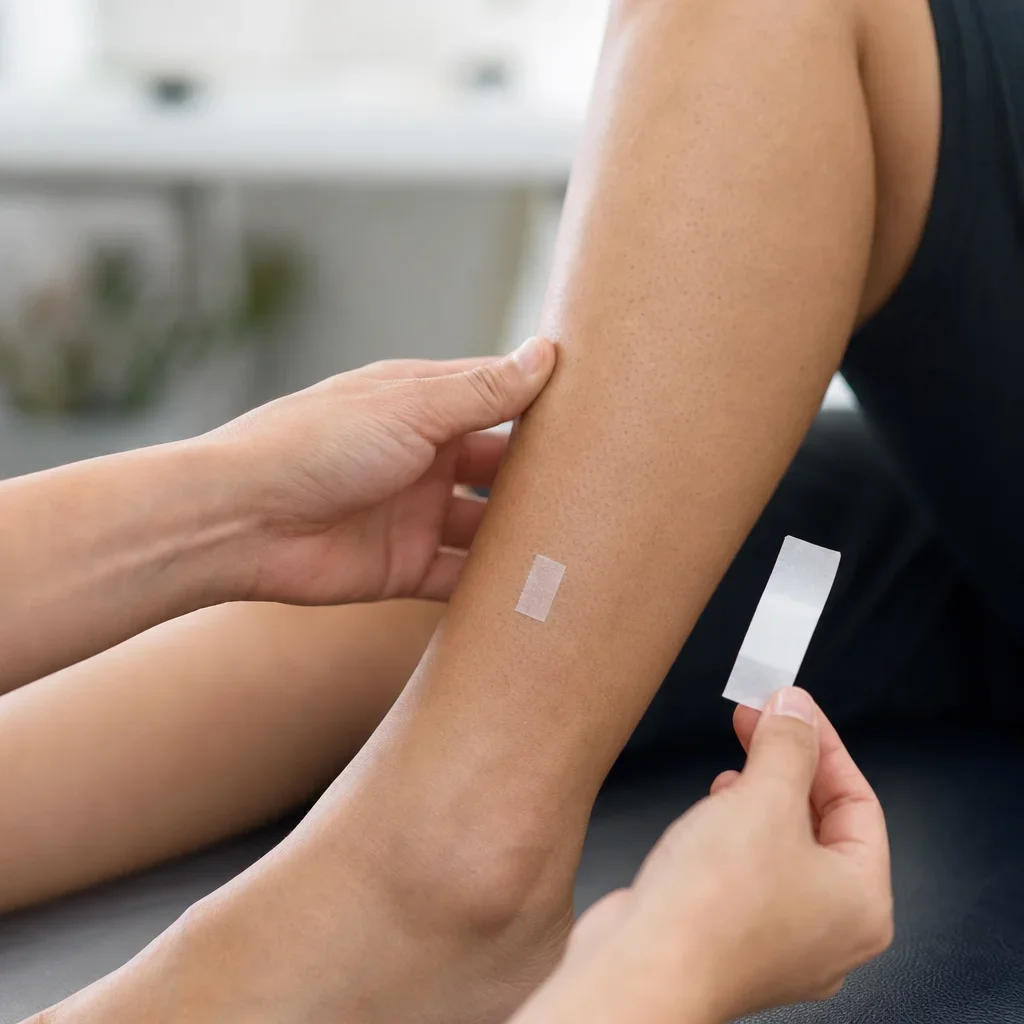
Do not apply tape over broken skin, open wounds, active rash, skin infection, or a known adhesive allergy. Tape on irritated skin usually creates a second problem and can make removal more difficult.
Use extra caution if you have very fragile skin, unexplained calf pain, major swelling, or circulation concerns. In those cases, it is better to get clinician guidance before applying any tape.
More tape is not better support. Extra layers, repeated overlap, and aggressive stretch can irritate skin, feel restrictive, and distract you from the real issue, which is whether the leg actually tolerates the load.
A small patch test is reasonable if your skin reacts easily to adhesives. Skin tolerance varies, and itching, burning, or a spreading rash means the tape should come off.
What tape to use for shin splints
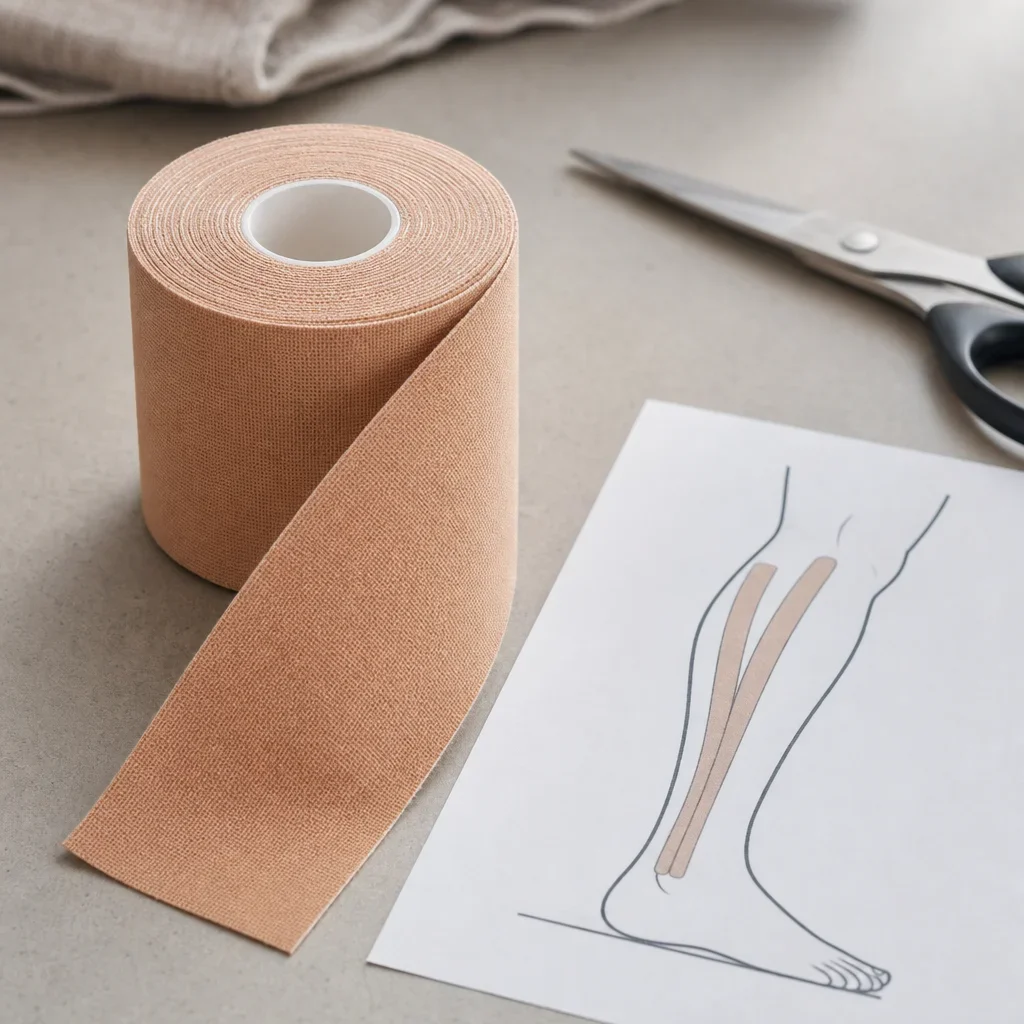
Elastic kinesiology tape is usually the best first choice for self-application because it moves with the leg while providing light support. Standard rolls are commonly about 5 cm or 2 inches wide , which is enough for most lower-leg taping patterns.
Rigid athletic tape is a different tool because it is meant to restrict motion more than kinesiology tape does. That makes it less forgiving for self-application, and detailed rigid tape methods are better taught in person when a clinician has confirmed what needs to be supported.
If you are comparing products, the best KT Tape for shin splints is usually the one your skin tolerates, cuts cleanly, and stays on without aggressive pulling. Brand hype matters less than adhesive tolerance, ease of use, and whether the tape can be applied smoothly along the painful region.
How to tape shin splints without KT tape depends on what you have. Another kinesiology tape brand can be used the same way because kinesiology tape is the category, while rigid tape is a different technique with a different goal.
How to apply shin splints KT tape: basic step-by-step
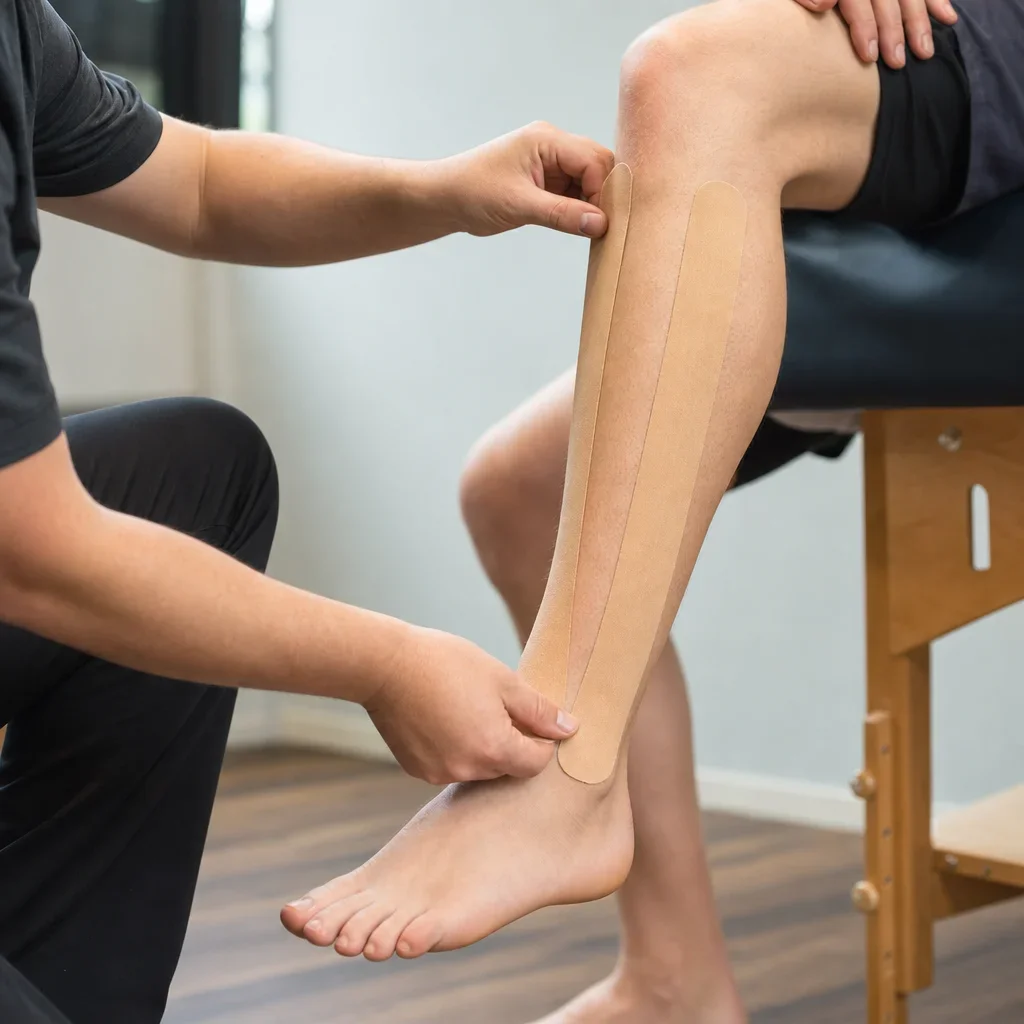
Skin prep is the first step because tape adheres best to clean, dry skin with no lotion. Trimming excess hair and rounding the tape corners helps reduce edge lift and makes removal easier.
Body position should expose the front and inner shin without forcing the ankle. A relaxed seated position with the knee bent and foot slightly lifted works well for most people because it gives access to the lower leg and keeps you from over-stretching the tape.
The basic shin splints KT tape method uses 1 long support strip and 1 to 2 shorter strips. The long strip usually follows the painful region by body landmark rather than a fixed length, which is why your tape should be cut to fit your leg, not copied inch for inch from someone else.
The anchors go on with no stretch, while the middle section uses light to moderate stretch only. A practical range is 0% stretch on the first and last few centimetres and roughly 10% to 25% through the working section .
For a simple medial support setup, place the first anchor just above the inside of the ankle with no stretch. Run the strip upward along the inner shin beside, not directly on top of, the most tender bony edge, then finish below the knee with the top anchor laid down flat.
Add a shorter support strip across the most symptomatic section if you need more feedback. Place the ends down with no stretch and use light pull through the middle so the skin is supported rather than yanked.
Rub the tape after application to help the adhesive bond with the skin. Waiting about 15 to 30 minutes before heavy sweating or exercise gives the adhesive a better chance to set .
A how to tape shin splints diagram is worth using here because landmarks are easier to copy visually than from text alone. An original clinic visual should show anchor points, direction of pull, and which areas to avoid if the bone itself is sharply tender.
How to tape based on where your shin hurts
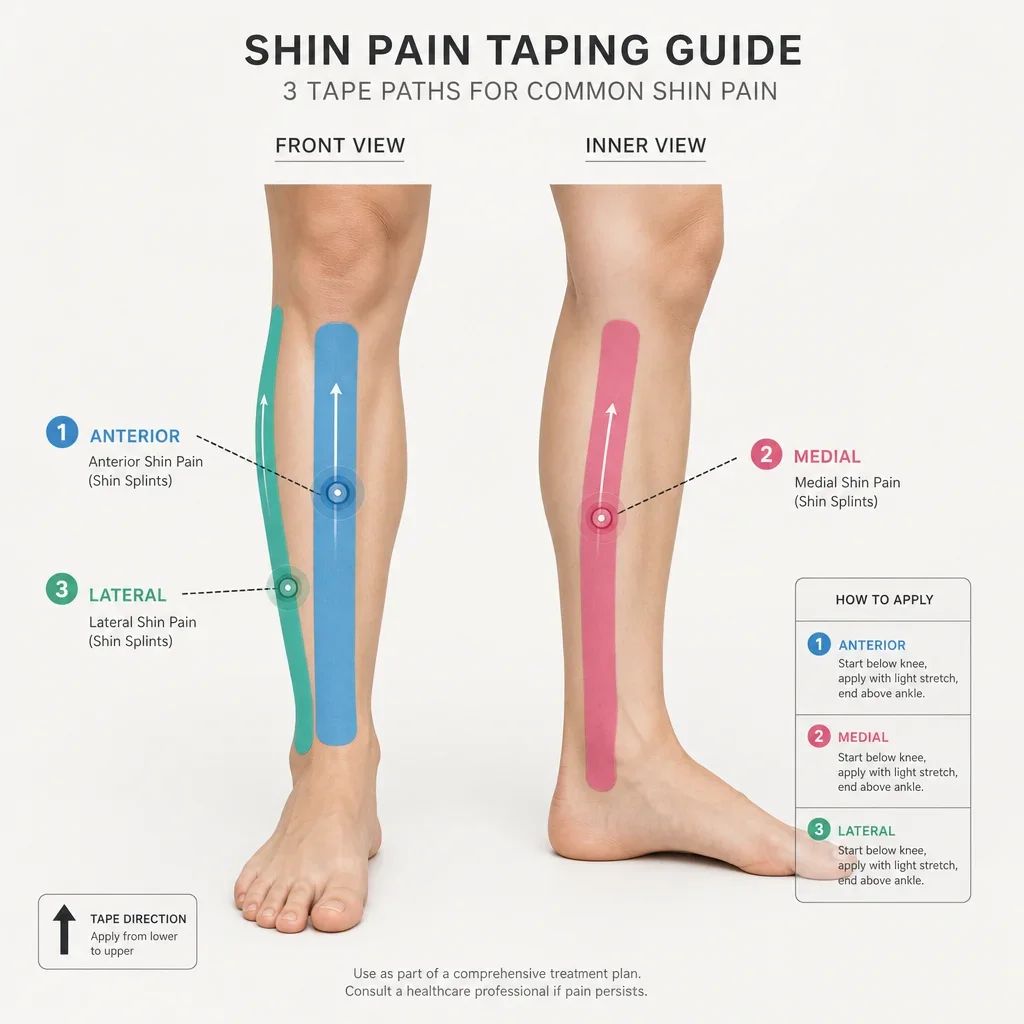
How to tape shin splints on the inside starts with the common medial tibial stress syndrome pattern. Place the main strip along the inner border of the shin, just off the most tender bone, and angle any support strip across the sore region to spread load awareness rather than compress one spot.
KT Tape for shin splints anterior should follow the tibialis anterior region instead of the inner shin. In that setup, the strip tracks more along the front or front-outside of the lower leg where the muscle works during toe lift and foot control.
Kt tape for shin splints lateral should be used more cautiously because outside shin pain may reflect a different tissue pattern. If the pain is not clearly tied to training load or it comes with numbness, weakness, or tight bursting pain during exercise, get assessed instead of repeating self-taping.
Posterior shin splints KT Tape is not one universal pattern because deeper inner or calf-side pain can overlap with posterior tibial, soleus, or other lower-leg issues. That is why deeper or less typical pain patterns deserve more caution and often respond better to a proper exam than a generic tape layout.
| Pain location | Common pattern | Taping consideration | When to get checked |
|---|---|---|---|
| Medial or inside shin | Diffuse ache along inner tibia | Main strip beside inner shin, not over sharp bony tenderness | If pain becomes focal or hurts at rest |
| Anterior shin | Front lower-leg muscle irritation | Follow tibialis anterior line rather than medial tibia | If toe lifting is weak or pain is not load-related |
| Lateral shin | Outside lower-leg pain | Use only if pattern is clearly mild and training-related | If symptoms include numbness, tightness, or unusual weakness |
| Posterior or deep inner shin | Calf-side or deeper lower-leg pain | Avoid assuming it is standard shin splints | If pain is hard to localize or persists with walking |
Common taping mistakes that make shin splints feel worse
Too much stretch is one of the most common errors because it pulls on the skin instead of supporting motion. That can make the tape feel sharp, itchy, or strangely restrictive within minutes.
Stretched anchors are another problem because the tape lifts faster at the ends and irritates the skin more easily. The first and last part of each strip should lie flat with no tension.
Placing tape directly over the most irritated bony edge can make symptoms more noticeable. A better approach is usually to support the surrounding soft tissue path instead of pressing hard on a very tender spot.
Applying tape to oily, damp, or freshly lotioned skin lowers adhesion right away. If the tape starts peeling early, people often add more layers, which usually creates more skin trouble than support.
Reapplying to already irritated skin can turn a minor issue into a visible rash. If the area is itchy, red, or burning, stop taping that area until the skin settles.
How long to leave KT tape on and whether you can run or shower with it
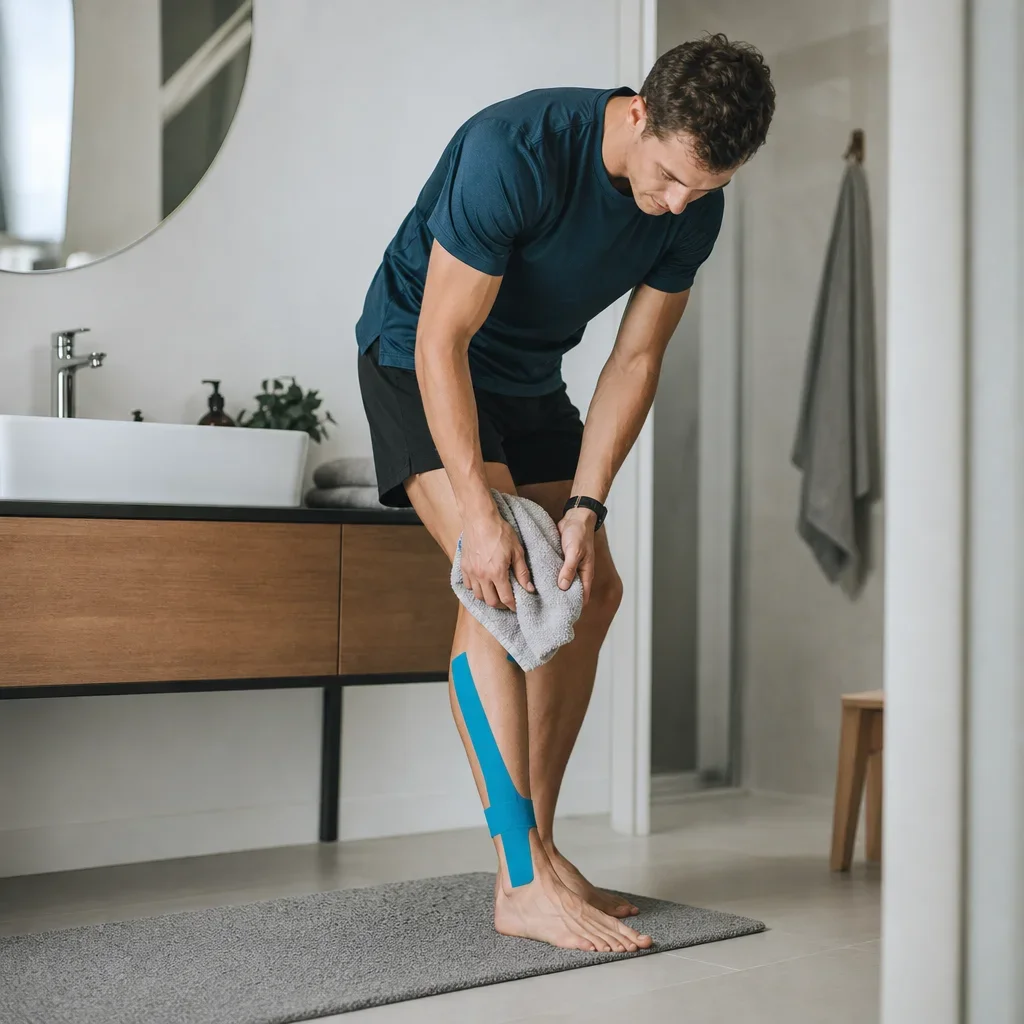
KT tape is usually worn for 3 to 5 days if the skin tolerates it . Some people remove it sooner because sweat, friction, or edge lifting reduces comfort before the adhesive actually fails.
You can usually shower with kinesiology tape because most products are water resistant, not waterproof . Pat it dry after showering instead of rubbing it hard with a towel.
Exercise with tape is reasonable only when symptoms are mild, stable, and not worsening with the session. If tape lets you warm up but the pain climbs as you continue, the problem is still there and your training load needs to come down.
Remove the tape sooner if you notice itching, burning, rash, or significant peeling. Skin response decides wear time more than the label does.
How to remove KT tape safely
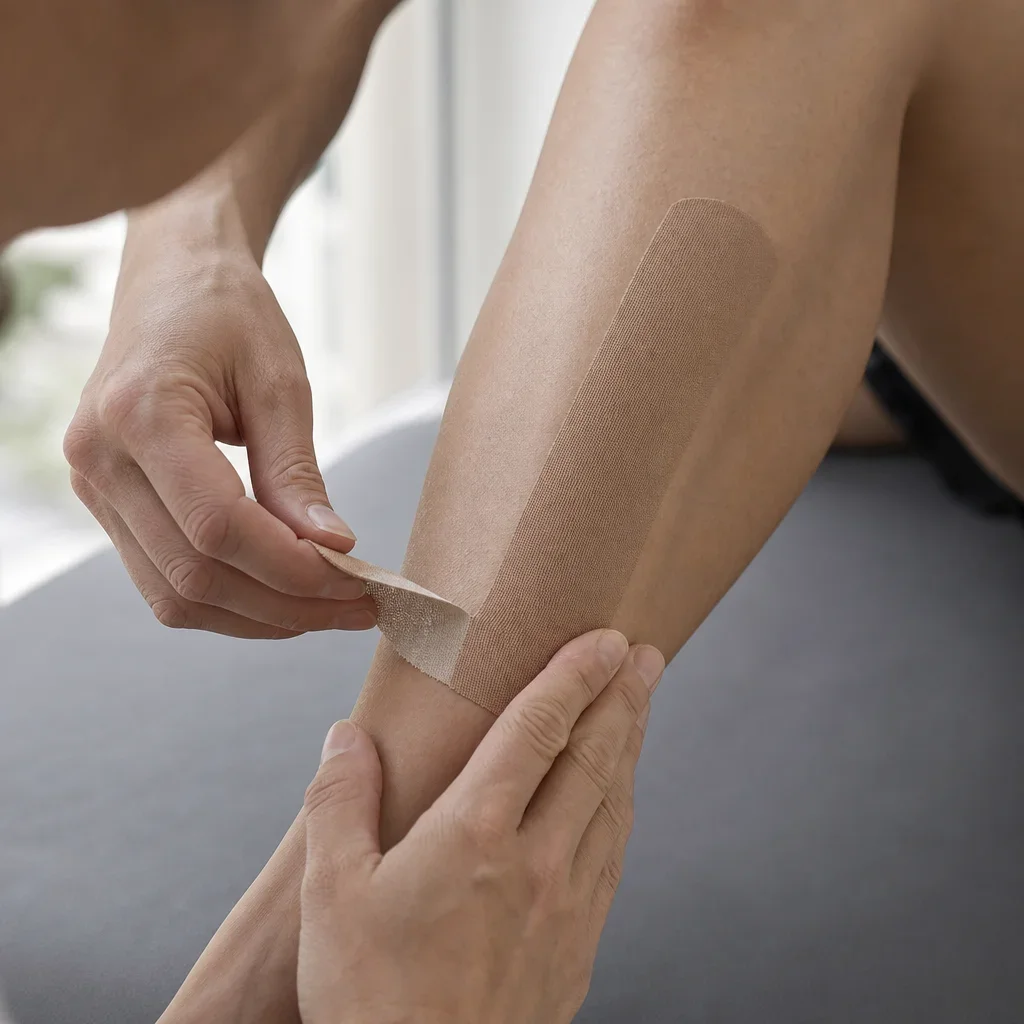
Safe removal is slow, not forceful. Peel the tape back gradually in the direction of hair growth when possible while supporting the skin with your other hand.
Warm water can make removal easier because it softens the adhesive enough to reduce skin pull. Ripping tape off quickly is the fastest way to irritate the skin, especially on the shin where soft tissue coverage is limited.
Stop if the skin becomes very red or sore during removal. Do not reapply over irritated skin until it has fully settled.
Should you reduce running mileage while using KT tape?
Yes, if running is still provoking symptoms, your load needs to change even if the tape feels supportive. Tape is not permission to keep the same mileage, the same hills, and the same intensity when your shin is already reacting.
How to tape shin splints for running should always be paired with training modification. Lower volume, flatter routes, fewer speed sessions, and cross-training are safer than trying to out-tape a rising pain pattern.
Runners should back off when pain worsens as the run continues or lingers into the next day. Court-sport athletes need the same logic for jumps, pivots, repeated accelerations, and hard decelerations because those loads can irritate the shin even faster than steady running.
What helps shin splints faster than tape alone

The fastest way to improve shin splints is usually to reduce the aggravating load while building the leg back up. There is rarely an instant fix, and tape alone does not address the reason the tissue got overloaded.
Relative rest works better than complete rest for many active people because you can often keep training around the problem. Swapping some impact sessions for cycling, pool work, or other lower-impact options can calm symptoms while fitness is maintained.
Strength and endurance work for the calf and foot usually matter more than taping over time. Those tissues help absorb repeated ground force, so stronger lower legs often tolerate the return to running better than taped but underprepared legs.
Mobility can help when a true restriction is present, especially at the ankle. Stretching every structure just because the shin hurts is less useful than identifying what actually limits movement and load sharing.
Ice or simple pain-relief strategies can ease symptoms after activity, but they are symptom tools, not a cure. If the pain keeps coming back when training rises again, the underlying loading problem still needs to be solved.
Exercises and mobility to pair with taping
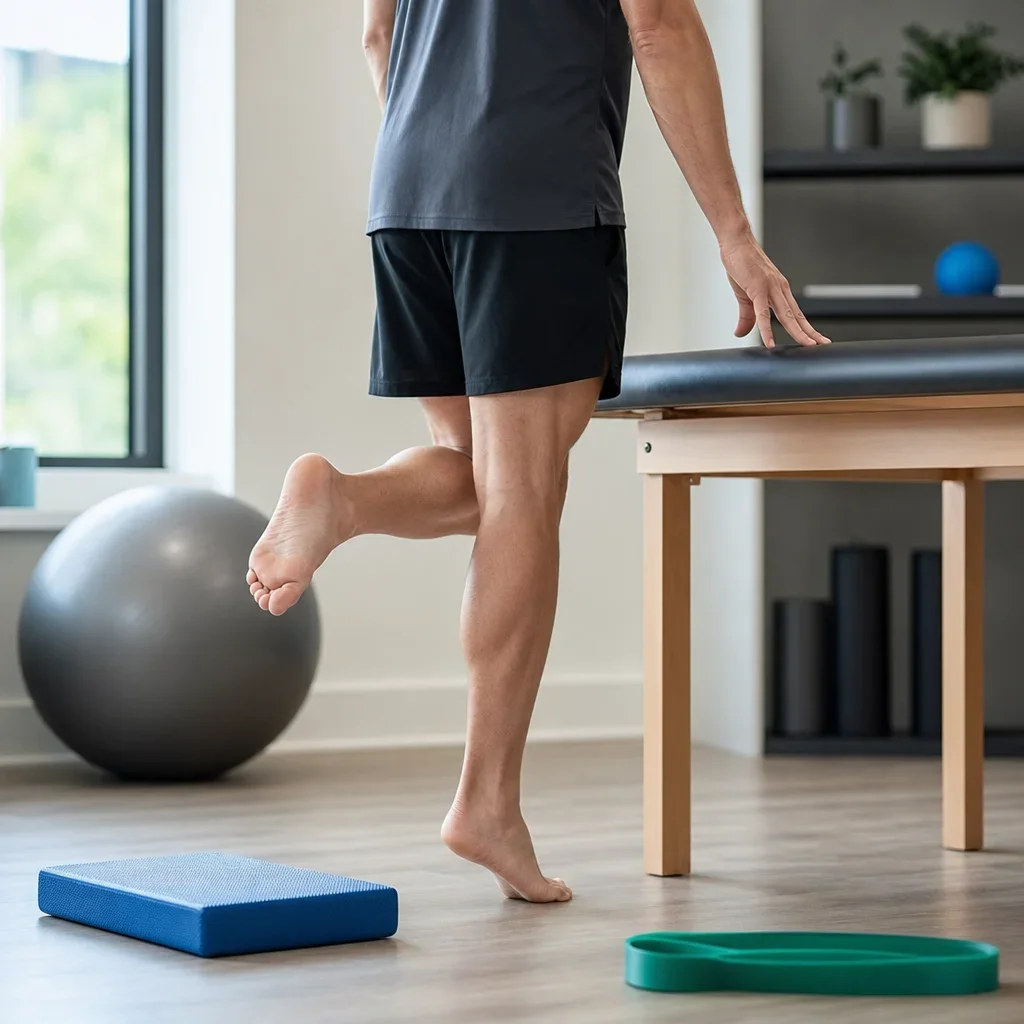
Calf raises are a strong starting point because the calf complex handles repeated force in running and jumping. Both straight-knee and bent-knee versions matter since they bias different parts of the calf .
Tibialis anterior work can help when the front of the shin is involved. Simple toe-lift drills, band-assisted dorsiflexion, or controlled heel walks can load that region gently when tolerated.
Foot intrinsic strengthening is useful because the foot helps manage how force moves into the tibia. Short-foot drills, towel scrunch variations, and controlled single-leg balance are common examples .
Balance and lower-limb control work matter for runners and court-sport athletes because the shin reacts to the whole chain, not just one muscle. Step-downs, controlled landing drills, and graded hopping progressions can be useful once pain is settling.
Mobility work should be targeted, not automatic. If ankle dorsiflexion is limited, calf and ankle mobility can help; if it is normal, stretching alone is unlikely to fix the issue.
At Studio Athletica, a biomechanics-led physiotherapy assessment looks at movement, loading patterns, and return-to-sport planning rather than only the painful spot. That matters when shin pain keeps cycling back despite rest, taping, or shoe changes.
Prevention: can KT tape stop shin splints from coming back?
Tape can be used as a temporary prevention tool by some athletes, but it should not be the main strategy. The more reliable prevention plan is gradual training build-up, recovery days, lower-leg strength, and earlier response to soreness.
Repeated dependence on tape is often a clue that the real issue has not been addressed. If you need the same shin splints taping setup every week just to tolerate normal training, the load or mechanics need a closer look.
FAQ
Is KT Tape good for shin splints?
It can be useful for temporary symptom relief and movement awareness, but it does not heal shin splints by itself. The bigger drivers are usually load management, strength, mobility, and return-to-sport planning.
Can KT tape really help shin splints?
It can help some people feel more comfortable, especially with mild symptoms. The effect is variable, and the research is not strong enough to treat tape as a cure.
How long should I keep KT Tape on for shin splints?
A common wear range is 3 to 5 days if your skin tolerates it . Remove it sooner if it itches, burns, peels badly, or irritates the skin.
Can you shower or exercise with KT tape on?
Usually yes, because kinesiology tape is designed to tolerate sweat and water to a degree . Pat it dry after showering, and only exercise with it if symptoms are mild and not worsening.
How to tape really bad shin splints?
If the pain is severe, focal, or affecting walking, more tape is not the answer. That pattern needs assessment first because stress injury or another diagnosis has to be considered.
How to tape shin splints with rigid tape?
Rigid tape is used for a different purpose than kinesiology tape because it restricts motion more. It is better taught in person after the painful structure has been identified, rather than copied from a generic online method.
How to tape shin splints without KT tape?
Use another elastic kinesiology tape brand if that is what you have. The category matters more than the logo, and the same general placement principles apply.
Can you put too much KT tape on?
Yes. Too many layers or too much tension can irritate the skin and create a false sense of support while the tissue remains overloaded.
What is commonly mistaken for shin splints?
Stress fracture is the big one, but compartment syndrome, tendon irritation, nerve-related pain, calf strain, vascular issues, and referred pain can also mimic shin splints.
Should you tape both legs or only the painful side?
Usually only the painful side needs tape. Bilateral pain can happen, but if both shins hurt repeatedly, the bigger question is why your training or mechanics are overloading both legs.
When to book a physiotherapy assessment for shin pain
Persistent, recurring, or hard-to-classify shin pain deserves a proper exam because diagnosis changes management. A sports physiotherapy assessment can help determine whether the issue is medial tibial stress syndrome, tendon overload, stress reaction concern, or a broader running-load problem.
If you are in Toronto and shin pain is limiting your running, court sport, or rehab progress, book a physiotherapy assessment at Studio Athletica in downtown Toronto. The goal is not just to tape the area, but to assess movement, identify the likely source, and build a return-to-run or return-to-sport plan that fits your body.
Medical caution
Tape is a temporary support strategy, not a substitute for diagnosis. If shin pain is sharp, focal, present at rest, painful at night, associated with swelling, or changes the way you walk, stop self-treating and get assessed.