
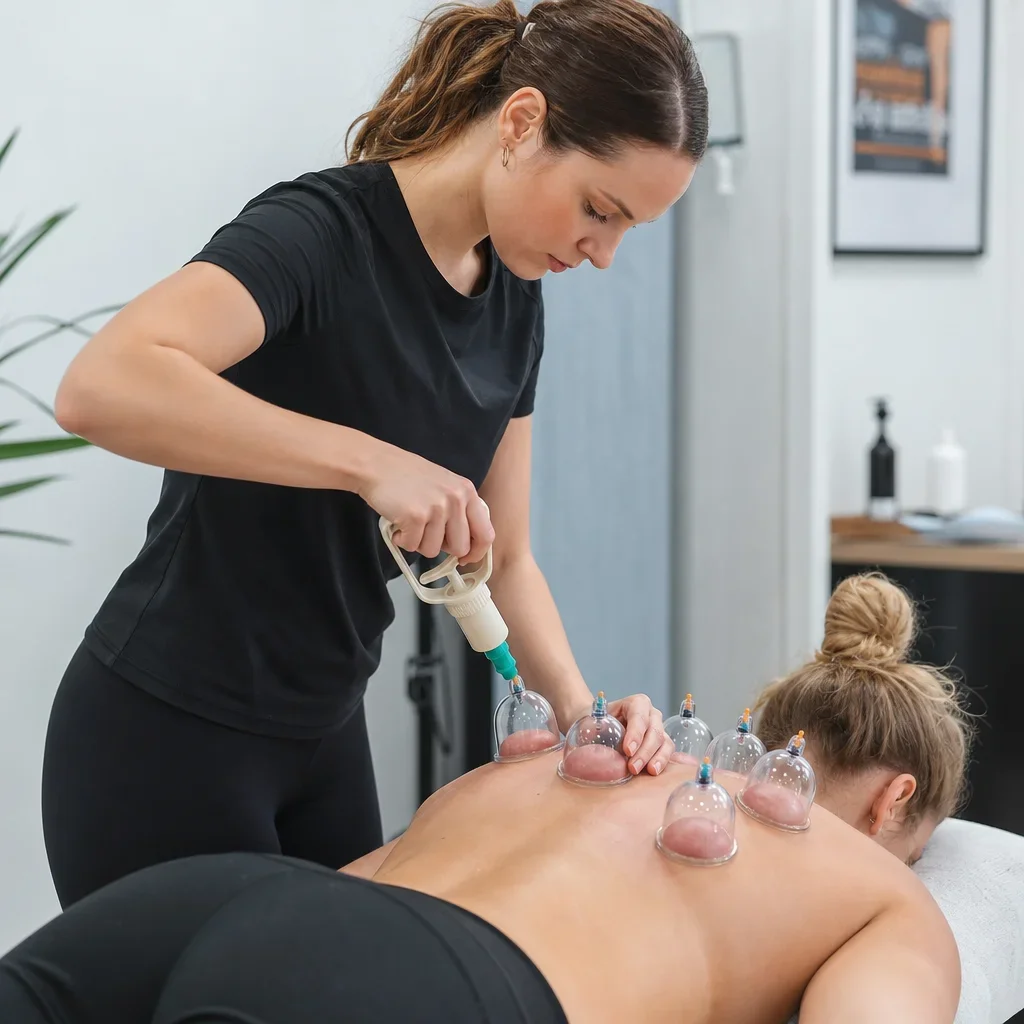
A lot of athletes see cup marks on social media and assume more marks means more benefit. That is not how cupping therapy for athletes works. Used well, it can be one recovery tool inside a bigger rehab plan. Used blindly, it can distract from the reason you are sore, stiff, or not performing comfortably.
What Is Cupping Therapy for Athletes?
Cupping is a manual therapy technique that uses suction on the skin and superficial soft tissue. In sports cupping therapy, the goal is usually short-term symptom change, such as less perceived tightness, less soreness, or easier movement, not a stand-alone fix for an injury.
Cupping fits best as an add-on to assessment, exercise, load management, and other hands-on care. That matters for athletes and active adults because a tight calf, stiff shoulder, or sore back can come from training volume, movement mechanics, recovery habits, or a developing injury, and suction alone does not sort that out.
Why Do Athletes Use Cupping?
Athletes usually try cupping because they want a low-effort recovery option that may reduce soreness, ease muscle tension, or make movement feel less restricted for a short period. That is why you see it in both elite sport and general rehab settings, even though the visible marks do not prove effectiveness.
Professional athletes do use cupping, and Michael Phelps helped make it highly visible during the 2016 Olympics. That visibility explains interest, but it is not evidence that cupping improves performance, heals tissue faster, or works for every sport and every body.
How Cupping Therapy Works
Cupping works by creating suction that lifts the skin and changes pressure in the treated area. That mechanical pull may change how the area feels, how sensitive it is, and how easily you move right after treatment, but the exact mechanisms are still being studied.
The most defensible explanation is not that cupping “flushes toxins” or removes lactic acid. It is that suction can temporarily affect pain perception, local tissue sensitivity, and movement comfort through a mix of mechanical and nervous-system effects. Those effects can feel useful, but they are not the same as proving lasting tissue repair.
Does Cupping Actually Help Athletes? What the Evidence Says
The evidence for cupping therapy benefits is mixed, with the strongest support around possible short-term changes in pain, soreness, and range of motion rather than clear gains in strength, speed, or endurance. That is why cupping is controversial: study quality varies, protocols are inconsistent, and the treatment context itself can influence how people feel.
A realistic evidence summary looks like this:
| Claim | What the evidence supports | Practical take |
|---|---|---|
| Temporary pain relief | Possible in some musculoskeletal cases | Reasonable as a short-term symptom tool |
| Less soreness or tension | Possible for some athletes | Best judged by your response over the next 24-72 hours |
| Better range of motion | Sometimes seen short term | Useful if paired with exercise to keep the gain |
| Faster healing | Unclear | Do not rely on cupping alone |
| Better performance | Limited evidence | Not a performance shortcut |
| Detox or lactic acid removal | Unsupported | Marketing claim, not a rehab goal |
Types of Cupping: Dry vs Wet vs Moving Cupping
Dry cupping is the version most people mean in rehab and cupping physical therapy settings. It uses suction only, with no skin puncture. Moving cupping uses oil or lotion so the cups glide across the skin, creating a massage-like pull.
Wet cupping is different because it involves skin puncture or incision and blood exposure. That brings different safety, infection-control, and regulatory considerations, so this guide focuses on dry cupping and moving cupping used in sports and rehab environments.
A simple comparison helps:
| Type | How it works | Typical rehab use | Main caution |
|---|---|---|---|
| Dry cupping | Cups stay in place with suction | Local tightness, soreness, symptom relief | Can leave marks and tenderness |
| Moving cupping | Cups glide with suction | Broad areas of stiffness or tension | Can irritate sensitive skin |
| Wet cupping | Includes skin breaking | Not typical in mainstream rehab settings | Higher hygiene and infection concerns |
What Conditions or Training Situations Might Cupping Be Used For?
Cupping is usually considered for post-training soreness, recurring muscle tightness, movement restriction, or chronic overuse discomfort that has already been assessed. Common sport examples include calf tightness in runners, shoulder stiffness in swimmers, lat or thoracic tightness in lifters, and hip flexor or quad tension in cyclists.
Cupping is a poor first move when pain is acute, severe, or medically unclear. If there is major swelling, a suspected tear, sharp loss of function, concussion concerns, fracture concern, fever, infection, or rapidly worsening symptoms, a medical or sports medicine assessment comes before any recovery modality.
Cupping Before or After Training: Best Timing for Athletes
Timing should follow your response, not a blanket rule. If you are trying sports cupping therapy for the first time, doing it right before competition is usually not smart because some people feel tender, heavy, or distracted by the marks afterward.
A cupping session often lasts about 15-30 minutes for the cupping portion itself. Post-training or post-event use usually makes more sense when the goal is soreness relief or easier movement, while pre-event use is better kept conservative and familiar.
This is a practical way to think about timing and frequency:
| Goal | When it may fit | When to be cautious | Typical rhythm |
|---|---|---|---|
| Recovery after a hard session | Later the same day or next day if the area is just sore or stiff | Avoid if symptoms suggest real injury, not routine soreness | Response-based, not automatic |
| Pre-event mobility or comfort | Only if you have tolerated it well before | Avoid first-ever sessions close to competition | Trial in training first |
| Rehab support | Between treatment visits as part of a bigger plan | Reassess if it is the only thing helping temporarily | Often weekly to monthly depending on goals and response |
What Does Cupping Feel Like and Does It Hurt?
Cupping usually feels like pulling, pressure, tightness, or warmth rather than sharp pain. If the suction is appropriate, it can feel intense but it should not feel alarming, burning, or like the skin is being pinched aggressively.
Does cupping hurt? It can be uncomfortable, especially over sensitive areas, but it should not feel severe. Circular marks and local tenderness are common, and the marks often fade over about 7-10 days.
Your First Sports Cupping Appointment: Step by Step
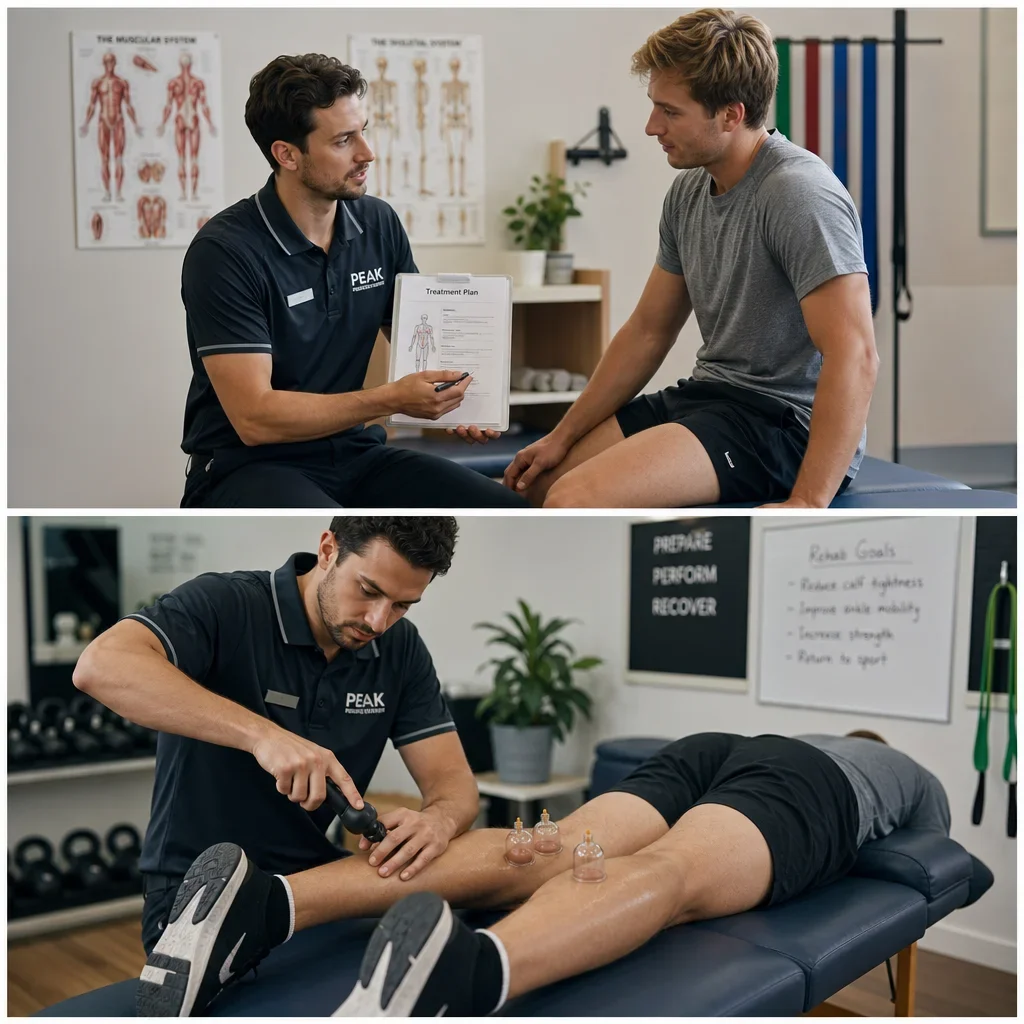
A good first appointment starts with assessment, not cups. In a sports medicine Toronto or physiotherapy Toronto setting, that should include your symptoms, training load, health history, skin status, goals, and red flags before anyone decides cupping is appropriate.
The treatment itself usually involves placing a few cups on targeted areas, then leaving them still or moving them depending on the plan. The cupping portion is often 15-30 minutes, and it may be combined with mobility work, manual therapy, or exercise in the same visit.
The session should end with a quick re-check of symptoms, skin response, and movement, plus aftercare instructions. If a provider offers cupping without assessment, without consent, or without explaining why it fits your problem, that is a red flag.
Aftercare: What to Do After Cupping Therapy
Aftercare is simple: monitor the skin, avoid aggressive rubbing over the treated area, and adjust training that day if the area feels irritated. Light movement often feels fine, but hard training right away is not always the best call if the tissue feels more sensitive than loose.
Use this checklist after treatment:
- Check the area for normal marks versus unusual blistering or severe irritation.
- Keep friction low over treated skin for the rest of the day.
- Resume training based on how the area feels, not on a fixed rule.
- Do not apply cups over broken, sunburned, irritated, or infected skin.
- Follow the provider’s plan if cupping was part of rehab, not a stand-alone visit.
How Often Should an Athlete Do Cupping?
The right frequency depends on the goal and on whether it is creating useful change between sessions. For some athletes, cupping is an occasional tool during a flare or a heavy training block. For others, it may show little value and should not become routine just because it feels therapeutic in the moment.
A common practical range is weekly, bi-weekly, or monthly depending on symptoms, training demands, and response. I would not frame that as a schedule to follow blindly. If relief is brief, absent, or only happens when passive treatment is repeated without gains in strength, tolerance, or function, the plan needs to change.
When Cupping Is Not Recommended
Cupping is not a good fit over open wounds, active skin infections, burns, broken skin, or clearly fragile skin. Extra caution also makes sense with blood thinners, bleeding disorders, major vascular concerns, certain skin conditions in the area, post-surgical tissue, pregnancy-related considerations, or complex medical histories that need individualized clearance.
You should skip self-booking cupping and seek assessment first if you have severe unexplained pain, major swelling, fever, suspected fracture, possible deep vein thrombosis, or symptoms that are getting worse quickly. That is true whether you are searching for cupping therapy near me or sports cupping therapy near me in downtown Toronto.
Possible Side Effects and What Can Go Wrong
The most common downside is temporary marks, tenderness, and skin sensitivity in the treated area. More significant problems can include skin irritation, blistering, burns with heat-based methods, infection risk with skin-breaking methods, or a symptom flare if the treatment is too aggressive or used on the wrong condition.
Cupping can go wrong when the provider uses too much suction, treats a problem that needed diagnosis first, or ignores infection control. Stop and seek medical care if you develop worsening pain, unusual swelling, concerning skin changes, signs of infection, dizziness that does not settle, or symptoms that do not fit a normal post-treatment response.
How to Tell if Cupping Is Helping
Cupping is helping if you can point to a meaningful change, not just a dramatic-looking mark. Useful markers include less pain with activity, easier movement, reduced perceived tightness, better tolerance to training, or smoother recovery across the next 24-72 hours.
It is probably not helping if it repeatedly leaves you more sore, disrupts training, or creates the same short-lived relief without better function. In that case, another approach may fit better, especially if the problem is really a load-management, strength, technique, or injury-diagnosis issue.
Cupping vs Massage, Dry Needling, Stretching, Compression, Ice Bath, and Physiotherapy
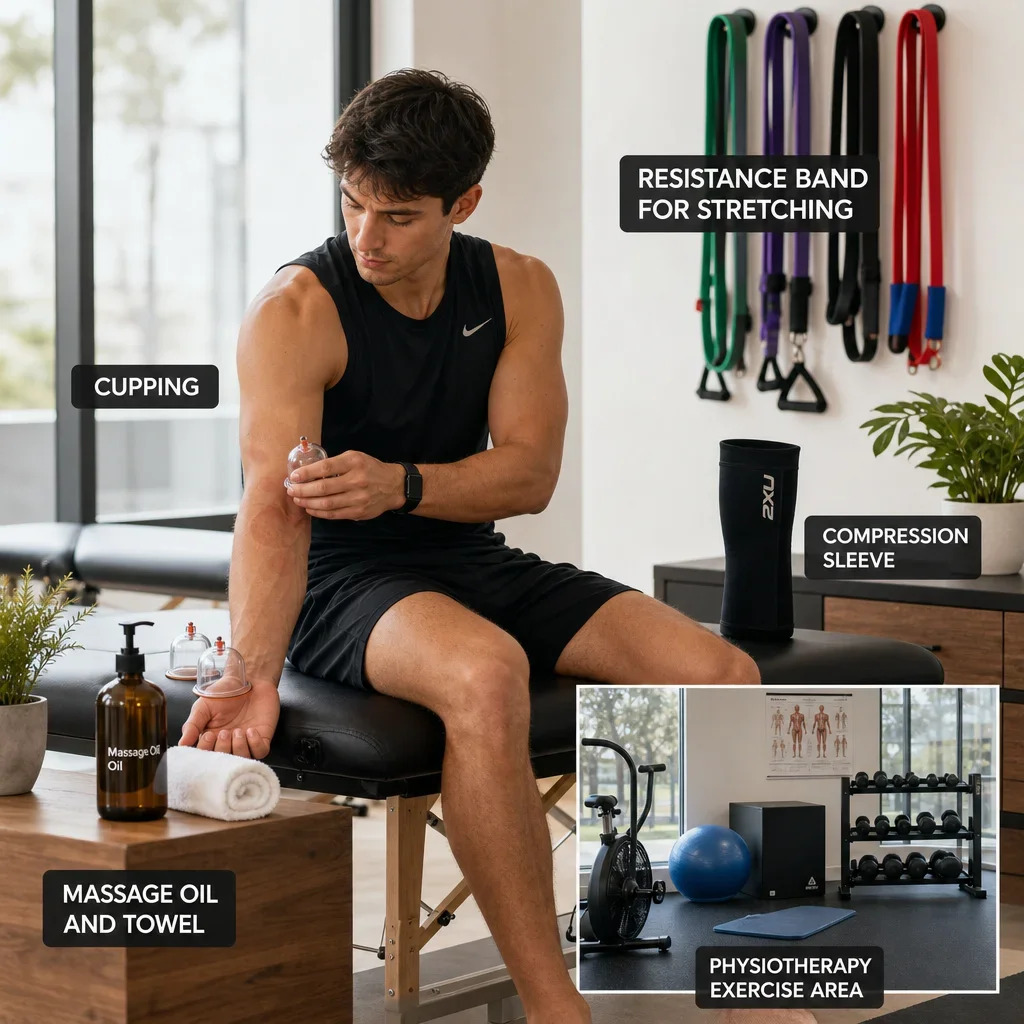
Cupping is one passive option among several, and it is rarely the complete answer. Massage may suit generalized relaxation, dry needling may be chosen for specific neuromuscular presentations, stretching can help when restricted motion is part of the problem, and physiotherapy is the better fit when you need diagnosis-driven rehab and progression.
This side-by-side comparison is more useful than hype:
| Option | Best use case | Main limitation | When assessment matters most |
|---|---|---|---|
| Cupping | Short-term symptom relief, perceived tightness, movement comfort | Passive, evidence mixed for performance | Recurring pain or unclear diagnosis |
| Massage | General relaxation, broad soreness, recovery comfort | May feel good without fixing the driver | Pain returns quickly or movement is limited |
| Dry needling | Targeted trigger-point or neuromuscular symptoms | Not for everyone, can be more invasive-feeling | Nerve-like symptoms or persistent pain |
| Stretching | Specific mobility work | Limited if strength or control is the issue | Repeated stiffness without lasting change |
| Compression | Swelling management or recovery preference | Not a diagnosis or tissue fix | Significant swelling or acute injury |
| Ice bath | Recovery strategy some athletes prefer after heavy exertion | Tolerance varies and goals matter | Pain seems injury-related rather than workout-related |
| Physiotherapy | Assessment, rehab planning, return-to-sport progression | Requires active participation | Best first choice for persistent or recurring issues |
Who Does Cupping Therapy and How to Find a Qualified Provider in Toronto
Who does cupping therapy depends on the setting and the profession. In Ontario, athletes may encounter cupping through regulated providers such as physiotherapists, chiropractors, massage therapists, or other trained professionals depending on scope and clinic model.
The better search is not just for cupping therapy near me. It is for a qualified provider who screens injuries first, explains why cupping fits, obtains informed consent, and can place it inside a bigger rehab plan. In downtown Toronto, that usually means looking for a sports medicine, physiotherapy, chiropractic, or rehab environment rather than a one-modality promise.
Ask a few plain questions before booking:
- What regulated profession is billing the visit?
- Do you assess the injury before treating it?
- What type of cupping do you use?
- How do you clean equipment and manage skin safety?
- What would make you decide cupping is not appropriate?
How Much Does Cupping Therapy Cost and Is It Covered by Insurance?
Cost depends on whether cupping is included inside a physiotherapy, chiropractic, or massage therapy visit, or offered as a stand-alone service. A common market range people see is about $30-$100 per treatment, but the real number depends on provider type, appointment length, and whether it is part of a broader session.
Insurance coverage usually follows the regulated profession on the receipt, not the buzzword “cupping.” That means a session may be covered under physiotherapy, chiropractic, or massage therapy benefits if your plan allows it, but you need to confirm provider type and billing details with your insurer before booking.
Myths and Facts About Cupping Therapy
The biggest myths are easy to clear up when you look at mechanism instead of marketing. Cupping therapy benefits are possible, but they are narrower and more individual than the internet suggests.
| Myth | Fact |
|---|---|
| Darker marks mean more toxins were released | Mark colour is not a detox score and does not prove better treatment. |
| Cupping removes lactic acid | That claim is unsupported. |
| If elite athletes do it, it must work for everyone | Celebrity use is not proof of broad effectiveness. |
| Cupping fixes injuries by itself | It may help symptoms, but diagnosis and rehab still matter. |
| More suction is better | Excessive suction raises the chance of irritation and soreness. |
When to Book a Sports Medicine Assessment Instead of Self-Booking Cupping
Assessment should come first when pain keeps returning, training is slipping, you do not know the diagnosis, or you are dealing with post-surgical rehab. That is where a biomechanics-led plan matters more than chasing a passive treatment.
A downtown Toronto clinic that looks at movement, load, strength, and diagnosis can decide whether cupping, physiotherapy, chiropractic care, massage therapy, or another option fits the problem. If you are unsure whether cupping belongs in your recovery plan, book an assessment first and let the treatment follow the findings, not the trend.
FAQ
How often should an athlete do cupping?
Frequency is usually based on response and goal, not a fixed formula. Weekly, bi-weekly, or monthly can all be reasonable ranges depending on symptoms and training demands.
Does cupping actually help athletes?
It may help some athletes with short-term pain, soreness, or movement comfort, but evidence is mixed and stronger for symptom change than for performance gains.
Why do pro athletes do cupping?
They often use it for recovery routines, soreness relief, perceived muscle looseness, and therapist preference. Visibility in pro sport does not prove it works for everyone.
When is cupping not recommended?
Avoid it over broken or infected skin, and get medical assessment first for severe pain, major swelling, fever, suspected fracture, or other red flags.
Is there a downside to cupping?
Yes. Common downsides include marks, tenderness, and short-term skin sensitivity. More serious issues are less common but can include blistering, irritation, or treating the wrong problem.
What is a negative side effect of cupping?
The most common one is temporary circular marks with local tenderness. Those marks often fade within about 7-10 days.
Does cupping hurt?
It should feel like pulling or pressure, not sharp or alarming pain. If it feels intense in the wrong way, the suction may be too aggressive.
How long does a cupping session last?
The cupping portion often lasts about 15-30 minutes, though the full appointment may be longer if it includes assessment or exercise.
Can you work out after cupping?
Sometimes, yes. Light activity may feel fine, but hard training right away is not always ideal if the area feels irritated or tender.
Who does cupping therapy in Toronto?
Depending on the clinic and scope, it may be offered by physiotherapists, chiropractors, massage therapists, or other trained providers in rehab and sports medicine settings.
Is cupping covered by insurance?
Coverage usually depends on the regulated profession billing the visit and on your plan details, not on cupping itself as a named modality.
What is the difference between dry cupping and wet cupping?
Dry cupping uses suction only. Wet cupping involves skin breaking and blood exposure, which changes the risk and hygiene considerations.
If your goal is more than temporary relief, the next step is simple: get the problem assessed before you decide which tool belongs in the plan.