

Lower back and hip pain can be debilitating. Fortunately, there are safe ways to decompress the lower back and hips – meaning to relieve pressure on the spine and hip joints – through gentle techniques. Decompression helps create space between vertebrae and in the hip joints, taking strain off nerves and discs. By incorporating specific stretches, posture adjustments, and simple exercises, you can alleviate tightness and improve mobility in these areas.
Understanding Spinal Compression in the Lower Back and Hips
Everyday activities like prolonged sitting, heavy lifting, or even poor posture can lead to compression in the lower spine and hips. In these situations, gravity and muscle tension push the vertebrae and hip joints closer together, which may pinch nerves and cause pain or stiffness. Conditions such as sciatica (irritation of the sciatic nerve) are common examples – a herniated disc or tight piriformis muscle can compress nerve roots, leading to pain from the lower back through the hip and leg. Other issues like osteoarthritis in the hip or sacroiliac joint dysfunction can also contribute to simultaneous back and hip pain.
Why does this compression happen? Sometimes it’s due to acute injury (like a fall or accident) or chronic strain (such as sitting all day with poor ergonomics). Weak core muscles and tight hip flexors or hamstrings can exacerbate the problem by pulling the pelvis and spine out of optimal alignment. The result is often a feeling of “tightness” or pressure in the low back and hips, and possibly nerve-related symptoms like tingling or shooting pains if a nerve is impinged.
Benefits of Decompressing Your Lower Back and Hips
Relieving that pressure through decompression techniques can bring significant benefits. By gently stretching and opening up the spaces in your spine and hip joints, you can:
- Reduce pain and nerve pressure: Creating more space between vertebrae relieves irritation of spinal nerves, often reducing pain and numbness. For example, decompressing the lumbar spine can alleviate sciatic nerve pain that travels through the hips.
- Improve mobility and posture: Spinal decompression exercises help improve spinal alignment and hip range of motion. Over time this leads to better posture, stability, and flexibility in daily movements. You may find it easier to stand up straight and move without stiffness.
- Enhance disc and joint health: Decompression allows nutrients and blood flow to reach spinal discs and hip cartilage more effectively. This can promote healing and reduce inflammation. Unlike high-impact activities or prolonged sitting, decompression techniques are gentle and non-invasive, putting less stress on joints.
- Avoid heavy medication or surgery: Many decompression methods are natural, drug-free ways to find relief. They can often be done at home and may help manage pain so that more invasive treatments are not needed. (Of course, always follow medical advice for severe conditions.)
By regularly practicing decompression strategies, you support your body’s structures and may prevent future episodes of intense pain.
Precautions Before You Start
While at-home decompression is generally safe, it’s important to take a few precautions:
- Consult a professional if needed: If you have a diagnosed spinal condition (like advanced spinal stenosis, osteoporosis, or a recent spine surgery), get clearance from your doctor or physiotherapist before doing these exercises. Certain conditions may require supervised therapy instead of self-care exercises.
- Listen to your body: Decompression stretches should relieve tension not cause sharp pain. If any movement causes a spike in pain, numbness, or weakness in your legs, stop immediately. These could be warning signs of a nerve being pinched or another issue, and you should seek medical attention.
- Start gentle and slow: Especially if you’re very stiff or in acute pain, begin with mild stretches and short hold times. You can gradually increase the stretch or duration as your flexibility improves over days and weeks. Avoid any jerking or bouncing movements – all exercises should be done in a slow, controlled manner.
- Breathing and form: Breathe deeply during stretches to help muscles relax and never force a posture beyond your comfort. Proper form is more important than pushing too hard. It can help to warm up slightly (e.g. a brief walk or a heating pad on your back) before stretching tight muscles.
By taking these precautions, you’ll maximize benefits and minimize the risk of injury during decompression exercises.
Effective Stretches and Exercises to Decompress the Lower Back and Hips
Decompressing the lower back and hips typically involves certain exercises and stretches that aim to relieve pressure on the nerves and joints. Here are some of the most effective techniques you can try at home. Perform these on a comfortable, firm surface (like a yoga mat or carpet), and remember to breathe through each stretch.
Knee-to-Chest Stretch
This simple stretch gently lengthens the low back. Lie on your back and bend your knees. Draw one knee up toward your chest, holding your shin or thigh, while keeping the other leg bent or extended. You should feel a light stretch in your lower back and hip. Hold for about 20 – 30 seconds, then switch legs. You can also pull both knees to your chest to stretch the entire lower back at once. This posture opens up the space in the lumbar spine and can relieve pressure on spinal discs.
Child’s Pose (Prayer Stretch)
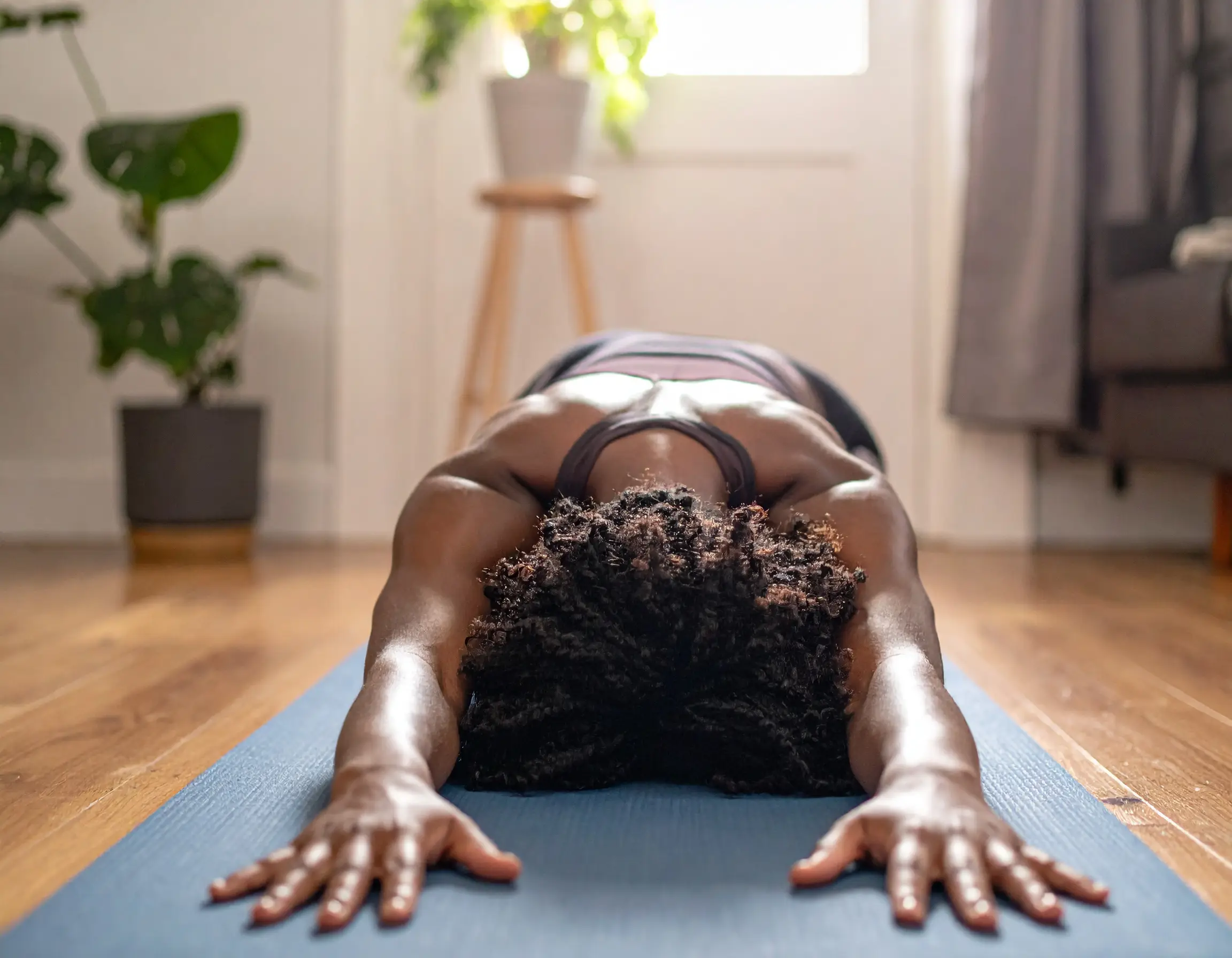
Borrowed from yoga, this pose is excellent for spinal decompression. Kneel on all fours, then sit your buttocks back toward your heels while reaching your arms forward along the floor. Let your chest lower toward the ground. You should feel a comfortable stretch along your lower back, hips, and even into the glutes. Hold for 20 – 30 seconds, breathing deeply. Child’s pose “lengthens” the spine, creating more space between vertebrae and relaxing the hip joints.
Cat-Cow Stretch
This dynamic movement mobilizes the spine and takes pressure off the lower back. Start on your hands and knees (hands under shoulders, knees under hips). Inhale and drop your belly toward the floor while lifting your head and tailbone – this is the Cow pose, which gently arches your back downward. Then exhale and round your back upward like an angry cat, tucking your chin – this is the Cat pose. Continue alternating cat and cow slowly with each breath, for about 10 – 15 repetitions. This rhythmic motion pumps the discs and stretches the back and hip muscles, promoting decompression.
Supine Spinal Twist
Twisting the lower spine can help decompress the vertebrae and relax the hips. Lie on your back with knees bent and feet flat. Gently drop both knees to one side while keeping your shoulders on the floor – you’ll feel a stretch in your lower back and outer hip. Hold 15 – 30 seconds, then bring knees back up and rotate to the other side. (If it’s more comfortable, you can cross one leg over the other while twisting.) This supine twist creates a traction force on the spine, relieving tension. It’s one of the easiest yet effective stretches for back pain relief.
Piriformis Stretch (Figure-4 Stretch)
The piriformis muscle in the buttock can contribute to sciatic nerve compression when tight. To stretch it, lie on your back and bend your knees. Cross your right ankle over your left thigh (making a “4” shape). Gently pull your left thigh toward you (you can grasp behind the thigh) until you feel a stretch deep in your right hip/glute. Hold 20 – 30 seconds and switch sides. This helps open the hips and reduce pressure on the sciatic nerve. You can also do a seated version (seated pigeon stretch) by crossing one ankle over the opposite knee and leaning forward.
Hip Flexor Lunge
Tight hip flexors (at the front of your hips) can compress the spine by pulling your pelvis forward. Kneel on your right knee (use a cushion under it) and place your left foot flat in front, knee bent 90 degrees (a lunge position). Keeping your torso upright, gently push your hips forward until you feel a stretch in the front of your right hip. Hold ~20 seconds, then switch to stretch the other side. This hip flexor stretch helps decompress the lower back by easing the pull on your lumbar spine. For added benefit, reach the arm (same side as the kneeling leg) up overhead as you lunge to stretch your hip flexor and hip capsule more.
Hamstring Stretch
Flexible hamstrings (back of the thighs) reduce strain on the lower back. Tight hamstrings can tilt your pelvis and contribute to compression. To stretch them, lie on your back and extend one leg upward. Loop a towel or strap around your foot and gently pull the leg toward you (keeping a slight bend in the knee). Hold ~30 seconds and switch legs.
You should feel the stretch in the back of your thigh. This will indirectly ease tension on your lower back. Standing forward bend is another option: stand with feet hip-width, slowly bend forward at the hips (keeping back straight initially) and reach toward your toes, feeling a stretch in hamstrings and along your spine.
Overhead Reach Stretch
This simple move helps create traction in your spine almost anywhere. Stand up straight with your feet about shoulder-width apart. Interlace your fingers and stretch your arms overhead, palms facing up. Reach upward as if trying to touch the ceiling, elongating your back and stretching your shoulders. You can also gently lean to each side for 10 – 15 seconds to stretch the side of your lower back. This overhead stretch increases space between vertebrae and feels great for a tight back. Do it periodically throughout the day to counteract compression from sitting.
Bar Hang (Spinal Traction)
If you have access to a sturdy pull-up bar, hanging can effectively decompress the spine using your body weight. Grip the bar with both hands and allow your body to hang freely (or with toes just touching the floor if needed for support). Relax your back and let gravity gently stretch the spine. Hang for about 15 – 30 seconds if comfortable, then safely step down.
Repeat a few times. This technique literally uses traction to increase the space between vertebrae and alleviate pressure on spinal disks and nerves. Tip: If a full hang is too intense, try keeping your feet on the ground and just partially unloading your weight by holding the bar and bending your knees. Avoid this if you have shoulder issues or severe pain; always use a secure bar.
Perform these exercises once or twice daily as tolerated. Over time, consistency is key – muscles will lengthen and strengthen, making decompression easier. You may start feeling relief after each session, but long-term improvement comes from regular practice. It can be helpful to do a short warm-up (like a brief walk or some gentle cat-cow motions) before deeper stretches, and consider a short cooldown after.
Posture and Lifestyle Tips to Maintain Decompression
In addition to specific exercises, making small changes in daily habits can keep your lower back and hips decompressed and healthy:
Mind Your Posture
Slouching or sitting with a poor posture compresses the lower back. Aim to sit and stand tall – shoulders relaxed, back straight but not rigid. If you work at a desk, ensure your chair and computer are ergonomically set so that your feet are flat on the floor and the screen is at eye level. Consider using a small lumbar roll or cushion behind your lower back when seated to maintain a natural curve and space in the spine.
Frequent Movement Breaks
Avoid staying in one position for too long. If you sit much of the day, take micro-breaks every 30 – 60 minutes to stand up, gently stretch, or walk for a couple of minutes. Regular movement prevents constant compression of your spinal discs and hip joints. Even a short walk or doing a few overhead reaches and gentle backbends during the day can help.
Use Support When Lying Down
When resting or sleeping, a simple trick to reduce pressure on your lower back is to lie on your back with a pillow under your knees. This position slightly elevates your legs, flattening your lower spine toward the floor or mattress and lessening compression in the lower back. If you prefer side-sleeping, placing a pillow between your knees can keep your hips aligned and reduce strain on the lower back.
Heat and Relaxation for Tight Muscles
Warm muscles stretch more easily. Applying a heating pad or taking a warm shower/bath before doing your decompression stretches can help your muscles relax and increase your range of motion. After stretching, if you experience any soreness, you can use an ice pack on the affected area for 15 minutes to reduce inflammation. Also, practice deep breathing or even gentle yoga to ease tension – stress can cause muscles to tighten up, increasing the feeling of compression.
Strengthen Your Core and Hips
Incorporate a bit of core strengthening and hip strengthening in your routine a few times a week. A strong core (abs, back muscles) and strong glutes help support the spine and maintain proper pelvic alignment. Simple exercises like bridges (lying on your back, knees bent, lifting hips up) can strengthen your lower back and glutes.
Planks or modified planks are great for core stability – even holding 20 seconds at a time will build support muscles around the spine. When these muscles are conditioned, your spine is less likely to compress under daily activities. Just be sure to use proper form and start gently if you’re new to strengthening exercises.
By making these adjustments, you create an environment where your lower back and hips remain decompressed and pain-free more of the time. Good posture and a strong support system of muscles will reduce the likelihood of the compression returning after you’ve done all those helpful stretches.

When to Seek Professional Help
Home remedies and self-care can be very effective for mild to moderate lower back and hip discomfort. However, if your pain is severe, worsening, or accompanied by alarming symptoms like radiating numbness, significant weakness, or loss of bladder/bowel control, you should seek medical attention promptly. These signs could indicate a serious compression of nerves that needs professional intervention.
A healthcare provider (such as a physiotherapist or doctor) can assess your condition to pinpoint the exact cause of your pain. They may perform physical exams and recommend imaging (X-ray or MRI) if needed to check for issues like herniated discs or joint problems. If standard decompression stretches aren’t providing relief, a professional can offer targeted treatments:
- Physiotherapy: A physiotherapist can guide you through tailored exercises and manual therapy techniques. They may perform manual traction (gentle pulling techniques) on your spine or hips to help decompress the joints. They will also correct your form on exercises and advance your program safely.
- Spinal Decompression Therapy: Many physiotherapy and chiropractic clinics offer non-surgical spinal decompression using specialized tables or devices. This therapy mechanically stretches the spine in a controlled manner to relieve nerve pressure and is often used for conditions like herniated discs or sciatica. It has been shown to enlarge the spaces between the vertebrae and reduce pressure on nerves, providing relief for many patients. If appropriate, this could be a part of your treatment plan under professional supervision.
- Other Interventions: Depending on the cause of your pain, treatments such as massage (to relax tight muscles), acupuncture, or anti-inflammatory medications might be recommended in conjunction with decompression exercises. In rare cases of severe structural issues, medical procedures or surgery could be considered to physically relieve nerve compression – but these are last resorts after conservative measures.
Remember, there’s no need to “tough it out” if pain persists. Getting an evaluation can ensure you address the root of the problem and prevent further injury.
Decompressing the lower back and hips can be a game-changer for relieving pain and improving your daily comfort. Through a combination of gentle stretches, strengthening exercises, and mindful posture, you can create more space in your spine and hip joints, alleviating the pressure that causes aches and nerve pain. In many cases, these techniques not only reduce existing pain but also help prevent future episodes by improving your flexibility, core strength, and posture.
As with any health routine, consistency is key. Make these decompression exercises and habits a regular part of your life – your lower back and hips will thank you. Be patient and listen to your body’s signals as you progress. Most importantly, don’t hesitate to seek guidance from a physiotherapist or healthcare provider if you need extra help or if something doesn’t feel right. With proactive care and the right techniques, you can maintain a pain-free lower back and mobile, healthy hips for the long run. Here’s to moving freely and living comfortably!