
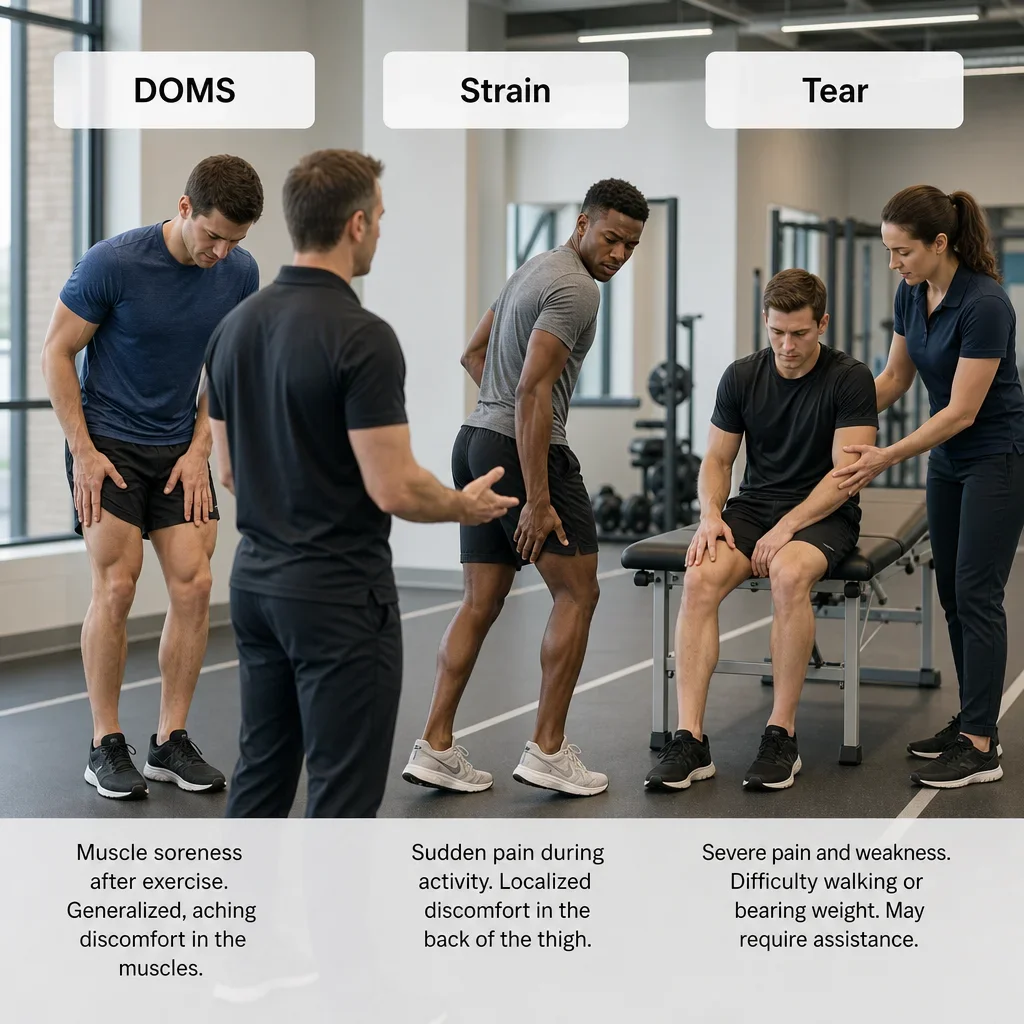
Hamstring soreness vs strain can feel similar at first, but the pattern matters. Delayed muscle soreness usually follows a harder or unfamiliar workout, while a pulled hamstring more often causes focal pain during a specific movement such as sprinting, kicking, slipping, or reaching.
This guide is general education, not a remote diagnosis. A physiotherapy or sports medicine assessment is the safest way to clarify a new hamstring injury, especially when pain, weakness, bruising, or altered walking mechanics are present.
Hamstring Soreness vs Strain: The Quick Answer
DOMS, or delayed-onset muscle soreness, commonly appears after unaccustomed exercise and may peak about 24 to 72 hours later. It is usually broad, achy, and felt in both legs or across a larger area of muscle.
A hamstring strain is an injury to muscle fibres or the muscle-tendon unit. It is more likely when pain begins suddenly during forceful movement, stays in one focal spot, and becomes sharper when the hamstring lengthens or contracts.
A hamstring tear is a more serious form of strain involving greater tissue disruption. Severe pain, marked weakness, a pop, extensive bruising, a visible contour change, or difficulty bearing weight need prompt medical assessment.
Seek urgent care now for inability to bear weight, severe or worsening swelling, a visible deformity, rapidly spreading bruising, fever, chest symptoms, calf swelling, new numbness, or weakness extending beyond the injured area. These symptoms are not safe to self-manage as a routine hamstring injury.
Compare Hamstring DOMS, Strain, and Tear
The timing and effect on movement usually give more useful clues than pain intensity alone. Walking ability, bruising, and a popping sensation can help guide care, but none can confirm or rule out a tear on their own.
| Feature | DOMS | Mild hamstring strain | Moderate strain or partial tear | Suspected severe tear or avulsion |
|---|---|---|---|---|
| Typical onset | Builds after exercise, commonly 24–72 hours later | During or shortly after a forceful movement | Usually sudden during sprinting, kicking, slipping, or stretching | Sudden injury, sometimes with a pop |
| Pain pattern | Diffuse ache and stiffness | Localized tightness or pain | Sharp pain in hamstring with loading | Severe focal pain and major loss of function |
| Walking | Usually normal, though stiff | May be possible with discomfort | May cause a limp | May be very difficult or impossible normally |
| Bruising or swelling | Uncommon | Usually absent or mild | Can develop over time | Can be substantial or rapidly developing |
| Running or sprinting | May be uncomfortable after exercise | Sprinting should stop if painful | Not appropriate to self-clear | Do not attempt |
| Next step | Light movement if symptoms settle | Relative rest and monitor function | Assessment is advisable | Prompt medical assessment |
“Pulled hamstring” is everyday language, not a precise diagnosis. It can describe anything from a mild strain to a more significant hamstring tear, which is why function and injury mechanism matter.
Is It Safe to Walk, Train, or Run With Hamstring Pain?

Walking can be possible with a mild strain, but walking without a limp does not prove the injury is minor. A person may tolerate ordinary walking yet still lack the strength and lengthening control needed for running, acceleration, or jumping.
Stop sprinting, jumping, kicking, deep stretching, and hard acceleration when they cause sharp pain, weakness, a limp, or symptoms that worsen afterward. Those actions place high force through the hamstring at long muscle lengths.
Use this traffic-light guide to make a conservative activity decision.
- Green: Mild, improving soreness after exercise with normal walking and no focal weakness. Easy movement may be tolerated if symptoms settle rather than build.
- Amber: Focal pain, a protective limp, weakness, pain during everyday stairs, or symptoms that persist after reduced activity. Arrange a physiotherapy or sports medicine assessment.
- Red: A pop, major bruising, severe weakness, inability to walk normally, visible deformity, or rapidly worsening pain. Seek prompt medical care.
A grade 2 hamstring injury should not be cleared for sport simply because walking is possible. Partial injuries can still impair force production and raise reinjury risk during a sudden return to running.
How to Check a Possible Pulled Hamstring Without Self-Diagnosing
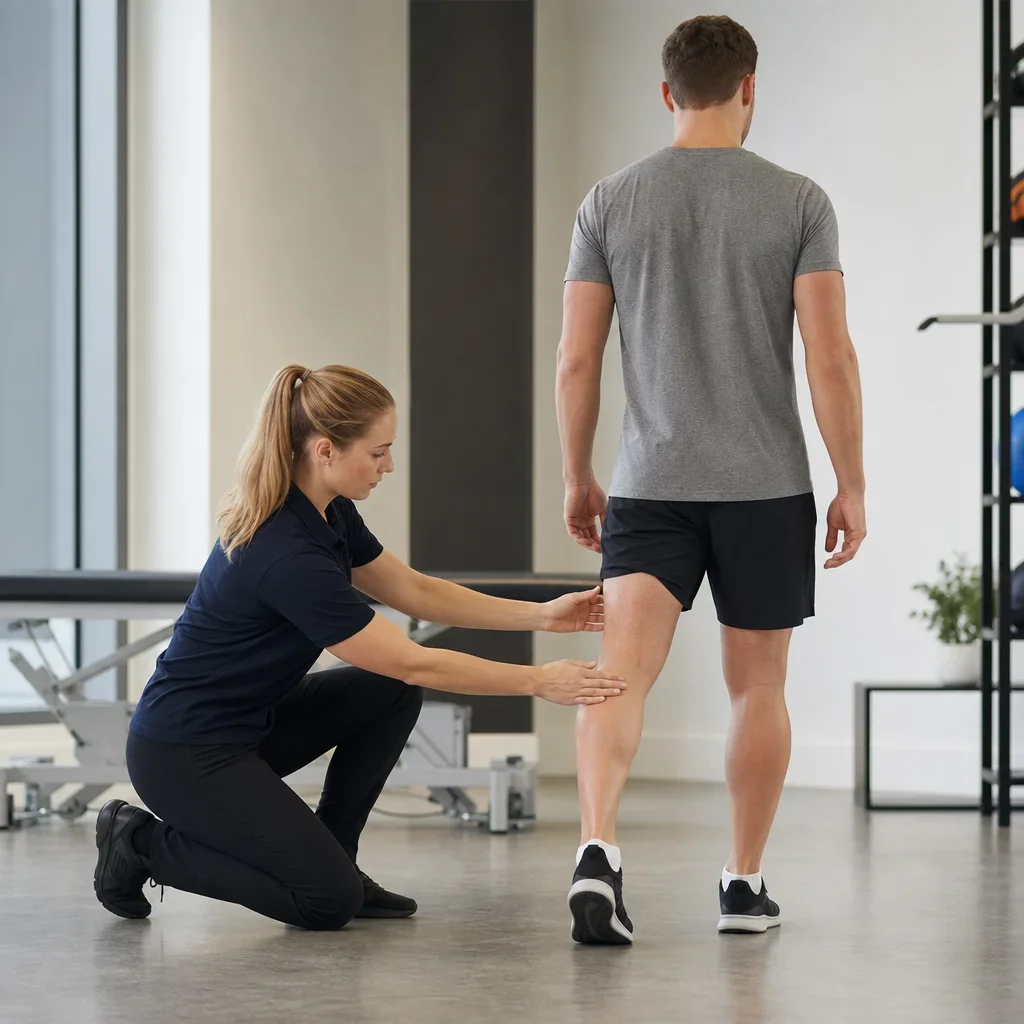
A safe pulled hamstring test is an observation check, not a challenge test. Note whether symptoms started during one specific movement or developed gradually after training.
Compare your walking pattern, ability to bend and straighten the knee comfortably, location of tenderness, and whether ordinary movement creates sharp pain or weakness. Focal tenderness and pain during gentle loading are more concerning for a strain than generalized post-workout stiffness.
Do not force a hamstring stretch, perform a maximal strength test, or repeatedly sprint to see whether it has improved. These actions can aggravate an acute injury and do not reliably identify the grade of a tear.
A clinician assessment usually includes injury history, gait, range of motion, strength, palpation, and movement testing. Imaging is considered selectively when the examination suggests a significant tear, tendon injury, avulsion, or another diagnosis.
Hamstring Strain Grades: What Grade 1, Grade 2, and Grade 3 Can Feel Like
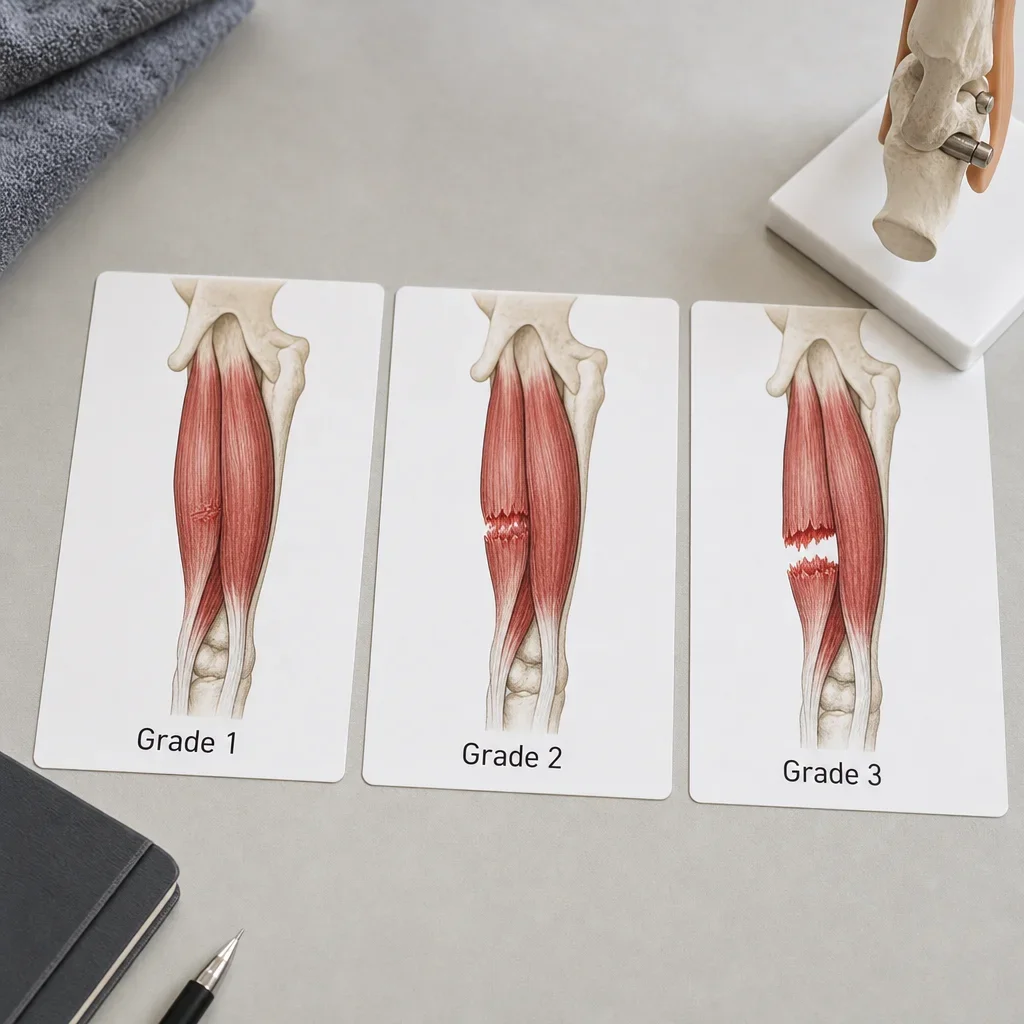
Grade 1 hamstring strain symptoms are usually milder and may include localized tightness, discomfort with faster movement, and limited strength loss. A grade 1 hamstring strain recovery time can still vary because pain reduction does not automatically restore sprinting capacity.
Grade 2 injuries describe a more substantial partial strain. They may involve sharper pain, weakness, swelling or bruising, and reduced tolerance for walking, running, or stairs.
Grade 3 injuries refer to a severe complete tear or clinically significant tendon injury. They can cause major functional loss and need specialist assessment because some tendon avulsions may require surgical consultation.
Pain high near the sitting bone after forceful hip flexion with knee extension deserves prompt assessment. That mechanism can involve the proximal hamstring tendon rather than a simple mid-muscle strain.
What to Do in the First Few Days, and What Not to Do

The first goal is to protect the hamstring from reinjury while maintaining comfortable movement. Relative rest means pausing the activities that reproduce sharp pain, rather than automatically staying completely still.
Cold packs and compression can be used for short-term symptom relief if they feel comfortable. Keep a barrier between cold and skin, and stop if numbness, tingling, colour change, increasing pain, or circulation concerns develop.
A compression wrap should feel supportive, not restrictive. Loosen or remove it if the foot becomes numb, cold, pale, blue, increasingly painful, or swollen below the wrap.
Medication choices should be individualized with a pharmacist or physician. Anti-inflammatory medicines can interact with other medications and may not suit people with certain medical conditions or bleeding risks.
Avoid after a suspected strain: aggressive stretching into pain, massage directly over an acutely bruised area, repeated sprint testing, returning because pain temporarily settles, and ignoring a limp. The fastest way to heal a hamstring strain is usually appropriate loading progression and avoiding a second injury, not forcing a shortcut.
How Long Does a Sore or Strained Hamstring Last?
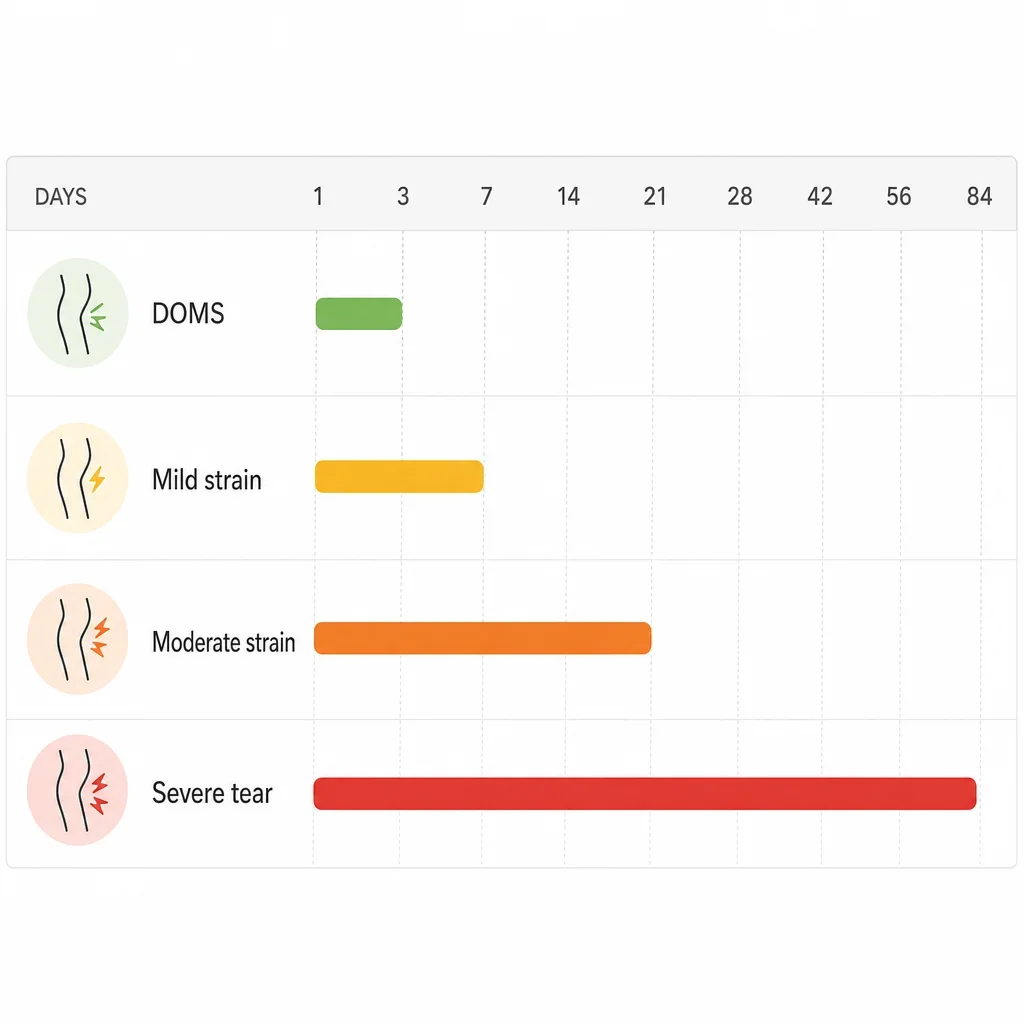
DOMS commonly improves over several days and is often settled within about 1 week. A sore hamstring that is not improving, becomes more focal, or affects normal walking should be assessed rather than assumed to be ordinary training soreness.
Recovery time depends on injury location, severity, prior hamstring injury, training demands, and rehabilitation progression. Pain settling is only one part of recovery; hamstring strength, tolerance to lengthening, and running control may lag behind.
| Condition | Typical symptom timeline | What changes the timeline |
|---|---|---|
| DOMS | Several days to about 1 week | Training novelty, workload, sleep, and recovery habits |
| Mild strain | Days to a few weeks | Location, loading demands, previous injury, and rehabilitation |
| Moderate strain or partial tear | Several weeks to a few months | Strength loss, bruising, tendon involvement, and return-to-sport demands |
| Severe tear or surgical case | Several months or longer | Tendon involvement, surgical plan, complications, and rehabilitation progression |
A slightly pulled hamstring can improve without surgery, but self-managing does not mean ignoring it. Persistent weakness, recurrent strains, or inability to progress activity normally are reasons for assessment.
When to See a Physiotherapist, Sports Medicine Clinician, or Emergency Service

Prompt assessment is appropriate after a pop, notable bruising, focal pain with weakness, limping, repeat hamstring injuries, or uncertainty about returning to running. Physiotherapy can assess movement mechanics and build a progressive loading plan rather than relying on rest alone.
MRI or ultrasound may be considered when a clinician suspects a significant tear, tendon injury, avulsion, or uncertain diagnosis. MRI provides detailed soft-tissue information, while ultrasound can assess some superficial muscle and tendon injuries dynamically.
An X-ray does not show a muscle tear directly. It may be used when a clinician is concerned about a bony avulsion or fracture, particularly after a forceful injury near the sitting bone.
Most hamstring injuries do not automatically need surgery. Severe tears and tendon avulsions may need specialist referral, which is why major weakness or high-hamstring injury signs should not be managed by online advice alone.
Could It Be Something Other Than a Hamstring Strain?
High hamstring pain near the sitting bone that is aggravated by sitting or repeated hip hinging can follow a tendon-related pattern. Persistent tendon-area symptoms deserve assessment because tendon loading is managed differently from an acute muscle strain.
Pain travelling from the low back or buttock, tingling, numbness, or symptoms extending below the knee can suggest nerve or referred-pain involvement. These clues do not diagnose a nerve problem, but they make an isolated hamstring strain less certain.
Pain concentrated behind the knee should not automatically be labelled a hamstring injury. Swelling, calf symptoms, unexplained onset, warmth, redness, breathlessness, or chest pain need urgent medical review because non-muscle causes must be considered.
Rehabilitation and Return to Running or Sport
Hamstring rehabilitation progresses from comfortable movement to strength, longer-length loading, and sport-specific speed. A return to running after hamstring strain should be based on function, not a calendar date alone.
A clinician may assess eccentric hamstring strength, hip and trunk control, running mechanics, acceleration, deceleration, and recent training-load changes. Eccentric work means the hamstring produces force while lengthening, which is a demand seen during sprinting and deceleration.
Return-to-sport readiness usually includes normal walking and running mechanics, no meaningful symptoms during or after graded loading, restored range of motion and strength appropriate to the individual, and successful exposure to sport-specific demands. A runner, soccer player, and gym-goer do not all need the same final test.
Do not use a generic advanced exercise program as a substitute for assessment after a suspected moderate or severe injury, surgery, or repeated strain. Exercise selection needs to match the injury stage and the demands of the activity you are returning to.
Prevent Another Hamstring Strain
Hamstring injury prevention is more than stretching. It involves building strength gradually, preparing for speed and long-length loading, and avoiding sudden jumps in training volume or intensity.
Sprinting, acceleration, kicking, jumping, and cutting place high demand on the hamstrings. Slipping, lifting, sudden reaching, and standing from an awkward position can also trigger injuries in active adults who are not playing sport.
A progressive warm-up should match the activity you plan to do. A warm-up can prepare tissues and movement patterns, but it cannot guarantee that a hamstring injury will not occur.
A previous hamstring strain is a useful reason to follow a structured return-to-training plan. Rebuilding hamstring, hip, and trunk capacity alongside gradual exposure to speed can reduce the mistake of feeling better before being ready.
FAQ: Hamstring Pain and Pulled Hamstrings
Is my hamstring sore or strained?
Soreness is more likely when discomfort develops after exercise, feels diffuse, and improves over several days. A strain is more likely when pain is focal, began during a specific movement, and is aggravated by contraction, stretching, or faster movement.
How do I test if I pulled my hamstring?
Use a symptom and function check rather than a forceful test. Observe injury timing, walking pattern, focal tenderness, bruising, and sharp pain with ordinary movement, then seek assessment if weakness, limping, or uncertainty is present.
Is it okay to walk on a strained hamstring?
Some people can walk with a mild strain, but a normal walk does not confirm a mild injury. Stop and seek assessment if walking causes a limp, sharp pain, escalating symptoms, or clear weakness.
Can I walk with a Grade 1 hamstring strain?
Walking may be possible with a grade 1 strain, but grade labels should not be assigned at home. Avoid using walking tolerance as permission to run, sprint, jump, or return to sport.
Can I still walk with a grade 2 hamstring tear?
Some people can walk with a moderate or partial hamstring tear, although walking may be painful or altered. A grade 2 injury needs assessment and should not be self-cleared for training based on walking ability.
How do I tell if my hamstring is torn or pulled?
A tear is a more severe form of pulled hamstring injury. Major weakness, a pop, extensive bruising, deformity, or major function loss increase concern, but an examination and sometimes imaging are needed to clarify severity.
How long should a sore hamstring last?
DOMS commonly improves over several days and is often resolved within about 1 week. Pain that persists, worsens, or limits normal movement should be assessed.
How long does a slightly pulled hamstring take to heal?
Mild strains may improve over days to a few weeks. Return to sprinting or sport can take longer because symptoms may improve before strength and high-speed tolerance fully return.
What is the fastest way to heal a strained hamstring?
There is no reliable two-day fix. The safest route is appropriate activity modification, gradual loading, avoiding reinjury, and assessment when symptoms or function are concerning.
Can a strained hamstring heal itself?
Some mild strains improve with conservative care, but persistent pain, weakness, repeat injuries, bruising, or difficulty progressing activity need clinical assessment. A strain that settles at rest can still be unready for fast running.
When do I need an MRI or ultrasound for hamstring pain?
Imaging is usually considered when a clinician suspects a significant tear, tendon injury, avulsion, or another uncertain diagnosis. It is not required for every sore hamstring.
The Practical Next Step
Do not judge a hamstring injury by one sign, such as whether you can walk or whether bruising is visible. Compare the onset, pain location, weakness, movement quality, and response to gradual activity.
If you felt a pop, have bruising or limping, cannot return to normal activity, keep reinjuring the area, or are unsure about running again, book a downtown Toronto physiotherapy or sports medicine assessment. A biomechanics-led evaluation can help establish what loads the hamstring currently tolerates and what needs to improve before you return to training.