
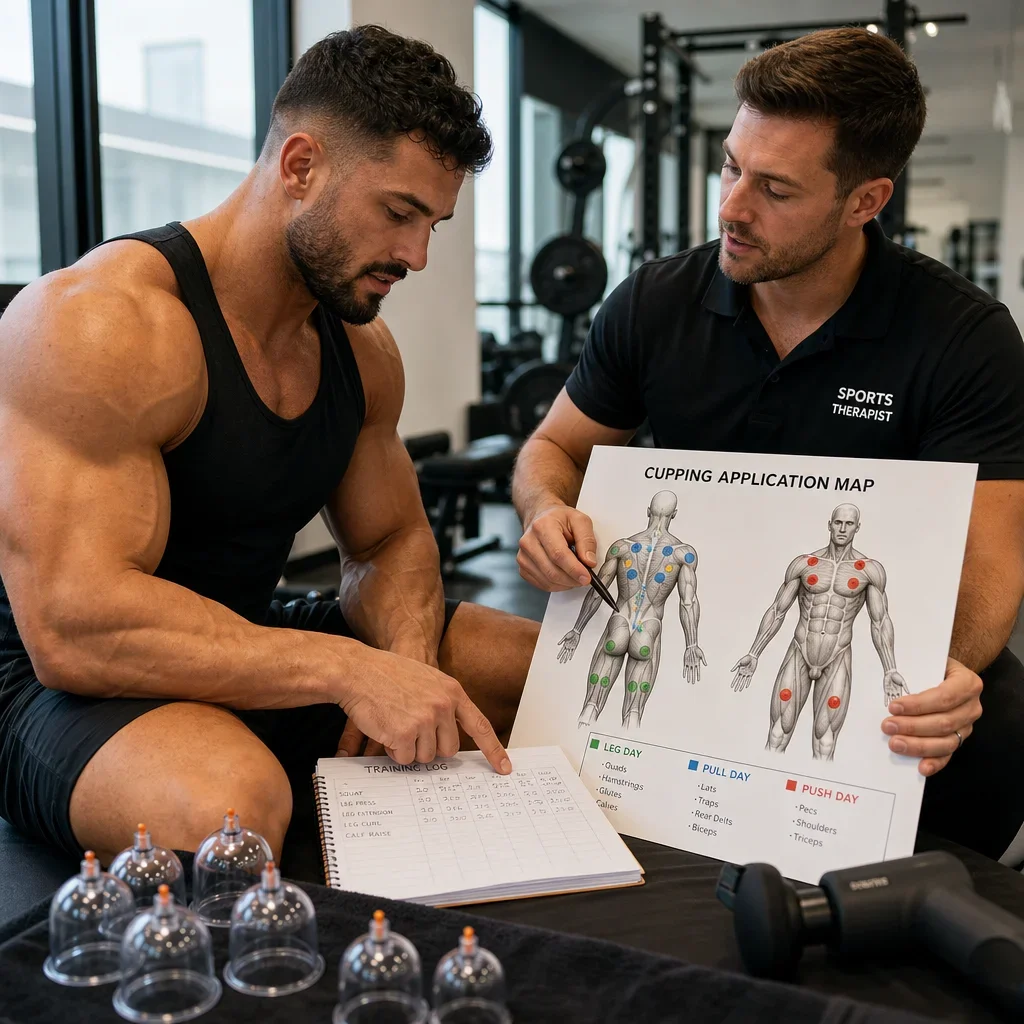
Cupping for bodybuilders is mostly a recovery tool, not a muscle-building tool. It may help some lifters feel short-term relief in soreness, tightness, or mobility, but it does not directly build muscle, increase hypertrophy, or replace a proper rehab plan.
What Is Cupping for Bodybuilders, and What Is It Actually Used For?
Cupping therapy uses suction on the skin and superficial tissues to create negative pressure . In a sports setting, people usually try it for temporary relief of muscle tightness, post-training soreness, or a stiff area that feels like it is limiting movement .
The main appeal is simple: some athletes feel looser or less sore after treatment. That short-term change can make training, recovery work, or movement practice feel easier, especially when an area has been overworked by pressing, pulling, squatting, hinging, or posing volume .
Cupping is not a direct muscle-growth method. If your goal is hypertrophy, the main drivers are still training volume, intensity, progressive overload, nutrition, sleep, and recovery capacity .
Visible use by elite athletes made cupping more popular, but popularity is not proof. Professional athletes have used many recovery tools over the years, and that tells you the tool is being tried, not that it consistently improves strength or size .
Does Cupping Help Muscle Recovery, Performance, or Muscle Growth?
Cupping may help muscle recovery in a narrow sense, but mostly for short-term symptoms. The best case is usually less perceived tightness, temporary pain relief, or a modest improvement in range of motion, which is different from improved strength, power, or muscle gain .
That distinction matters for athlete recovery. Feeling better for a day or two can still be useful if it helps you tolerate training, complete rehab exercises, or move more comfortably between sessions .
There is no strong basis to claim cupping directly increases hypertrophy or performance in resistance-trained athletes. If a lift improves after treatment, the more likely explanation is short-term symptom change or easier movement, not a direct anabolic effect .
Severe soreness, one-sided pain, loss of strength, or repeated flare-ups usually point to a bigger issue than recovery alone. In that case, training load, technique, tissue irritability, or an actual injury matters more than any passive treatment .
How Cupping May Work: What We Know, What Is Theoretical, and What Is Marketing Hype
Cupping works by applying suction, which changes pressure in the skin and superficial soft tissue . That pressure may alter local sensation, create a stretching effect on the skin and fascia-like layers, and temporarily change how an area feels during movement .
The clearest sports-medicine explanation is symptom modulation, not structural correction. A shoulder can feel looser after dry cupping or moving cupping without the underlying reason for the restriction being fixed .
Claims that cupping releases toxins are not well supported. Marks after treatment are a skin response to suction, not proof that anything toxic was pulled out of the body .
That is why the benefits of cupping need context. If the actual driver is poor scapular control, overloaded calves, a pec minor restriction, or a progression error in training, lasting change usually comes from exercise, programming, and biomechanics-led treatment rather than suction alone .
Types of Cupping: Dry, Moving, Static, Fire, and Wet Cupping
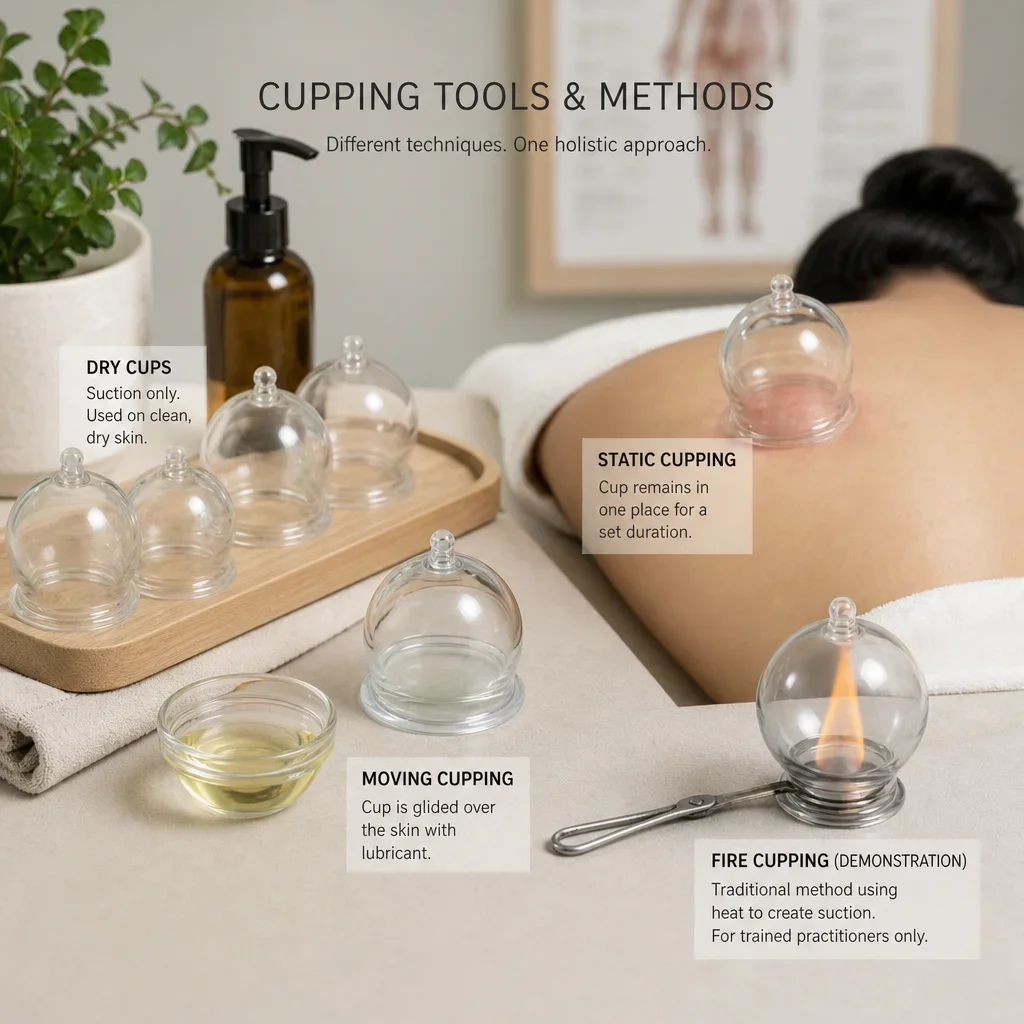
Dry cupping is the form most athletes mean. It uses suction only, with no skin incision, and it is the version most relevant in a regulated rehab or sports medicine setting .
Static cupping means the cups stay in one place for a short period. Moving cupping means the provider glides the cup over the skin, usually with a lubricant, to treat a broader area and change how tissue movement feels .
Fire cupping uses heat to create suction inside a cup before it is placed on the body. It exists, but it adds burn risk and is not something to treat like a DIY recovery trick .
Wet cupping is different from dry cupping because it involves breaking the skin. That adds bleeding and infection concerns, so it falls outside what most bodybuilders are actually looking for in a sports recovery conversation .
| Type | How it is done | Common use case | Main upside | Main risk | Fit in athlete care |
|---|---|---|---|---|---|
| Dry cupping | Suction cup placed on skin | Local tightness or soreness | Simple, targeted | Marks, tenderness, irritation | Commonly discussed |
| Static cupping | Cup stays in one spot | Focused treatment area | Precise placement | Too much local sensitivity | Commonly used |
| Moving cupping | Cup glides over skin | Broader muscle area | May feel less pinchy, covers more tissue | Irritation from friction or suction | Often relevant for athletes |
| Fire cupping | Heat creates suction | Less common in rehab settings | Traditional method | Burn risk, technique dependent | Use caution |
| Wet cupping | Skin is broken before or after suction | Not typical sports recovery care | Different intent entirely | Bleeding, infection risk | Usually not the athlete-first option |
Best Use Cases for Bodybuilders: Training Phase, Weekly Split, and Muscle Group Examples
Cupping makes the most sense when the problem is local tightness, mild soreness, or a temporary mobility complaint. It makes less sense when the real issue is sharp pain, strength loss, nerve symptoms, or a pattern that keeps returning under load .
After leg day, some lifters ask about quads, adductors, calves, hamstrings, or glutes. That can be reasonable if the area feels beat up and stiff, but if walking hurts, swelling is increasing, or one side feels weak, assessment matters more than a recovery add-on .
After pull day, traps, lats, posterior shoulders, thoracic tissues, and forearms are common targets. These areas can feel dense and overworked after rows, pulldowns, deadlifts, curls, and grip-heavy work, but placement still depends on skin tolerance, contour, and the exact pain pattern .
After push day, bodybuilders usually ask about pecs, front delts, triceps, and the shoulder girdle. This is where I would be careful, because restricted pressing mechanics can come from the cuff, biceps tendon, thoracic mobility, scapular control, or bench setup, not just local tightness .
Deload weeks are often a better time than peak loading weeks to try a passive treatment. When total fatigue is lower, you can judge whether the treatment actually helps movement and recovery instead of piling it on top of hard training stress .
Bulking, cutting, and competition prep also change the decision. During prep, visible marks may matter for posing practice, tanning, photo shoots, and stage appearance, so even a useful treatment can be bad timing if the skin needs to look clean .
| Weekly split scenario | Common complaint | Could cupping help? | Priority level |
|---|---|---|---|
| Heavy leg day | Quad or calf tightness | Possibly for short-term relief | Optional |
| Pull day with grip fatigue | Forearm or lat tightness | Possibly if symptoms are local | Optional |
| Push day with shoulder pinch | Pain in pressing pattern | Only after assessment of mechanics | Not first priority |
| Deload week | General stiffness | Reasonable time to trial it | Reasonable |
| Peak week or photo shoot week | Visible marks are a problem | Usually poor timing | Often avoid |
When to Schedule Cupping Around Workouts
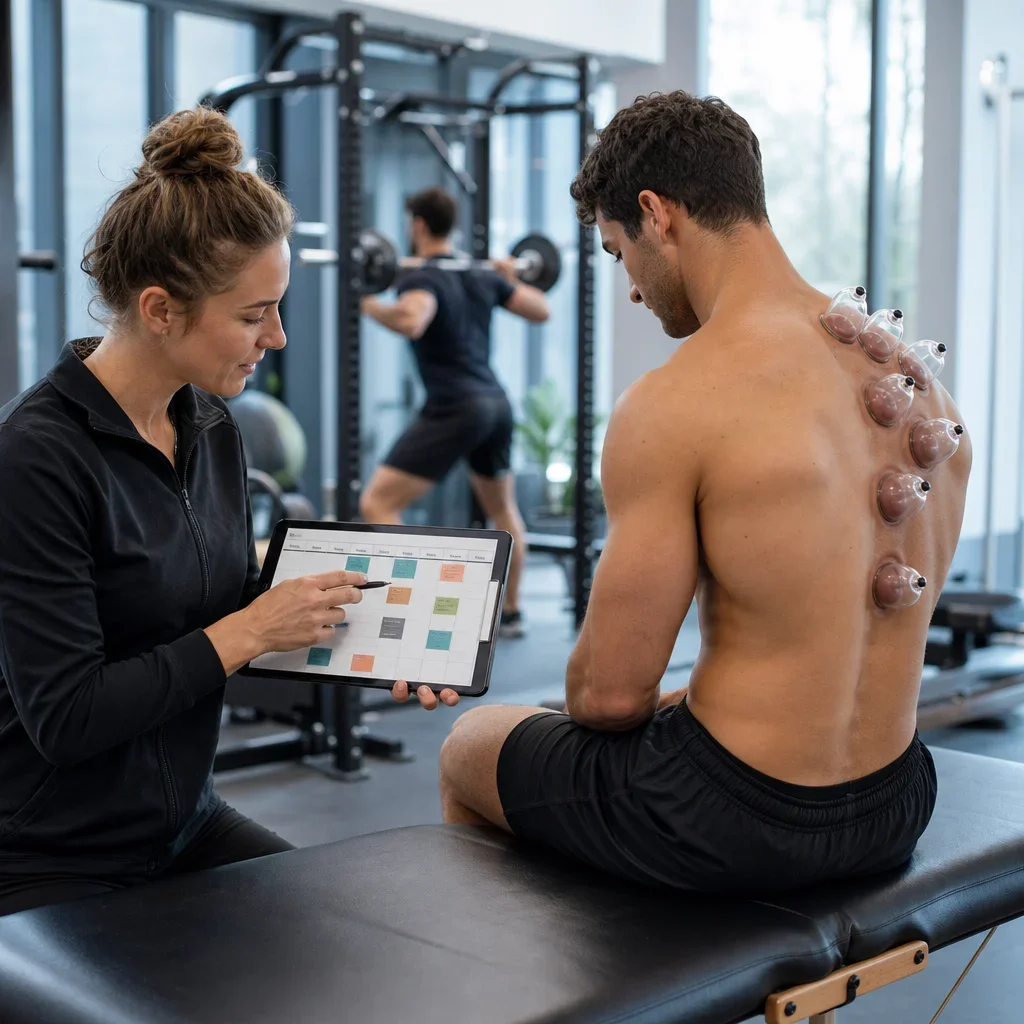
Cupping usually fits better after heavy sessions or on lighter training days than right before maximal lifting. An aggressive session can leave the area tender or sensitive, which is the opposite of what you want before a heavy squat, bench, deadlift, or overhead session .
A typical hands-on treatment visit in rehab or manual therapy practice is often around 30 to 60 minutes, depending on whether cupping is used alone or combined with assessment, exercise, or other treatment . The actual time spent with cups on the skin varies by provider and area treated, so you need clinician guidance rather than a generic number for your situation.
The effect, when people do feel one, is usually short-term. Relief may last hours to days, while longer-term change usually depends on fixing the load, movement, or rehab issue behind the symptoms .
Frequency should follow your response, skin tolerance, and training plan. If marks linger, if the tissue stays irritated, or if you are relying on repeated sessions just to train through the same pain, that is a sign to reassess the plan .
Pre-Session and Post-Session Checklist
A good pre-session screen starts with the basics. The provider should ask about current pain, recent training, skin irritation, medications, bleeding risk, and whether there is any sharp pain, numbness, tingling, or unexplained swelling .
A useful session goal should be specific. Better questions are whether the treatment is meant to calm a sore calf, ease upper-back tightness, or help shoulder motion feel less restricted during rehab work .
Post-session care should stay simple. Mild tenderness, temporary discoloration, and local sensitivity can happen, so the next step is usually to monitor the area, avoid treating the marks like an injury, and judge the result by function, not just by how dramatic the skin looks .
If the area feels worse, bruising is excessive, or symptoms spread beyond expected skin sensitivity, stop treating it as normal soreness. That is when you want a clinician to reassess rather than repeat the same approach .
Risks, Side Effects, and Who Should Avoid Cupping
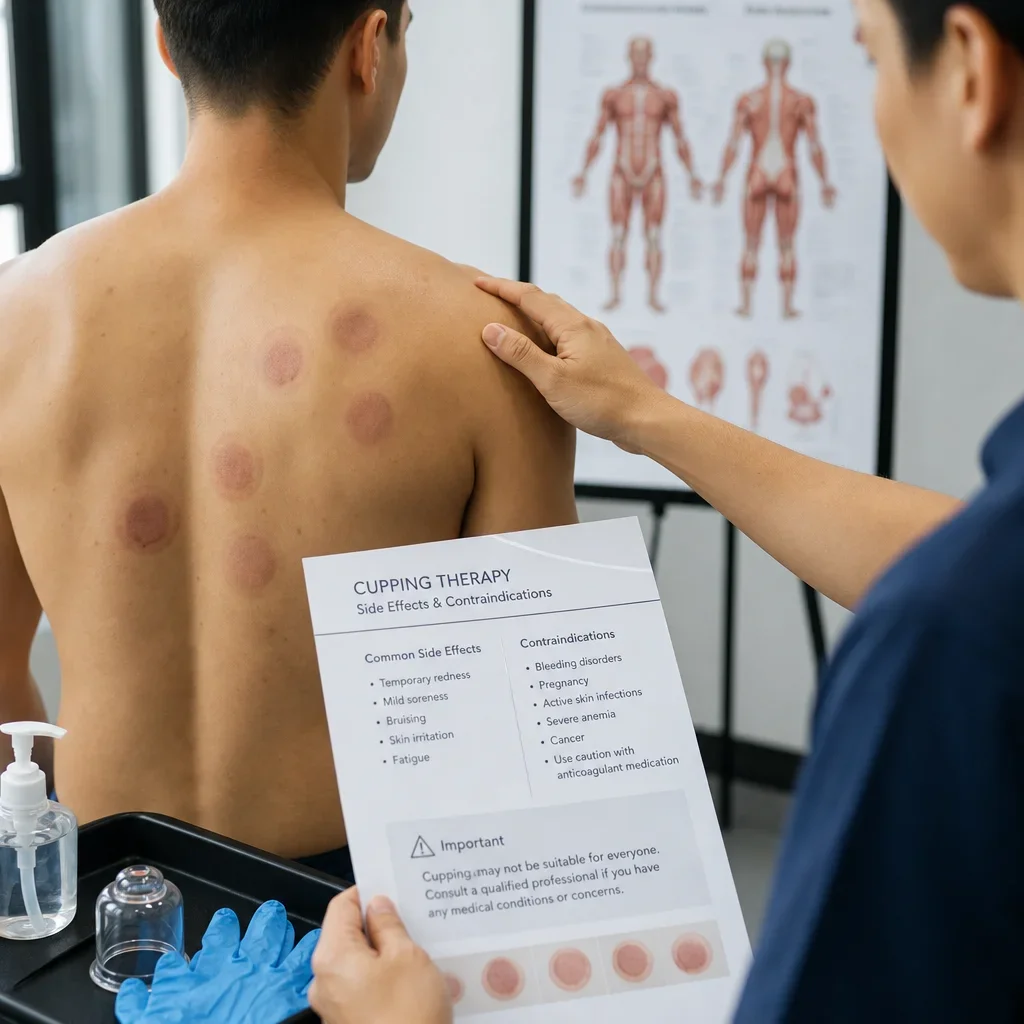
The common downsides of cupping are marks, tenderness, skin irritation, and temporary soreness. Those are expected risks even when technique is reasonable .
The bigger concern is poor technique or poor judgment. Severe pain during treatment, blistering, broken skin, major swelling, or symptoms that worsen instead of settling are not normal signs of an effective session .
People with open wounds, active skin infections, fragile skin, or a known bleeding risk need extra caution. Medication history also matters, especially if a drug affects clotting, bruising, skin quality, or healing .
Pregnancy, diabetes, circulation issues, and clotting disorders are situations where individualized medical guidance matters. That is exactly where general advice online falls short, because safety depends on the person, the area being treated, and the reason for treatment .
If you have sharp pain, obvious loss of strength, repeated giving way, nerve symptoms, or a suspected tear, cupping is not the main issue. You need an assessment to rule out a strain, tendon problem, joint issue, or neural irritation before layering on passive care .
What Do Cupping Marks Mean, and How Long Do They Last?
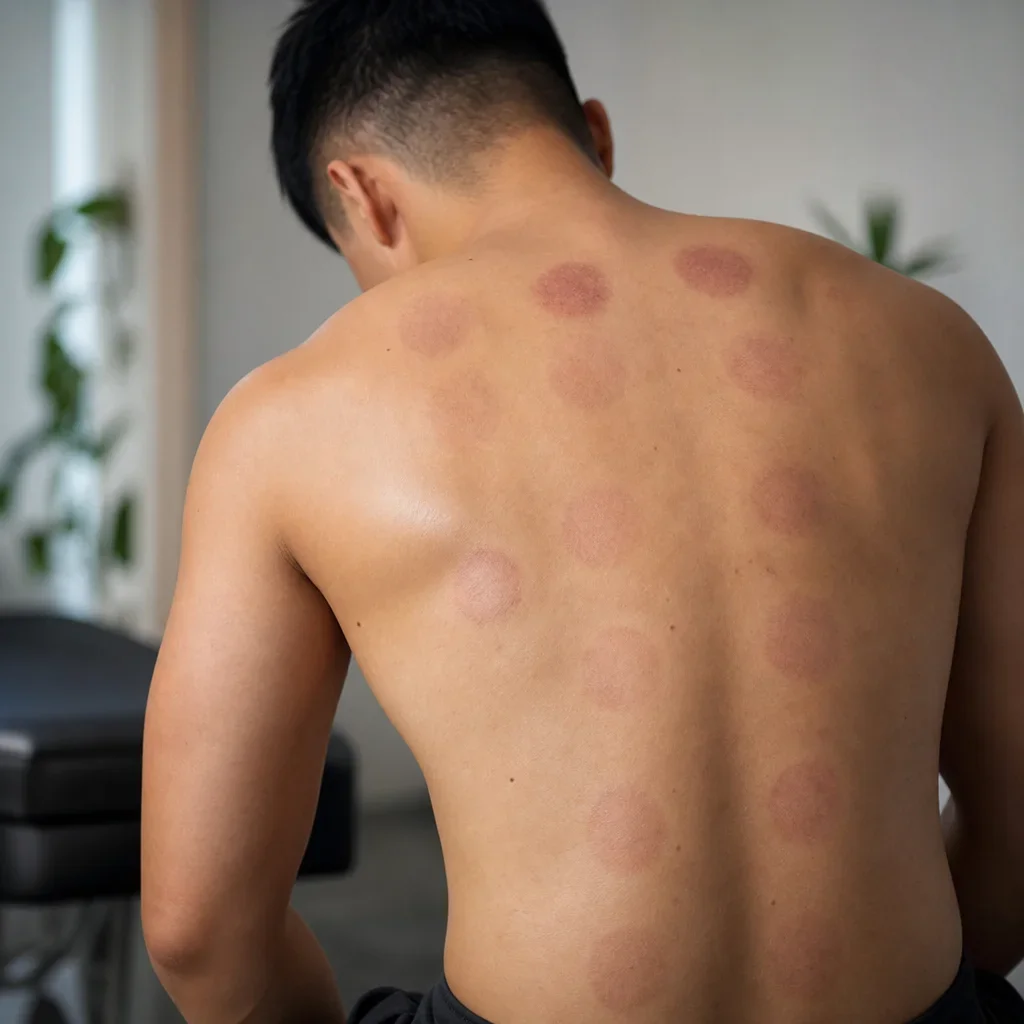
Cupping marks are a local skin reaction to suction, not a map of toxins leaving the body. Colour, shape, and darkness are not standardized diagnostic signs in evidence-based sports care .
For bodybuilders, the practical issue is visibility. Marks can be awkward for check-in photos, tanning, posing practice, beach trips, or competition prep, even if the treatment itself felt fine .
The marks often fade over days, but the exact timeline depends on skin sensitivity, suction strength, area treated, and how your skin tends to bruise or discolor . If you have an event coming up, ask about appearance before treatment instead of after.
Painful marks, blistered areas, or discoloration that looks excessive for your usual skin response should be reviewed. The goal is controlled symptom relief, not dramatic skin trauma .
Cupping vs Foam Rolling, Massage Guns, Sports Massage, Stretching, and Cryotherapy
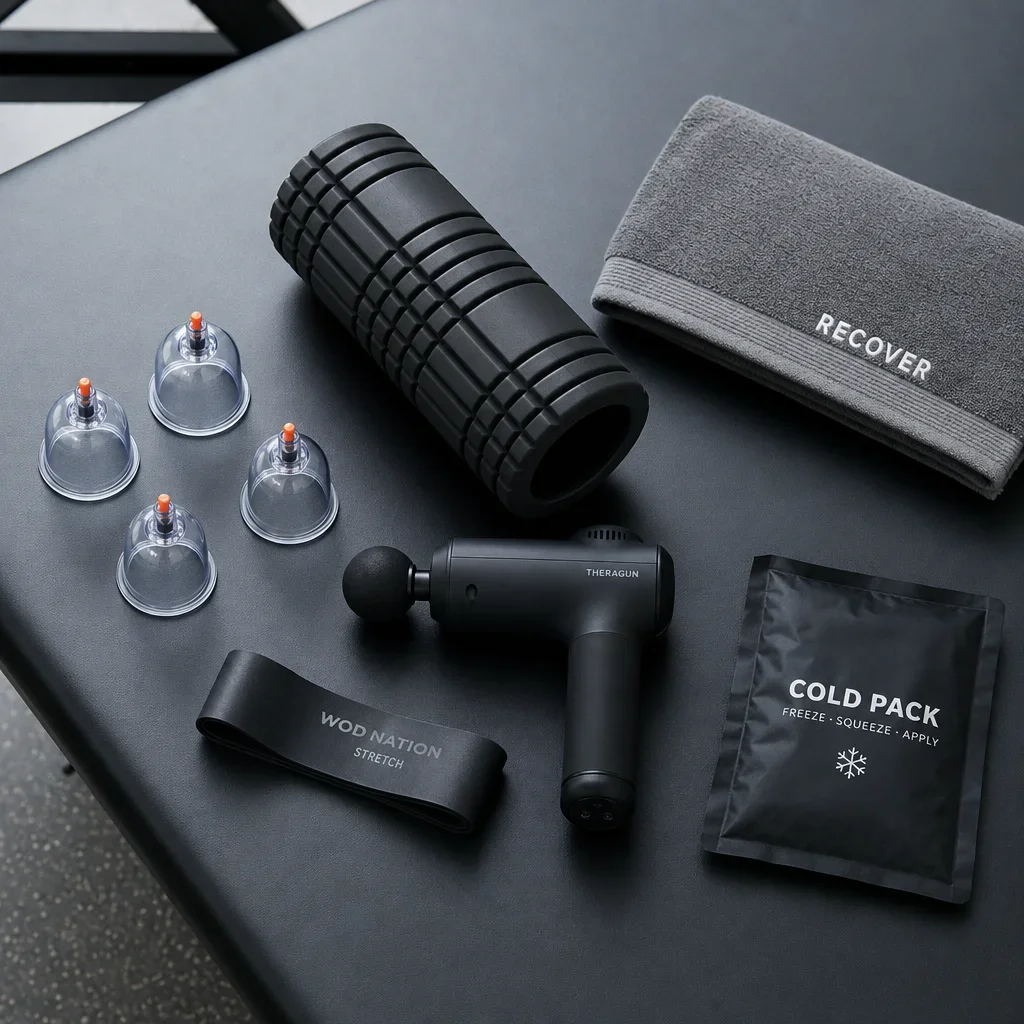
Cupping is one recovery tool, not the default best one. The right choice depends on whether you want general soreness relief, a quick self-care option, hands-on treatment, or a real assessment of recurring pain .
Foam rolling is usually the most practical self-management option because it is cheap, repeatable, and easy to use around training. It can help with temporary stiffness, but it still does not fix a loading or technique problem by itself .
Sports massage can make more sense when a larger area needs hands-on treatment. It also avoids the visible marks some athletes dislike, which matters during prep or when photos are part of the plan .
Massage guns are convenient for home use, but convenience does not equal better care. They are fine for short-term symptom work, yet a recurring shoulder, hip, or back issue still needs a movement-based explanation .
Stretching can help if the issue is true motion restriction or poor tolerance to end range. It is less useful when the real problem is tissue irritability, joint mechanics, or fatigue from too much volume .
Cryotherapy and cold exposure may reduce discomfort for some people, but they are broad recovery strategies, not targeted answers to a local movement problem. If the issue is exercise pain, technique breakdown, or asymmetry, assessment beats stacking more passive tools .
| Tool | Best use case | Main upside | Main drawback | When assessment is smarter |
|---|---|---|---|---|
| Cupping therapy | Local tightness or soreness | Short-term relief, targeted feel | Marks, skin sensitivity | Recurring or unclear pain |
| Foam rolling | General stiffness | Cheap, self-managed | Temporary effect | Pain changes your mechanics |
| Sports massage | Larger sore regions | Broad manual treatment | Cost, access, no root-cause fix alone | Symptoms keep returning |
| Massage gun | Quick home use | Convenient, easy after gym | Easy to overuse, limited assessment value | Numbness, weakness, sharp pain |
| Stretching | Motion tolerance work | Simple, active strategy | Not enough for injury or overload | Range loss is painful or one-sided |
| Cryotherapy | General discomfort relief | Whole-body or broad recovery feel | Not targeted, mixed relevance | Local pain affects lifting pattern |
At-Home Cupping: What to Know Before Trying It
Home cupping exists, but it carries more risk than people think. The main problems are too much suction, poor hygiene, wrong placement, and treating symptoms repeatedly without understanding the cause .
I would avoid treating over irritated skin, bony areas, unexplained pain, or tissue you think may already be injured. That is where home care can turn a manageable issue into a more confusing one .
Red flags for bad technique are straightforward. Excessive pain, numbness, tingling, blistering, broken skin, very dark widespread marks, or worse symptoms after the session all point to stopping and getting professional guidance .
If you are searching cupping therapy near me because the same pain keeps coming back after the gym, that is a clue. Recurrent pain is usually more about load, movement, or tissue tolerance than about not owning the right recovery gadget .
What the Evidence Says About Cupping for Athletes
The evidence for cupping therapy is mixed. Some studies in pain and musculoskeletal populations suggest short-term symptom relief, but that is not the same as proving meaningful benefits for bodybuilding outcomes like hypertrophy, strength, or power .
That gap matters because strength athletes ask a different question from general pain patients. A bodybuilder wants to know whether the tool helps them recover, move, and train better under load, not just whether it changes pain scores in a broad population .
User experience can still be positive when evidence is mixed. That is normal in rehab, but it is not a reason to overstate claims or market cupping as a proven performance enhancer .
The most reasonable position is that cupping may be an adjunct. It fits best when it supports a broader plan that includes exercise therapy, load management, movement analysis, and a clear return-to-training strategy .
If tightness, soreness, or pain keeps returning, a physiotherapy Toronto or sports medicine Toronto assessment is usually more useful than repeating passive care. The point is to find the actual driver and then decide whether cupping belongs in the plan .
How to Find a Qualified Cupping Provider for Athletes in Toronto
The best provider is assessment-first, not modality-first. For athletes, that means someone who can explain when cupping fits, when it does not, and what they would pair it with to address the actual movement or training problem .
In Toronto, look for a regulated clinician where appropriate and a setting that regularly sees lifters, runners, field athletes, and active adults. A sports medicine Toronto or physiotherapy Toronto clinic should be able to discuss mechanics, tissue tolerance, rehab loading, and return to sport, not just passive recovery options .
Good questions to ask are practical. Ask how they decide if cupping fits your issue, what red flags would make them avoid it, and how they would time treatment around your split, your sport, or your competition calendar .
A performance-rehab setting usually gives more value than a spa-style passive treatment model. Biomechanics, exercise selection, and individualized planning matter more than the cup itself .
When to Book a Physio or Sports Medicine Assessment Instead of Just Trying Cupping
Book an assessment first if pain is sharp, keeps changing your form, reduces strength, sends symptoms into the arm or leg, or keeps flaring up with the same lifts .
Post-surgical issues, repeated shoulder pain on bench or overhead work, ongoing back pain under load, and any nerve-like symptom deserve more than a recovery add-on. Those patterns need diagnosis-informed rehab and return-to-training planning .
This is where physiotherapy Toronto, sports medicine Toronto, or a chiropractor downtown Toronto may be more useful than cupping alone. The goal is not endless passive treatment. The goal is to get you lifting with better mechanics, less recurrence, and more confidence .
Cupping can still be part of that plan. It just works better when it is chosen for a reason, timed properly, and paired with exercise and load changes that address the real problem .
FAQ
Is cupping good for muscle building?
Not directly. Cupping for bodybuilders may help short-term soreness or mobility, but muscle growth still depends on training, nutrition, sleep, and recovery capacity .
Why do bodybuilders do cupping?
Most do it for temporary relief of tightness, soreness, or a stiff area that feels restricted after training .
What are the downsides of cupping?
The main downsides are marks, tenderness, skin irritation, and the risk of poor technique or poor timing around hard training .
Does cupping actually release toxins?
No detox claim is well supported here. The marks are a skin response to suction, not proof that toxins were removed .
How long do cupping results last?
When people do feel a benefit, it is usually short-term and may last hours to days. Longer-lasting change depends on treating the cause of the problem .
Do professional athletes do cupping?
Yes, some do. That shows it is used in sport, not that it is proven to improve performance for everyone .
Does cupping help sore muscles after lifting?
It may help some lifters feel less sore or less tight for a short period. It is not the main fix for overload, poor programming, or injury .
Can cupping improve mobility for squat, bench, or overhead work?
It may temporarily improve how movement feels, but lasting mobility change usually needs exercise, technique work, and load management .
Is dry cupping better than moving cupping for athletes?
Neither is automatically better. Dry cupping and static cupping are more targeted, while moving cupping may suit a broader region. The choice depends on the tissue, symptom, and goal .
Can I do cupping at home after the gym?
You can buy kits, but home use raises the risk of too much suction, poor placement, and repeated self-treatment of a problem that needs assessment .
How long do cupping marks last?
They often fade over several days, but skin response varies with suction strength, area treated, and individual skin sensitivity .
When should I see a physio instead of trying cupping?
See a clinician if pain is sharp, one-sided, recurrent, affects strength or form, or comes with numbness, tingling, swelling, or post-surgical concerns .
If your soreness or tightness keeps coming back, the next step is simple: get the pattern assessed before chasing more recovery tools. A downtown Toronto sports clinic can help you decide whether cupping therapy belongs in your plan, or whether exercise, manual care, sports massage, or a fuller rehab approach makes more sense.