
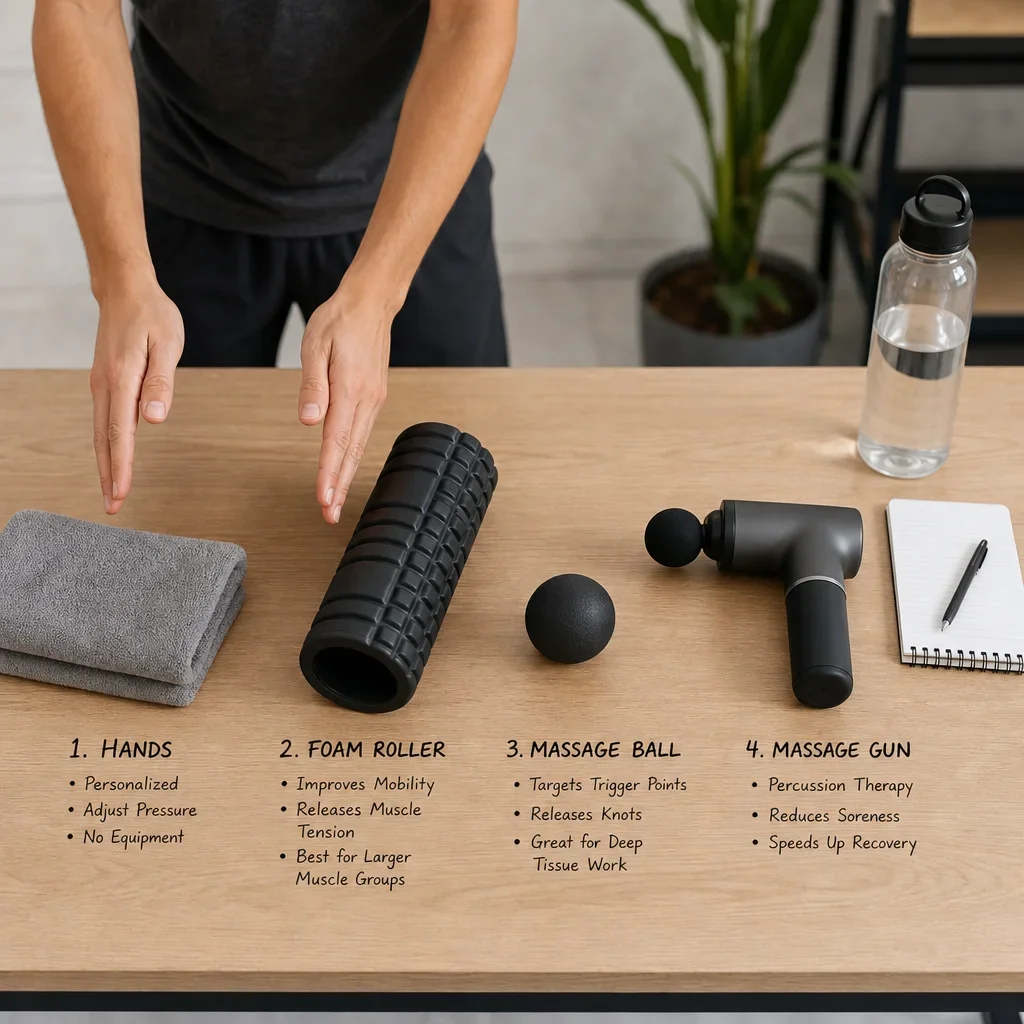
The best massage for sports recovery is not one technique for everyone. It depends on whether you want less soreness, better movement, pre-event prep, post-workout recovery, or help around an injury.
Quick answer: the best massage for sports recovery depends on your goal
Sports recovery massage usually fits best when the goal is athlete-specific recovery, training support, or return to movement after hard sessions. Deep tissue massage can help selected areas of chronic tension, but deeper is not automatically better. Foam rolling recovery and massage gun recovery tools can work for simple, familiar soreness when you use them carefully. Acute injury, marked swelling, numbness, tingling, unexplained weakness, or suspected tear need assessment first, not aggressive massage.
A simple way to choose is this. Sports massage is usually the better fit for training phases, event prep, and post-exercise care. Deep tissue massage is more about pressure and depth than purpose. A post-workout massage should usually calm tissue down, not fight it. If symptoms are persistent or unclear, a clinician should assess biomechanics, strength, loading, and joint function before anyone chases tightness.
Comparison table: sports massage vs deep tissue vs foam roller vs massage gun
The fastest way to choose is to compare each option by goal, feel, convenience, and risk.
| Option | Best for | Not ideal for | Expected feel | Convenience | Relative cost | Risk / cautions | Get assessed first? |
|---|---|---|---|---|---|---|---|
| Sports massage | Training recovery, post-event recovery, movement-focused care, sport-specific tension | Severe acute injury, unexplained nerve symptoms, major swelling | Adjustable from light to firm | Low to medium | Medium | Pressure should match irritability and goals | Yes if pain is sharp, recurrent, or injury-related |
| Deep tissue massage | Selected chronic tightness patterns, localized dense-feeling areas | Day-before competition, highly irritated tissue, acute strains | Usually firmer and more targeted | Low to medium | Medium | Can flare symptoms if too aggressive | Yes if symptoms are persistent or radiating |
| Foam roller | Broad muscle groups, simple home maintenance, budget recovery | Acute injury, bony areas, altered sensation | Broad pressure | High | Low | Easy to overdo on sore tissue | Yes if pain is unusual or worsening |
| Massage ball | Small areas like glutes, calves, pecs, foot | Nerve-like pain, bruised tissue, front of neck | Focused pressure | High | Low | More intense over small spots | Yes for sharp or referred pain |
| Massage gun | Brief self-treatment for familiar muscle soreness | Spine, throat, chest, swollen tissue, numb areas | Percussive and stimulating | High | Low to medium | User error is common around sensitive structures | Yes if symptoms are not clearly muscle soreness |
| No massage, get assessed | Sudden injury, weakness, numbness, swelling, joint instability, night pain | Simple short-term training soreness | Not applicable | Medium | Medium to high | Lower risk than guessing wrong | Yes |
Sports massage vs deep tissue is not a quality ranking. It is a fit question. A professional session is usually more adaptable in complex cases because the therapist can change pressure, position, and technique in real time. Typical treatment sessions in clinics are often 30–90 minutes , but the right length depends on whether the work is focused to one area or spread across several regions.
What sports massage is and how it differs from deep tissue massage

Sports massage is a goal-based treatment for active people. It is planned around training load, competition timing, soreness, movement limits, and tissue tolerance. Sports massage techniques may include compression, trigger point work, myofascial methods, assisted movement, and targeted soft-tissue treatment, but the pressure can be light, moderate, or firm depending on the goal.
Deep tissue massage describes depth and pressure emphasis more than athletic purpose. A sports massage may include deeper work, but it does not need to. That is the key difference in sports massage vs deep tissue. One is defined by context and goal. The other is defined more by how forceful and targeted the pressure feels.
Relaxation massage is different again. It is usually broader, less performance-specific, and more focused on general stress relief than movement or training outcomes. That does not make it useless. It just means it answers a different problem.
Best option by scenario: DOMS, flexibility, pre-event, post-event, chronic tightness, rehab

For delayed onset muscle soreness, the best massage for sports recovery is usually a lighter, tolerance-based sports massage or simple self-management, not heavy deep tissue. Massage for muscle recovery may reduce perceived soreness and stiffness, but it is not a magic reset after a hard lift or long run. DOMS usually peaks about 24–72 hours after unfamiliar or hard exercise.
For flexibility, massage can improve short-term range of motion, especially when it reduces guarding and is followed by active mobility and strength work. It is usually a temporary change unless you also address the load, control, and movement pattern that created the restriction.
For pre-event care, lighter and more stimulating work is usually the better choice. Massage before or after exercise should match the job. Before competition, aggressive deep tissue can leave some athletes feeling flat, sore, or guarded instead of ready.
For post-event recovery, gentler work usually fits better than intense pressure right away. A post-workout massage should settle the system, not create another stressor on already sensitized tissue. Hydration, food, sleep, and load management still matter more to total recovery than any hands-on session.
For chronic tightness, repeated deep pressure alone rarely solves the real driver. We see this in runners with calves, lifters with hips, and desk-based athletes with upper traps. If the same area tightens back up every week, the issue may be strength, joint motion, training volume, or movement strategy rather than a tissue that simply needs more force.
For injury rehab, massage is best used as one tool inside a larger plan. If pain is linked to a sprain, strain, tendon irritation, surgery, or return-to-sport progression, massage should support rehab, not replace it. In those cases, physiotherapy, chiropractic, or sports medicine assessment usually gives the clearer path because it can identify what to load, what to modify, and what to avoid.
Does massage actually help recovery? What the evidence suggests
Massage can help some people feel less sore, less stiff, and more ready to move, but it is not a stand-alone recovery system. Recovery is built first on sleep, training load, nutrition, hydration, and programming. Massage sits lower in that hierarchy.
The strongest case for sports massage is short-term symptom relief and perceived recovery. The case is weaker for major changes in objective performance recovery. Research on sports recovery massage varies a lot by technique, pressure, timing, body area, and study population, so broad claims are usually oversold online.
That is why I tell active patients not to judge a recovery tool by hype. Judge it by the problem it solves. If massage helps you move comfortably, train consistently, and tolerate your program better, it can be useful. If it becomes the only thing keeping you functional, you probably need a fuller assessment.
Professional massage vs self-massage tools: when each makes sense
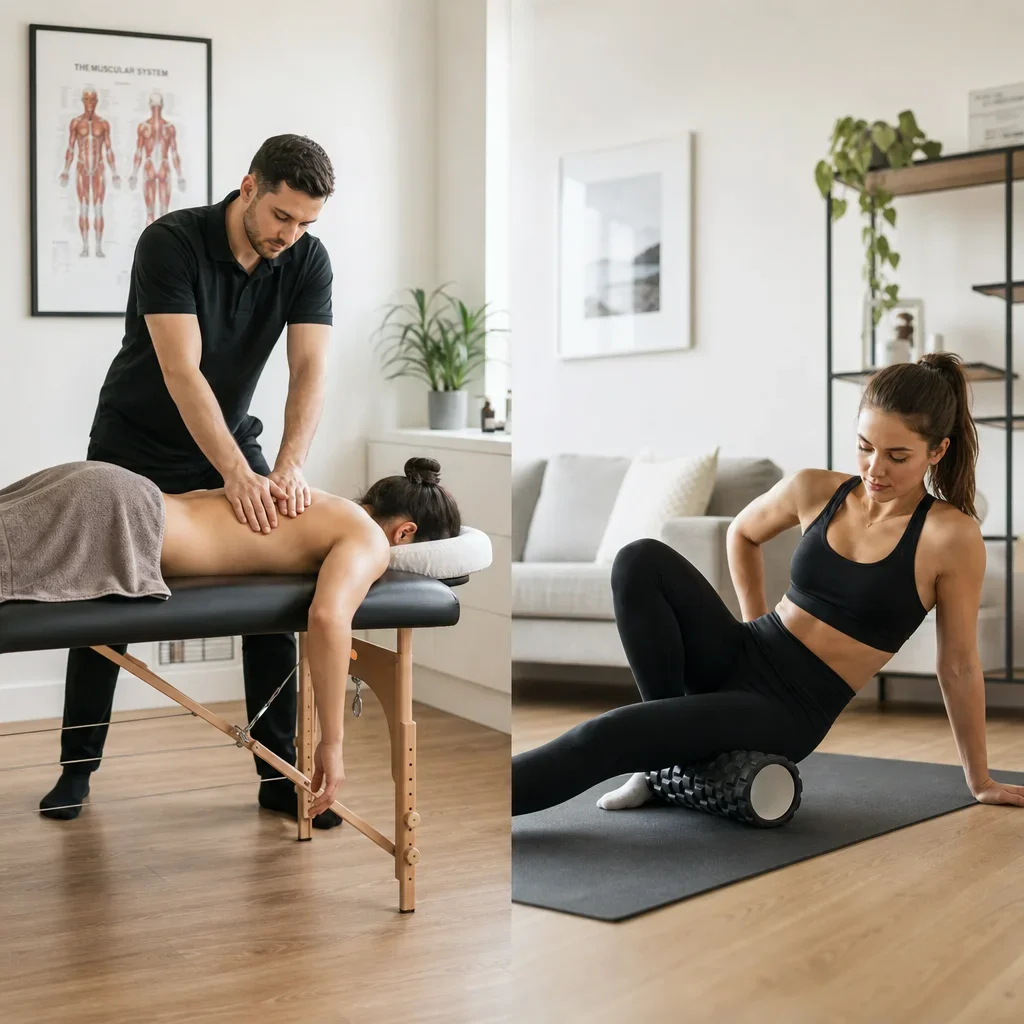
Professional massage therapy makes the most sense when symptoms are localized, recurring, hard to read, or tied to injury history. A trained provider can adjust pressure, avoid sensitive structures, and change the plan if your response is not typical. That is hard to do with a roller or massage gun on your own.
Foam rolling recovery works best for broad muscle groups and simple maintenance. Quads, glutes, calves, and upper back usually tolerate a roller better than small or sensitive regions. A ball is more precise for the foot, pecs, glutes, or posterior shoulder, but that precision also makes it easier to irritate tissue.
Massage gun recovery tools are convenient, but convenience is not the same as clinical fit. They can feel helpful for brief, familiar muscle soreness, yet they are easier to misuse around the spine, front of the neck, chest, armpit, groin, and other areas where nerves and blood vessels are more superficial.
If you are searching sports recovery massage near me or best massage for sports recovery near me, choose based on the complexity of the problem. Mild, familiar soreness may suit self-care. Persistent pain, recurrent strains, or symptoms that change your training should push you toward an in-person assessment first.
How to use self-massage more safely

Use enough pressure to feel the tissue, not enough to fight it. Discomfort can be tolerable, but sharp, electric, radiating, or increasing pain is a stop signal. Pressure that makes you brace, hold your breath, or limp afterward is too much for recovery work.
Avoid self-massage over the front and side of the neck, directly over joints, bony points, open wounds, severe bruises, varicose veins, swollen tissue, and areas with altered sensation. Percussion tools should also stay off the chest, throat, and spine unless a clinician has given you a specific reason and method.
Start light and brief, then reassess. Short bouts of about 30–90 seconds on one area are a reasonable starting point for self-massage , followed by movement. If symptoms spread, tingling appears, weakness shows up, or your movement is worse afterward, stop and get assessed.
Self-massage do and don’t checklist
Do
- Use light to moderate pressure first
- Pick broad muscle areas before small sensitive ones
- Recheck movement after the tool, not just pain
- Stop if symptoms become sharp, hot, numb, or radiating
Don’t
- Drive through severe pain to chase release
- Use tools over swollen or bruised tissue
- Percuss directly over the throat, spine, or front of the hip/groin
- Self-treat unexplained calf pain, marked swelling, or progressive weakness
What muscles or body parts should not be massaged?
There is no simple universal list of five body parts that are never allowed to massage. The safer answer is that some regions and conditions should be avoided or treated only by trained professionals because of anatomy, symptom pattern, or medical risk.
What muscles should not be massaged depends less on the muscle name and more on the condition. Do not massage areas with suspected fracture, possible blood clot, infection, open skin, severe bruising, active inflammation, undiagnosed lumps, or acute tears. Do not aggressively treat areas with numbness, burning, or unexplained altered sensation.
Use extra caution around the neck, throat, armpit, front of the hip and groin, behind the knee, and any region where major nerves and blood vessels are more superficial. That is one reason self-treatment is not always the best choice when pain feels unusual or hard to locate.
Side effects and risks: soreness, bruising, and when massage can backfire
The common side effects of deep tissue massage are temporary soreness, tenderness, mild fatigue, and localized sensitivity. Those reactions can happen after sports massage too, especially if pressure was higher than your tissue tolerance. A short-lived response can be normal, but more pain does not mean better treatment.
Less helpful reactions include bruising, headache, guarded movement, and a flare of the original complaint. Side effects of deep tissue massage are more likely when the pressure is too aggressive, the timing is poor, or the tissue is already irritated from recent training or injury.
Post-treatment soreness often settles within about 24–72 hours . Severe swelling, heavy bruising, calf pain, chest symptoms, persistent numbness, or worsening weakness are not normal recovery signs. Those need medical or clinical follow-up instead of another hard session.
When to get a massage before or after exercise
Before exercise, lighter and more stimulating work is usually the better fit. Pre-event treatment should leave you feeling mobile and ready, not sore and flattened. That is why heavy deep tissue right before an event is usually a poor trade for performance.
After exercise, gentler recovery-oriented work usually makes more sense than intense pressure. If the tissue is hot, sensitized, and fatigued, the best post-workout massage is often shorter, calmer, and less aggressive than people expect.
Massage before or after exercise should also match the session. A light shakeout before a game is different from a recovery appointment after a race weekend. Your timing, event schedule, injury history, and usual response matter more than a rigid rule from the internet.
How often should athletes get massage, and how long should sessions be?
Massage frequency should match training load, symptom level, budget, and whether massage is part of a bigger rehab plan. Some athletes book occasional tune-ups. Others use a short block during heavy training or while transitioning back from injury. Automatic repeat visits are less useful than reassessing how you responded.
Recovery massage sessions are commonly 30–90 minutes . Shorter sessions usually fit one or two areas well. Longer sessions can cover broader recovery work, but longer is not always better if the tissue is already irritable.
A good rule is to match the dose to the target. A runner with one stubborn calf may need focused local work. A cyclist after a stage event may want broader lower-body recovery. If your symptoms keep returning on schedule, the next best step may be a movement or rehab assessment rather than simply increasing massage frequency.
What to expect in a sports massage session at a sports medicine clinic

A sports massage session should start with a short intake, symptom review, and discussion of your training, goals, and recent load. In a sports medicine setting, the treatment should be tied to what you are trying to get back to, not just where you feel tight.
Treatment may focus on one problem area rather than the whole body. That is normal. A useful session often includes communication about pressure, changes in position, and rechecking movement as you go. The therapist should explain what they are doing and adjust if the tissue becomes more reactive than expected.
In a clinic that also offers [physiotherapy](/physiotherapy-toronto), [chiropractic care](/chiropractor-downtown-toronto), [sports medicine](/sports-medicine-toronto), and [massage therapy](/massage-therapy-toronto), the benefit is coordination. If the issue looks less like simple soreness and more like a strain, tendon problem, joint issue, or post-surgery limitation, the plan can shift quickly toward the right assessment.
When massage is not enough: signs you need physiotherapy, chiropractic, or sports medicine assessment
Massage is not the right recovery tool when pain is sharp, function is dropping, or symptoms suggest more than routine muscle soreness. Sudden injury, inability to bear weight, recurrent strain, joint instability, swelling, numbness, tingling, night pain, or weakness should move you toward assessment first.
Physiotherapy Toronto patients usually need more than hands-on care when the problem involves strength deficits, mobility restrictions, tendon loading, post-surgery rehab, or graded return to sport. Treatment in that setting can include exercise progressions, movement testing, and load management, which massage alone cannot replace.
A chiropractor downtown Toronto or sports medicine Toronto assessment may also fit when the picture includes joint irritation, spinal symptoms, recurrent mechanical pain, or a need for broader diagnostic direction. The best plan is often integrated. Massage can support it, but it should not carry the whole job.
Special case: can massage help neuropathy?
Massage is not a primary treatment for neuropathy. Some people may find gentle hands-on care soothing, but numbness, burning, tingling, or progressive sensory change should be assessed medically or by an appropriate rehab clinician instead of being treated aggressively as routine tightness.
Can massage help peripheral neuropathy is the wrong first question if the symptoms are new, spreading, or unexplained. The right first step is assessment. That applies even more if weakness is involved.
Insurance, credentials, and choosing a sports recovery massage provider in Toronto
When you choose a provider, look for regulated credentials where applicable, experience with active patients, and a clinic that can coordinate care if the problem goes beyond massage. In Ontario, insurance coverage varies by plan and provider type, so you need to confirm eligibility directly with your insurer before booking.
If your recovery issue is straightforward soreness, booking massage therapy can make sense. If symptoms are persistent, sharp, neurologic, or injury-related, book an assessment first. For active people in downtown Toronto, the best setup is often a clinic that can connect massage with biomechanics-led rehab under one roof.
FAQ
What type of massage is best for sports recovery?
Sports massage is usually the best fit for athlete-specific recovery because it can be adapted to training phase, soreness, and movement goals. Deep tissue can help selected chronic tension patterns, but it is not automatically the better option.
Are sports massages good for recovery?
They can be. Benefits of sports massage usually show up as short-term relief of soreness, stiffness, and perceived readiness rather than guaranteed performance gains or faster healing.
Should I get a deep tissue or a sports massage?
Choose sports massage if the goal is training recovery, event prep, or post-exercise care. Choose deep tissue only when firmer, more targeted pressure suits the tissue and timing. If symptoms are sharp, radiating, or recurring, get assessed first.
Can massage speed up recovery?
Massage may improve how you feel during recovery, but it does not replace sleep, nutrition, hydration, and smart training load. It is better viewed as a support tool than a main driver.
Do foam rollers and massage balls actually work for recovery?
They can help with mild, familiar soreness and short-term movement improvement. They work best for simple self-management, not for diagnosing or treating unclear pain.
Are massage guns good for sports recovery?
They can be useful for brief self-treatment of familiar muscle soreness, but they are easy to misuse around sensitive areas. They are a limited tool, not a substitute for professional assessment.
When is the best time to get a massage before or after exercise?
Before exercise, lighter work usually fits better. After exercise, gentler recovery-oriented work is usually better tolerated than aggressive pressure. Exact timing depends on your event schedule and tissue response.
How often should athletes get a massage for recovery?
There is no fixed schedule. Frequency depends on training volume, symptoms, competition calendar, and whether massage is part of rehab. Reassess based on response rather than booking by habit.
How long should a recovery massage session last?
A recovery massage session is commonly 30–90 minutes . Shorter sessions fit focused work. Longer sessions fit broader recovery treatment.
What muscles should not be massaged?
Avoid massaging areas with acute injury, severe bruising, swelling, infection, open skin, possible blood clot, altered sensation, or unexplained lumps. Be cautious around the neck, groin, armpit, and behind the knee.
What side effects can happen after a deep tissue massage?
Temporary soreness, tenderness, and mild fatigue are the usual ones. Bruising, headache, worsening pain, numbness, or heavy swelling are not desirable responses and should not be ignored.
When should I book physiotherapy instead of massage?
Book physiotherapy instead of massage when pain is persistent, linked to injury, limiting performance, or paired with weakness, numbness, swelling, or recurrent flare-ups. Massage can help symptoms, but rehab addresses the cause more directly.
If your soreness is simple and familiar, a massage session may be enough. If the pattern is sharp, stubborn, or changing how you move, get assessed before you chase more pressure.