Sports recovery methods are not equal. The best option depends on your goal, your training load, and how soon you need to perform again. If you want better athlete recovery, start with sleep, food, hydration, and load management before you spend money on sports recovery equipment.
Sports recovery methods at a glance: what works best by goal
No single method is best for every athlete. The strongest first-line recovery strategies for sports are still sleep, adequate calories and protein, hydration, and training-load management, while tools like massage, foam rolling, compression, cold water, or sauna work better as add-ons than replacements.
The best recovery methods for athletes change by use case. For soreness, sleep, refueling, light movement, and time usually matter most; for next-day readiness during a tournament, cold water immersion, compression, and simple refueling can be more useful; for stiffness, active recovery methods and mobility work often beat complete inactivity.
Pro athletes usually recover quickly because they stack basics well. They control training volume, schedule treatment around competition, use individualized recovery techniques for athletes, and have support with sleep, meals, travel, and rehab rather than one miracle hack.
This guide ranks methods by goal, not hype. It also covers evidence strength, likely benefit, convenience, safety, and when hands-on care from a downtown Toronto sports medicine, physiotherapy, chiropractic, or massage team makes more sense than another gadget.
The recovery hierarchy: the 4 R’s, 5 pillars, and why basics come first
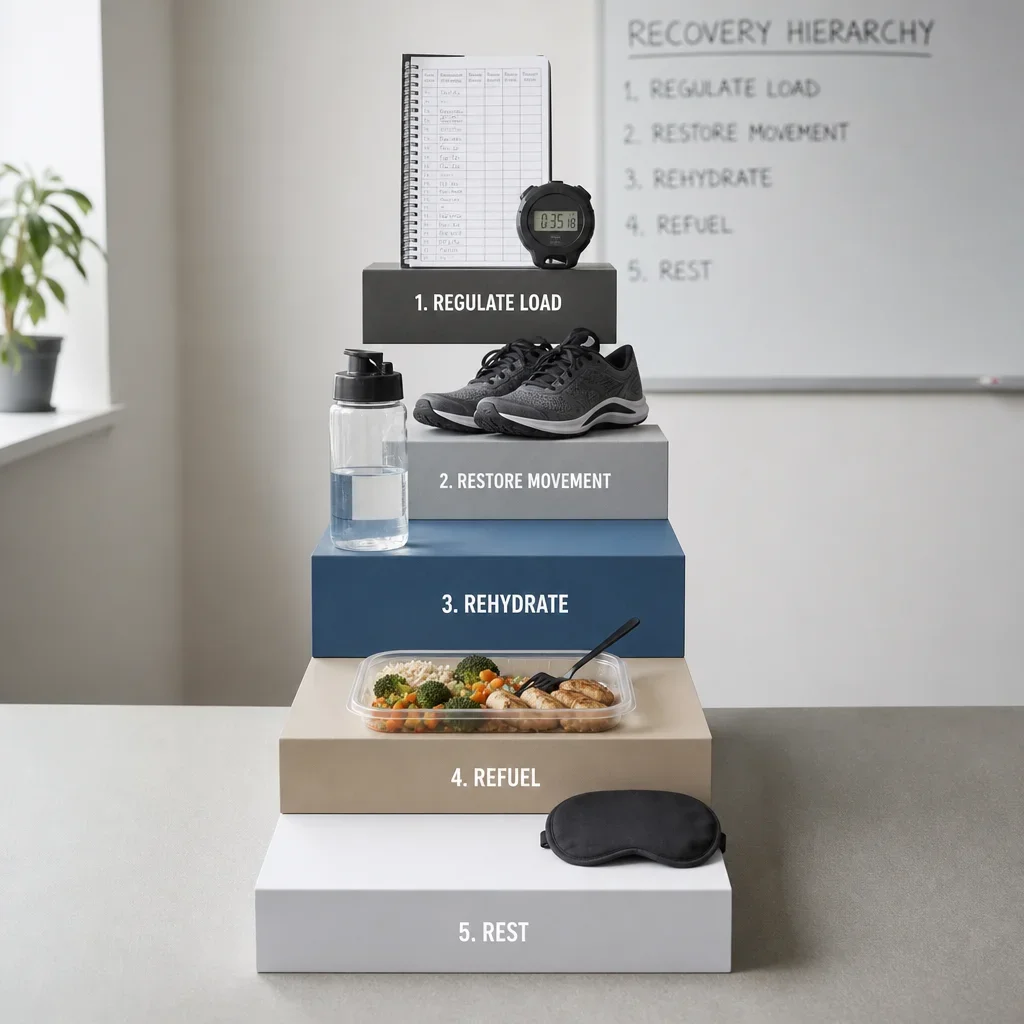
The most useful way to organize recovery in sports training is a simple hierarchy. We use five pillars: Rest, Refuel, Rehydrate, Restore movement, and Regulate load, because that framework fits how athletes actually recover between sessions.
The 4 R’s of recovery are not one universal medical standard. Different coaches and clinics define them differently, so it is safer to treat them as planning models rather than doctrine, with most versions covering rest, nutrition, hydration, and tissue or movement recovery.
The 5 pillars matter because recovery is not just passive. It includes sleep quantity and quality, total food intake, fluid replacement, mobility and tissue tolerance, and the way hard, easy, and rest days are distributed across the week.
Rest sits at the top because the rest and recovery needs of athletes are cumulative. If sleep is short, meals are missed, and training load is still high, expensive recovery for athletes near me will have limited upside even if it feels good for an hour.
What actually drives recovery after training or competition
Recovery works by restoring readiness, not just comfort. After hard training, the body needs time to repair tissue, restore glycogen, normalize fluid balance, settle the nervous system, and reduce the stiffness or soreness that can limit the next session.
DOMS recovery is different from immediate fatigue. Delayed onset muscle soreness usually peaks about 24 to 72 hours after unfamiliar or high-eccentric training, which is why a heavy lift, hard downhill run, or first game back can hurt most the next day instead of right away.
Lactate is not why you are sore the next day. Lactate clears relatively quickly after exercise, while next-day soreness is more closely tied to tissue stress, inflammation, and sensitivity changes after loading.
Different sports create different recovery bottlenecks. Endurance sessions drain fuel and fluid, heavy strength work raises muscle damage and stiffness, contact sport adds impact load, and repeated-sprint or tournament settings increase the need for fast turnaround more than perfect long-term adaptation.
Feeling recovered is not always the same as adapting well. Some post-workout recovery tools can reduce soreness or make you feel fresher, but that does not automatically mean they build more fitness, strength, or muscle.
Best sports recovery methods by goal
The best method for reducing muscle soreness recovery is usually a basics-first stack. Sleep, regular meals with enough protein and carbohydrate, light movement, and a short period of lower training load do more than chasing one passive modality.
The best method for improving next-day performance is goal-specific recovery. When the gap between sessions is short, refueling, rehydration, low-intensity movement, and getting off your feet early tend to have more value than long stretching sessions or multiple gadgets.
The best method between same-day or back-to-back events is fast turnover. Easy carbs, fluids, quiet rest, light mobility, and simple cooling or compression can be practical, while aggressive tissue work right before another event is often low value.
The best method for sleep and nervous-system downshift is routine. A consistent sleep window, lower stimulation before bed, a cool dark room, and post-competition decompression habits usually matter more than any single supplement or device. Adults generally need about 7 to 9 hours of sleep opportunity per night.
The best method for stiffness is movement first. Active recovery methods, mobility drills, and foam rolling can improve short-term range of motion and reduce the feeling of tightness better than full rest in many active adults.
The best method after travel is circulation plus rehydration. Walking, simple mobility, fluids, and normal meals usually outperform complicated recovery strategies for sports when the main problem is sitting, travel fatigue, and schedule disruption.
The best method in-season is the one you can repeat. The highest-return recovery strategies are the ones that fit your week, your sport, and your budget, because perfect plans fail if they are too expensive, too time-heavy, or impossible to do consistently.
Recovery methods comparison table: evidence, cost, convenience, and best use case
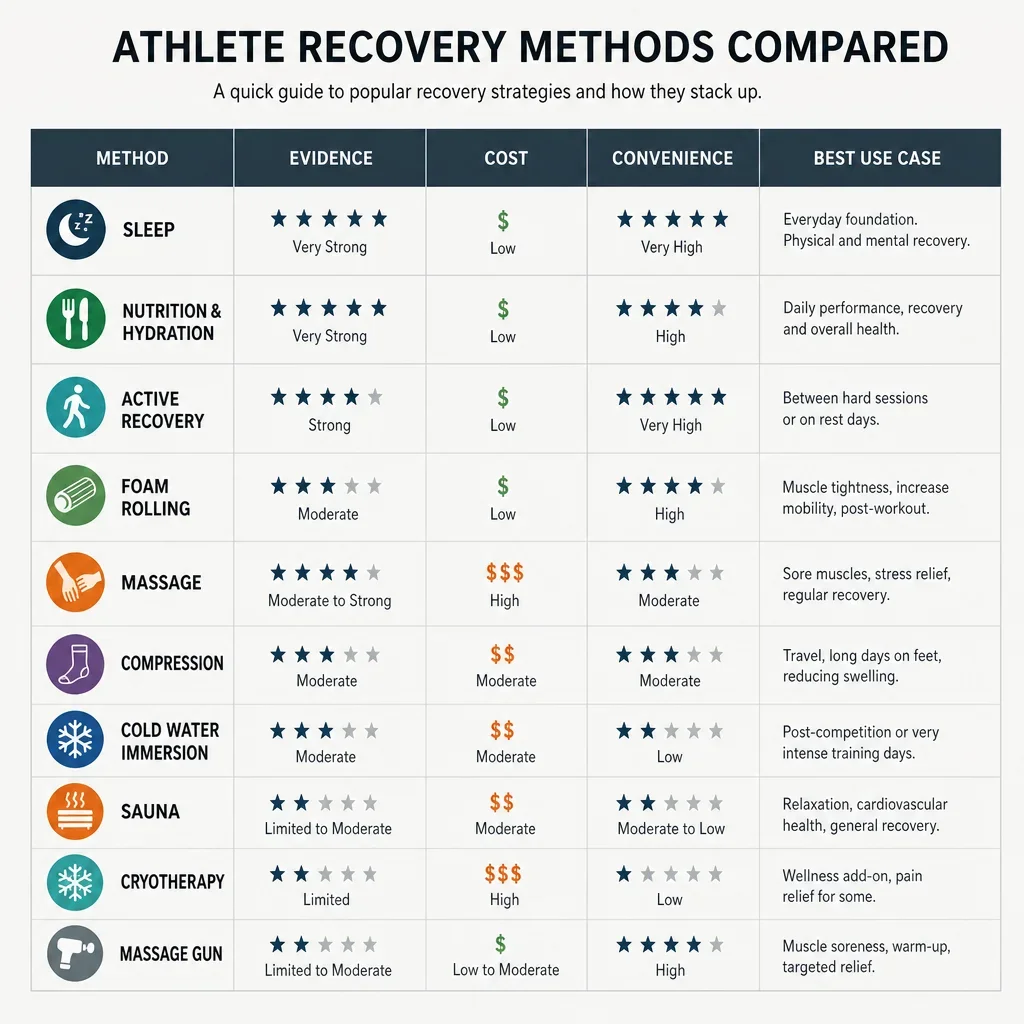
The table below is the practical version. Evidence labels are plain-language summaries, not guarantees for your situation.
| Method | Primary goal | Evidence strength | Likely benefit | Limitations | Convenience | Relative cost | Best fit |
|---|---|---|---|---|---|---|---|
| Sleep extension | Full-system recovery | Stronger | Better readiness, mood, coordination | Hard during busy schedules | Medium | Low | Almost every athlete |
| Nutrition and hydration | Refuel and rehydrate | Stronger | Better energy, repair, recovery between sessions | Requires planning | Medium | Low | High-volume training, games, long sessions |
| Active recovery | Reduce stiffness, maintain circulation | Mixed to stronger | Less heaviness, easier movement | Not enough alone after poor sleep or under-fueling | High | Low | Runners, field and court athletes |
| Foam rolling | Mobility, perceived tightness | Mixed | Short-term range of motion and symptom relief | Effects are temporary | High | Low | Warm-up and post-session add-on |
| Stretching | Range of motion, relaxation | Mixed | Can help downshift and maintain flexibility | Not a magic DOMS fix | High | Low | Athletes who feel better with it |
| Massage therapy | Relaxation, soreness, stiffness | Mixed | Temporary symptom relief and recovery ritual value | Passive, not a substitute for rehab | Medium | Medium | Heavy blocks, post-event, persistent tightness |
| Compression garments | Perceived freshness, travel | Mixed | Small practical benefit for some athletes | Fit and comfort matter | High | Medium | Travel days, busy competition blocks |
| Pneumatic compression | Leg freshness, between sessions | Mixed | Convenient short-term relief | Expensive and not essential | Medium | High | Frequent competitors with dense schedules |
| Cold water immersion | Soreness, short-turnaround readiness | Mixed to stronger | Can reduce soreness and improve freshness | May not suit every goal or athlete | Medium | Low to medium | Tournaments, repeated events |
| Contrast therapy | General freshness | Limited to mixed | Some athletes like it | Protocols vary and evidence is less clear | Low to medium | Low to medium | Athletes who tolerate both heat and cool |
| Sauna or heat | Relaxation, stiffness | Mixed | Helps some athletes unwind and loosen up | Dehydration and heat tolerance matter | Medium | Medium | Recovery days, not acute swelling |
| Whole-body cryotherapy | Perceived recovery | Limited to emerging | Some short-term symptom relief | High cost, less accessible, mixed evidence | Low | High | Optional, not foundational |
| Red-light therapy / photobiomodulation | Tissue support, symptom change | Emerging | Research interest, but practical effects vary | Device quality and protocols differ | Low to medium | Medium to high | Case-by-case add-on |
| Massage gun | Warm-up or symptom relief | Limited to mixed | Convenient short-term relief | Easy to overvalue | High | Medium | Home users wanting quick symptom help |
| Float therapy | Relaxation, mental reset | Emerging | Some athletes value relaxation | Limited evidence for performance recovery | Low | High | Stress-heavy periods |
Foundational recovery pillars: sleep, hydration, and nutrition
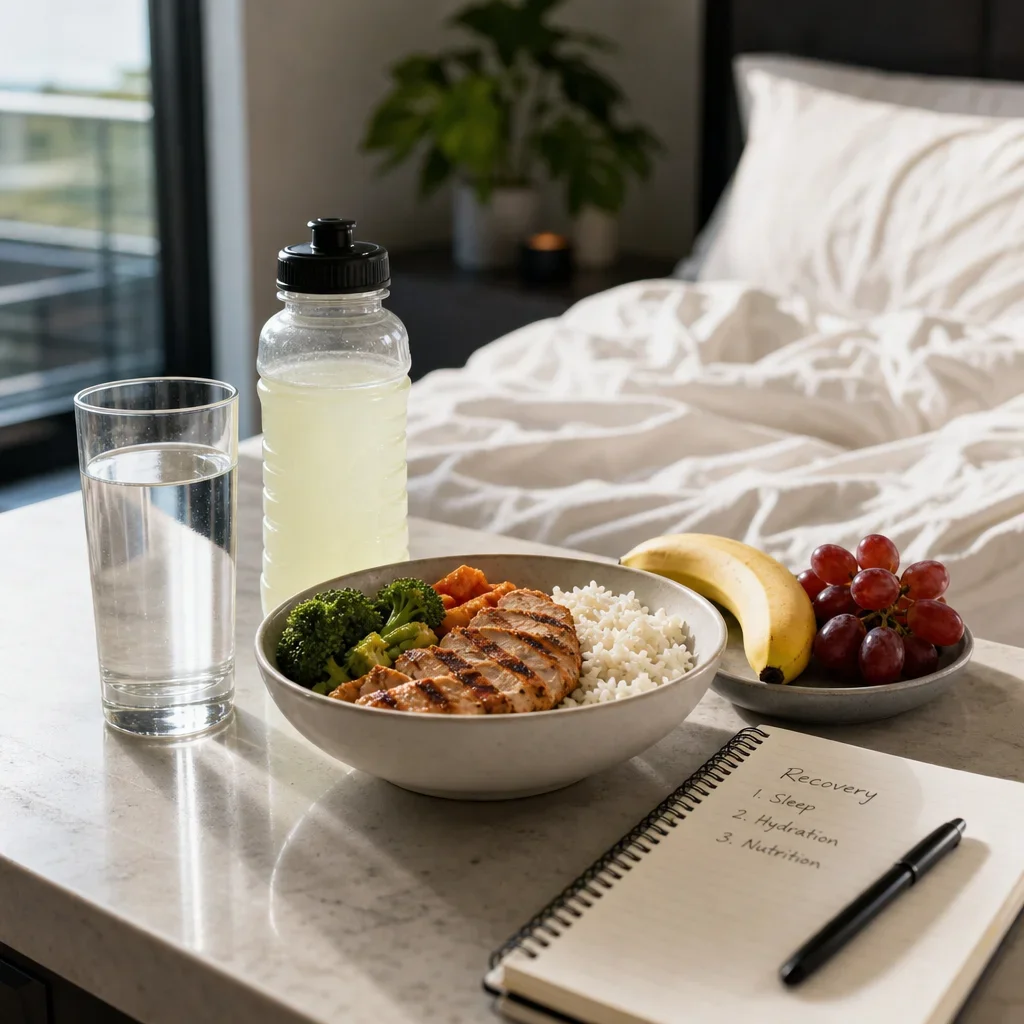
Sleep is the highest-value recovery tool because it supports both body and brain. Adults generally need about 7 to 9 hours of sleep opportunity each night, and athletes with heavy training or competition loads may notice performance drop quickly when sleep is cut short.
Hydration matters most when sweat losses are high. Thirst, darker urine, hot environments, double sessions, and endurance work are practical signs that rehydration deserves more attention after training.
Nutrition drives recovery by replacing what training used up. Total calories across the day matter, carbohydrate helps refill fuel stores after harder sessions, and protein supports repair, with post-exercise meals often landing around 20 to 40 grams of protein depending on body size and the rest of the meal.
Timing helps when sessions are close together. If you train again later the same day or compete again tomorrow, eating and drinking soon after the session is usually more useful than waiting until hours later.
Supplements are secondary to basics. Some athletes ask about creatine or magnesium, but those decisions should match the person, the sport, the diet, and any medical context rather than generic online advice.
Load management ties the whole pillar set together. Good post-workout recovery cannot fully offset a training plan that ramps too quickly, under-fuels hard blocks, or ignores life stress, work stress, and school stress.
Active recovery, mobility, stretching, and foam rolling
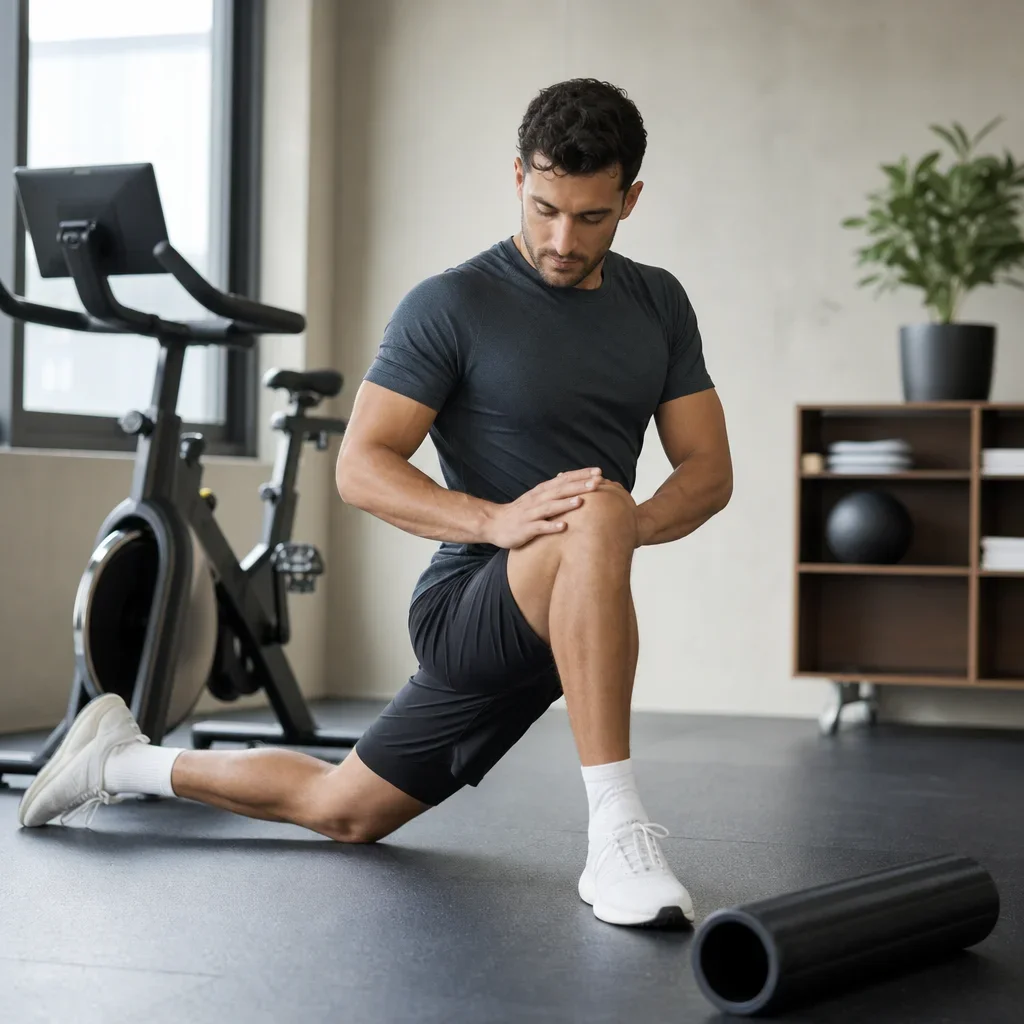
Active recovery is low-intensity movement used to reduce heaviness and keep you moving well. A light bike, walk, easy swim, or relaxed mobility circuit for about 10 to 30 minutes is a common starting range when the goal is to feel looser without adding more fatigue.
Active recovery helps most when the dose stays easy. If the effort creeps too high, the session stops being recovery and starts adding training stress, which is a common mistake in motivated athletes.
Stretching can support mobility and relaxation, but it is not a cure for soreness. Many athletes feel better after it, especially if they are stiff after travel or games, yet stretching alone usually does not solve DOMS recovery.
Foam rolling is useful for short-term changes, not permanent fixes. A practical range is about 30 to 120 seconds per muscle group, which can help temporary range of motion, perceived tightness, and warm-up readiness.
Massage guns overlap with foam rolling but are not the same thing. They are convenient for quick symptom relief or a brief warm-up, while the effects are still mainly short term and should not replace strength work, load changes, or rehab.
Runners often do well with easy spin or walk recovery plus calves, quads, and hip mobility. Lifters often prefer short easy movement, gentle range-of-motion work, and not chasing intense stretching on already-irritated tissues. Court and field athletes often benefit from a circulation-focused cooldown and lower-limb mobility after repeated sprint work.
Massage therapy and hands-on recovery support
Massage therapy can help athletes feel less stiff and more relaxed after hard training or competition. The main benefits are usually short-term symptom relief, downregulation, and reduced perception of muscle tone or soreness rather than structural tissue change.
Massage is most useful as support, not as a substitute for problem-solving. If the same area keeps tightening, the same pain returns every week, or movement is clearly asymmetrical, assessment plus targeted treatment usually matters more than repeating passive recovery alone.
Timing changes the value of massage. Many athletes prefer it after an event, on a lighter recovery day, or during a heavy training block rather than right before a maximal session where tenderness may be unwelcome.
A combined plan often works better than one service in isolation. In a sports medicine setting, massage may sit alongside exercise rehab, movement assessment, physiotherapy, or chiropractic care when recovery keeps breaking down for the same reason.
Cold water immersion, ice baths, and contrast therapy
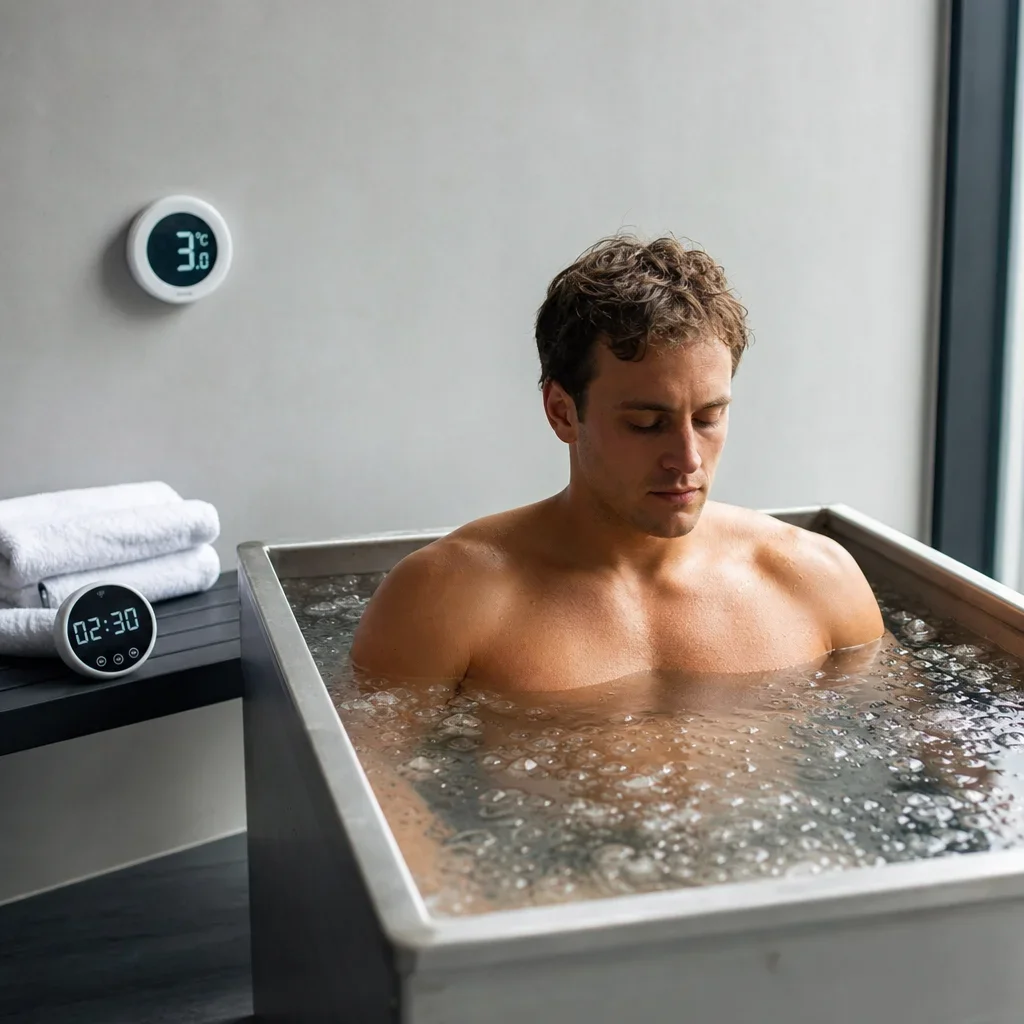
Cold water immersion can help short-term recovery when soreness and rapid turnaround are the main goals. It is most often used to reduce perceived soreness and improve freshness between games, hard practices, or dense competition schedules.
A conservative ice-bath range is about 10 to 15 degrees Celsius for 5 to 15 minutes. That is enough for most first-time or occasional users, and deeper cold or longer exposure is not automatically better.
Cold water is not ideal for every situation. If your top priority is long-term strength or hypertrophy adaptation, using cold immersion after every lifting session may be less appealing than using it only during tournament weeks, travel blocks, or periods where short-term performance matters most.
Contrast water therapy is a practical option for athletes who dislike full cold exposure. It is often used as alternating warm and cool water for general freshness, although the evidence is less clear than the hype suggests and protocols vary widely.
Safety matters with hydrotherapy. Athletes should be cautious or get medical advice first if they have cold intolerance, altered sensation, open wounds, certain cardiovascular issues, or any condition where cold exposure may be unsafe.
Heat therapy and sauna
Heat therapy is better for relaxation and perceived stiffness than for acute swelling. Many athletes use heat on recovery days to unwind, move more comfortably, or settle down after stressful competition rather than right after a fresh inflammatory injury.
Sauna can be a useful recovery ritual when used conservatively. Sessions are often discussed in the 10 to 20 minute range, with hydration and heat tolerance being the limiting factors rather than toughness.
Heat often fits better than cold when the main goal is calm, mobility, or general recovery comfort. If you feel wired after evening training, a gentle heat exposure may make more sense than another stimulating intervention.
Sauna is not for everyone. Dehydration risk, illness, dizziness, pregnancy considerations, heat intolerance, and some medical conditions are good reasons to be cautious and get individualized advice.
Compression garments, pneumatic compression, and recovery boots
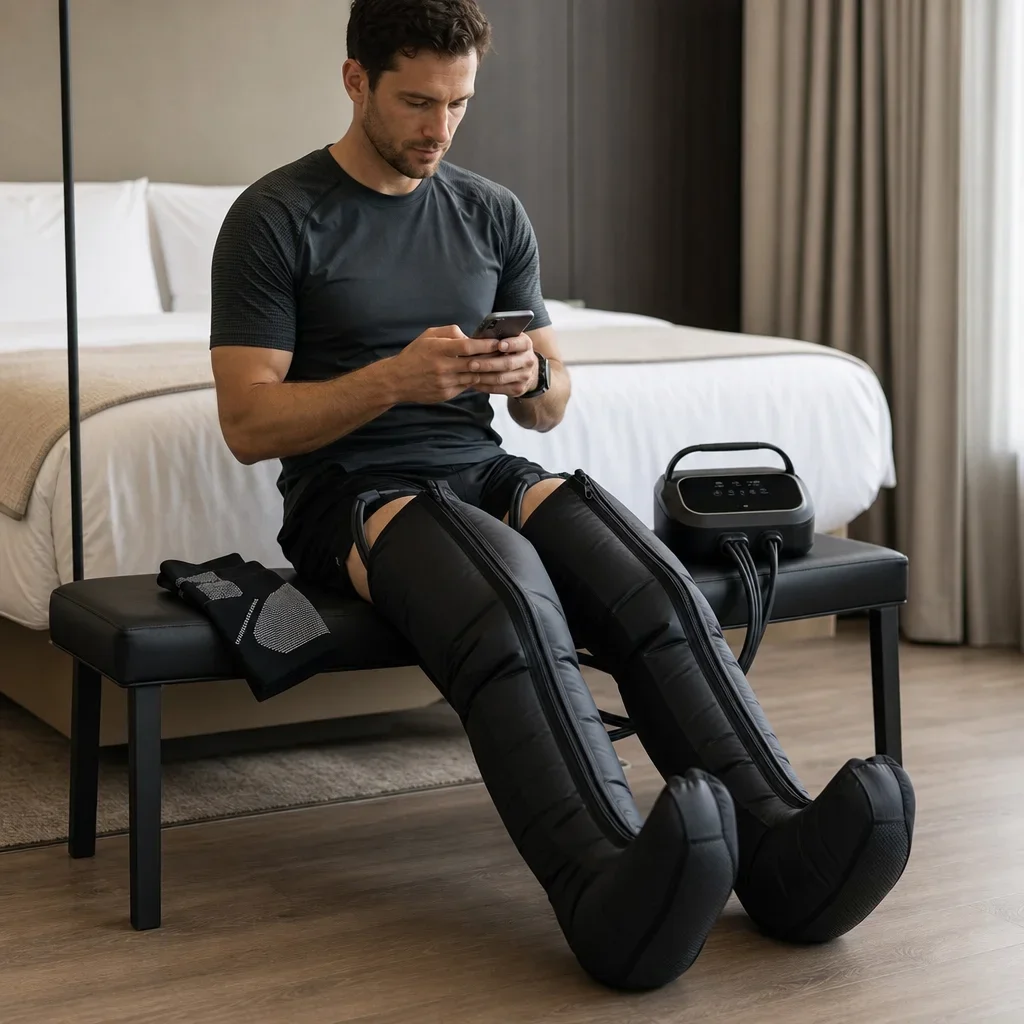
Compression garments and pneumatic compression are useful for convenience more than necessity. Some athletes report fresher legs, especially during travel, between matches, or in busy weeks, but these tools are usually optional rather than foundational.
Wearable compression and device-based compression are different. Garments provide steady pressure during travel or rest, while pneumatic sleeves cycle pressure in waves and are typically used in a seated recovery setting.
These tools make more sense when schedules are dense and budget allows. Garments are usually a medium-cost option, while pneumatic systems are usually high cost, which changes the value equation for recreational athletes.
Fit and adherence decide whether they help. If a garment is uncomfortable or a device sits unused in a closet, the practical value is zero no matter how good the marketing sounds.
Cryotherapy, red-light therapy, float therapy, and massage guns: worth it or hype?
Most trendy recovery gadgets sit below the basics on the priority list. Cryotherapy, red-light therapy, float therapy, and massage guns are optional tools, not replacements for sleep, food, hydration, and sensible training load.
Whole-body cryotherapy is best viewed as an expensive variation on cold exposure. Some athletes like the experience and short-term symptom relief, but the evidence is not strong enough to put it ahead of simpler and cheaper cold water methods for most people.
Photobiomodulation, often called red-light therapy, is promising in some research but still hard to generalize in practice. Device quality, treatment settings, and target tissues vary, which makes blanket claims about sports recovery difficult to defend.
Float therapy mainly appeals to athletes who want sensory downshift and relaxation. That can be valuable during stressful periods, but the case for float therapy as a primary physical recovery method is still limited.
Massage guns are the most practical of this group because they are simple and accessible. Their main role is short-term symptom change or warm-up support, not fixing the reason an area keeps flaring up.
Do recovery methods build muscle or blunt adaptation?
Recovery methods can improve readiness without always improving adaptation. The key distinction is whether your current priority is to perform again soon or to maximize the long-term training signal from a hard session.
Cold exposure is the main method athletes ask about in this context. Frequent post-lift cold immersion may reduce some hypertrophy or strength adaptation in certain settings, which is why many lifters avoid making it an after-every-session habit.
Short-term performance can matter more than adaptation during tournaments or congested schedules. In that setting, feeling fresher tomorrow may be more valuable than preserving every bit of the training signal from today’s session.
The practical answer is not black and white. Use more aggressive recovery when the calendar is crowded, and rely more on basics when the goal is building capacity over time.
Sport-specific recovery recommendations
Runners usually recover best when fuel, fluid, and impact management are handled first. Easy aerobic movement, lower-leg mobility, sleep, and not stacking hard runs too close together tend to offer the best return.
Lifters usually need recovery methods that respect tissue soreness without chasing pain. Food, sleep, smart programming, light movement, and selective use of soft-tissue tools often do more than frequent cold exposure if muscle growth is the goal.
Team-sport athletes benefit from methods that improve turnaround. Rehydration, carbohydrate intake, lower-body compression, simple cooldown movement, and practical soreness control are useful when games and practices are close together.
Combat sport athletes often need recovery that accounts for impact, cuts in body weight, and nervous-system stress. Sleep, rehydration after weigh-in periods, and carefully planned return to normal training loads matter more than flashy sports recovery methods.
Young athletes should keep recovery simple. Sleep, regular meals, hydration, school-sport balance, and one or two easy routines beat expensive sports recovery equipment for most youth athletes.
Parents and coaches should watch the pattern, not one bad day. A young athlete with repeated fatigue, mood change, falling performance, heavy legs, or persistent soreness may need more recovery time, a lighter training week, or clinical assessment rather than another drill.
Signs of under-recovery, overtraining, or injury that need attention
Persistent soreness is not always normal training pain. If soreness or pain lasts beyond about 5 to 7 days after a routine session, keeps returning in the same spot, or starts changing how you move, it is reasonable to get assessed.
Common signs an athlete needs more rest include declining performance, poor sleep, unusual fatigue, irritability, repeated niggles, heavy legs, and loss of motivation. Those signs fit under-recovery more than simple muscle soreness.
One-sided pain, swelling, instability, or pain that worsens as you train points more toward injury than normal post-workout recovery. That is especially true if you cannot load the area normally, cannot change direction, or keep limping after activity.
The slowest-healing body part is not one fixed answer. In practice, tendons, cartilage, and ligaments often recover more slowly than muscle because they generally have lower blood supply and different loading demands.
Athletes should consider sports medicine or rehab input when pain keeps limiting training, flare-ups are recurring, recovery is getting worse instead of better, or post-surgery progress is unclear. A movement or biomechanics issue can look like poor recovery when the real problem is load tolerance.
If recovery keeps breaking down, a clinician can assess why. At Focusphysio in downtown Toronto, that may involve physiotherapy, sports medicine, chiropractic, or massage therapy depending on whether the issue is pain, movement restriction, tissue irritability, or return-to-sport planning.
Sample post-workout and weekly recovery plans
A good post-workout recovery plan starts with non-negotiables. The first layer is food, fluid, and a calmer nervous system, then sleep later that night, then optional add-ons like foam rolling, compression, or heat depending on how you feel.
After a hard lift, a low-cost plan is simple. Eat a normal meal with protein and carbohydrate, walk or spin easily for 10 to 15 minutes, and use light mobility if you feel stiff; a medium-cost version adds massage or compression; a clinic-supported version adds assessment if the same area keeps flaring.
After a long run, the basics are refueling, rehydrating, and reducing stiffness. Easy walking, calves and hips mobility, and getting off your feet later in the day usually matter more than stacking multiple gadgets.
After a game, the plan depends on how soon you compete again. If the next event is close, prioritize quick fuel, fluids, a cooldown, sleep, and simple soreness-control methods like cold water or compression if you tolerate them well.
During a congested competition week, lower the menu instead of adding everything. Keep the plan to sleep, food, fluids, brief mobility, and one or two recovery strategies for sports that are practical for your schedule.
A youth-athlete plan should stay boring on purpose. Normal meals, enough sleep, hydration, a rest day when needed, and speaking up early about pain are better foundations than copying pro-athlete recovery routines from social media.
When recovery is not enough: when to see a physiotherapist, chiropractor, sports medicine clinician, or massage therapist
Recovery methods stop being enough when the same problem repeats. Recurring tightness, the same sore spot after every session, clear left-right differences, or worsening tolerance to normal training usually point to a loading, movement, or injury issue rather than a simple recovery deficit.
Physiotherapy Toronto athletes use often starts with identifying why recovery is poor. That can mean looking at tissue irritability, strength deficits, running mechanics, mobility limits, return-to-sport planning, or how training load rose across the last few weeks.
Sports medicine Toronto assessment can help when pain is limiting sport, symptoms are not settling, or you need a clearer diagnosis before changing training again. That is especially useful for recurrent injuries, post-surgery questions, and return-to-play decisions.
A chiropractor downtown Toronto athletes see may be one part of the plan when joint motion, pain modulation, movement quality, and exercise-based rehab all need to work together rather than relying on passive treatment alone.
Massage therapy fits best when the goal is symptom relief, downregulation, and helping an athlete tolerate a heavy block better. If you need more than symptom relief, combining massage with assessment and a targeted plan is usually the stronger route.
FAQ
What is the best recovery method for athletes?
The best recovery method depends on the goal. Sleep, nutrition, hydration, and load management usually give the biggest return, while methods like massage, cold water, or compression are add-ons for specific situations.
What are the recovery strategies for sports?
The main recovery strategies are rest, refueling, rehydration, restoring movement, and regulating training load. You can then add tools like active recovery, foam rolling, massage, cold water, or heat based on the situation.
What are good recovery techniques?
Good recovery techniques are the ones that match the training demand and are repeatable. For most athletes, that means enough sleep, normal meals, fluids, low-intensity movement, and only selective use of gadgets or clinic-based treatments.
How do pro athletes recover so quickly?
They usually recover quickly because they combine basics, scheduling, and support well. Pros also have tighter control over training load, travel, nutrition, sleep routines, and access to clinicians when needed.
What are the 4 R’s of recovery?
There is no single official version. Most 4 R models include some form of rest, refuel, rehydrate, and restore or repair.
What are the 5 pillars of recovery?
A practical five-pillar model is Rest, Refuel, Rehydrate, Restore movement, and Regulate load. It is a planning framework, not a formal medical rule.
What is active recovery and does it help?
Active recovery is easy movement after training or on lighter days. It can help reduce perceived stiffness and improve movement comfort when kept low intensity, often for about 10 to 30 minutes.
Do ice baths actually help muscle recovery?
They can help with short-term soreness and freshness, especially when events are close together. They are less clearly helpful as an after-every-session habit for athletes focused on long-term strength or hypertrophy.
Does massage help athletes recover faster?
Massage can help athletes feel less sore or stiff and more relaxed. It is supportive care, not a replacement for sleep, load management, or rehab when pain persists.
Are compression boots worth it for athletes?
They can be worth it for some athletes in dense schedules or heavy travel, but they are not essential for most. The value depends on budget, convenience, and how much you actually use them.
Can sauna help with sports recovery?
Sauna can help with relaxation and perceived stiffness for some athletes. It should be used conservatively, with hydration in mind, and it is not the right fit for everyone.
Do recovery gadgets replace sleep and nutrition?
No. Gadgets may add a small benefit, but they do not replace sleep, food, hydration, and sensible programming.
Which recovery methods are best for young athletes?
The best methods for young athletes are simple: sleep, regular meals, hydration, balanced schedules, and early assessment when pain keeps returning. Expensive gadgets are usually low priority.
When should soreness be checked by a physiotherapist?
If soreness or pain lasts more than about 5 to 7 days after a routine session, keeps coming back, becomes one-sided, or changes how you train, it is worth getting assessed.