
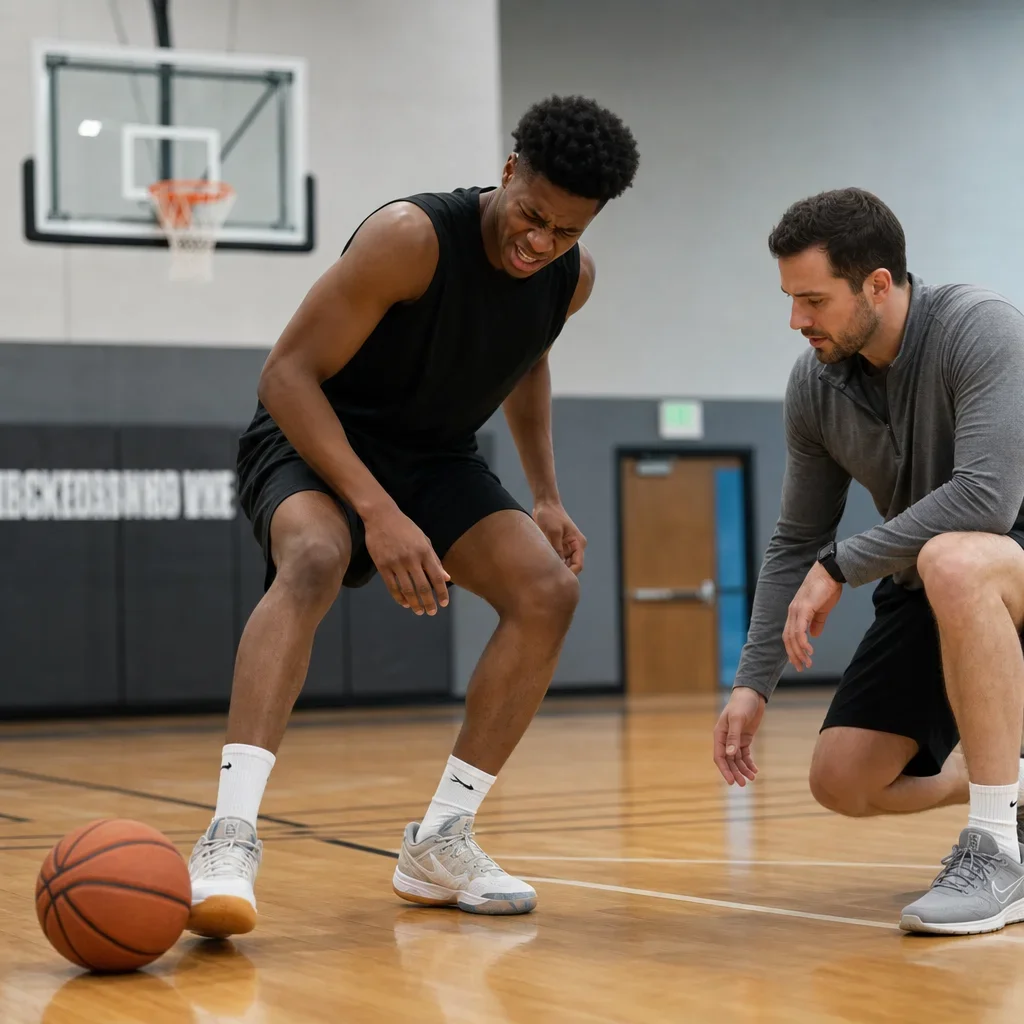
A good basketball injury prevention program lowers risk by fixing the things you can actually change. It will not remove all risk, because basketball still includes jumping, cutting, contact, and fatigue, but it can reduce avoidable problems through better warm-ups, strength work, landing mechanics, recovery habits, and return-to-play decisions.
What a basketball injury prevention program is and who it helps
A basketball injury prevention program is a structured plan that combines warm-up, strength, balance, movement retraining, load management, recovery, and return-to-play principles into one routine. It helps youth players, adult rec players, competitive athletes, parents, and coaches because the same game demands show up across levels: sprinting, stopping, landing, changing direction, and absorbing contact.
Prevention of injuries in basketball works best when it targets modifiable risk factors before pain becomes a bigger problem. In practice, that means improving single-leg control, calf and hip strength, deceleration mechanics, sleep and recovery habits, and how quickly court volume increases from week to week.
This guide gives you a full framework rather than a random list of drills. It covers common injuries in basketball, a practical warm-up, strength and balance exercises, injury-specific prehab, weekly planning, equipment choices, and when basketball injuries and treatment decisions need an in-person assessment.
The most common basketball injuries and why they happen
The most common injuries in basketball usually fall into acute injuries and overuse injuries. Acute injuries happen from one event, like an ankle rolling on a rebound or a finger jamming on the ball, while overuse injuries build over days or weeks from repeated jumping, sprinting, hard stops, and incomplete recovery.
A practical list of 10 common injuries in basketball includes ankle sprain, patellofemoral pain, jumper’s knee, ACL injury, MCL injury, hamstring strain, quadriceps strain, Achilles tendinopathy, finger or thumb sprain, and wrist injury. Shoulder injuries, stress reactions, concussion, and low back pain also show up, especially with falls, collisions, and schedule density.
These injuries happen because basketball repeats high-load movements on a hard court. Non-contact landing and cutting can stress the ankle and knee, repeated jumping can irritate the patellar or Achilles tendon, contact can injure fingers, thumbs, shoulders, and the head, and fatigue can make mechanics worse late in practice or games.
Persistent pain during play, swelling after sessions, repeated giving-way, or symptoms that do not settle with short-term load reduction are not just normal soreness. Those signs should be assessed, especially if the player cannot bear weight, has major swelling, locking, deformity, or concussion symptoms.
The main risk factors a good program should target
A strong program targets the risk factors you can change first. The big ones are poor warm-up habits, low single-leg balance under fatigue, weak calf and hip capacity, rushed deceleration, stiff landing mechanics, rapid spikes in court volume, poor sleep, unsuitable footwear, and playing through warning signs.
Previous injury matters because the body often keeps the old movement pattern after pain settles. We see this all the time with recurring ankle sprains and previous knee injuries, where a player feels mostly fine but still lacks confidence, balance, force absorption, or side-to-side symmetry.
Some factors are harder to change but still matter for planning. Growth spurts, age, previous surgery, contact exposure, tournament-heavy schedules, and role demands by position all change how much load a player can handle and which tissues get stressed most.
The ideal basketball warm-up before practice or games
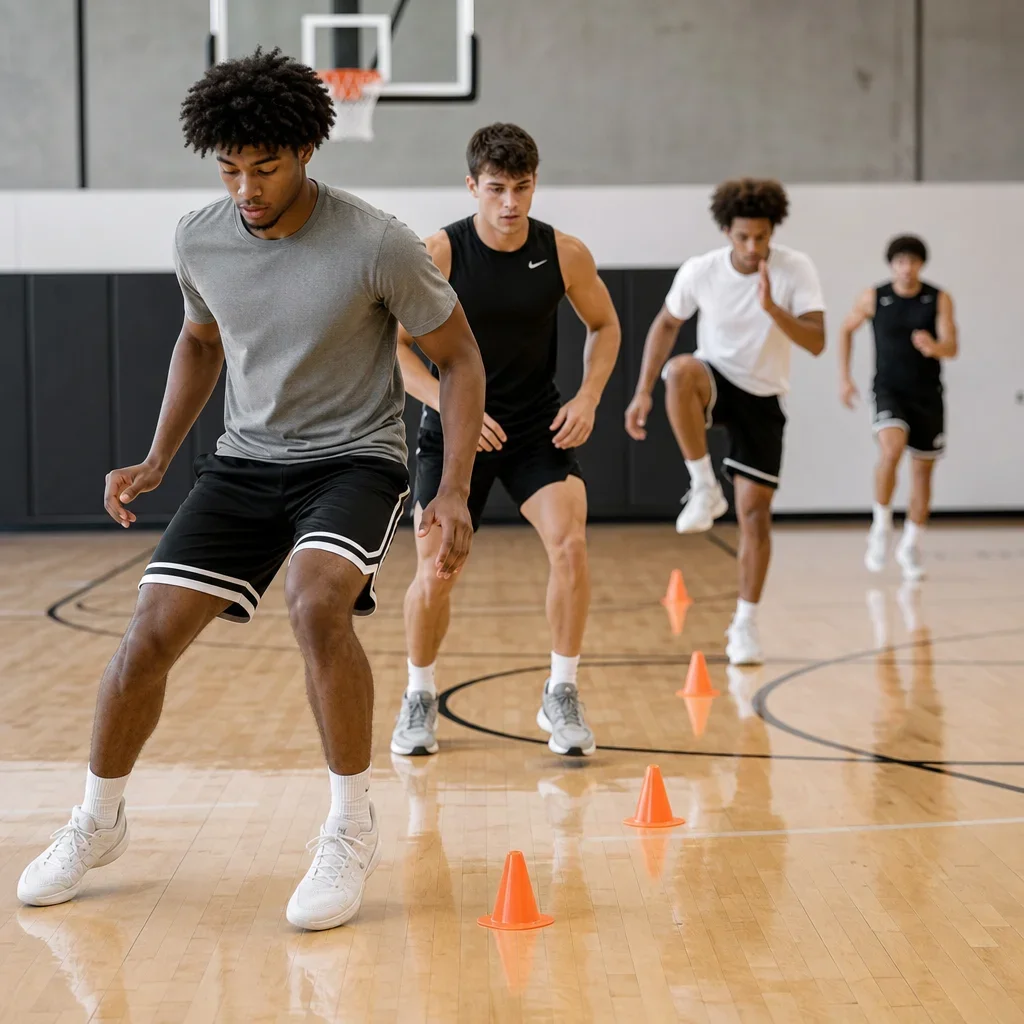
The best warm-up before basketball is dynamic, progressive, and specific to the court session ahead. A useful warm-up usually takes 8 to 15 minutes and should move through 5 phases: pulse raise, dynamic mobility, activation, landing and deceleration prep, and basketball-specific rehearsal.
Dynamic work is usually better than prolonged static stretching before play because the goal is readiness, not relaxation. Short mobility drills, skips, shuffles, hip openers, calf raises, pogo hops, and snap-downs prepare the ankles, calves, knees, hips, trunk, and shoulders for fast movement.
A simple pre-practice or pre-game sequence can look like this:
- Light jog, skip, backpedal, and shuffle for 2 to 3 minutes
- Dynamic mobility for hips, ankles, thoracic spine, and hamstrings for 2 to 3 minutes
- Activation work like glute bridges, calf raises, tibialis raises, and dead bugs for 2 to 4 minutes
- Landing prep with pogo hops, snap-downs, and stick landings for 2 to 3 minutes
- Basketball-specific closeouts, cuts, and acceleration drills for 2 to 4 minutes
The coaching cues matter as much as the drill selection. Quiet feet, knees tracking over toes, chest over the base of support, controlled trunk position, and a strong first step will usually do more than a rushed line of static stretches.
Strength, balance, and prehab exercises that matter most
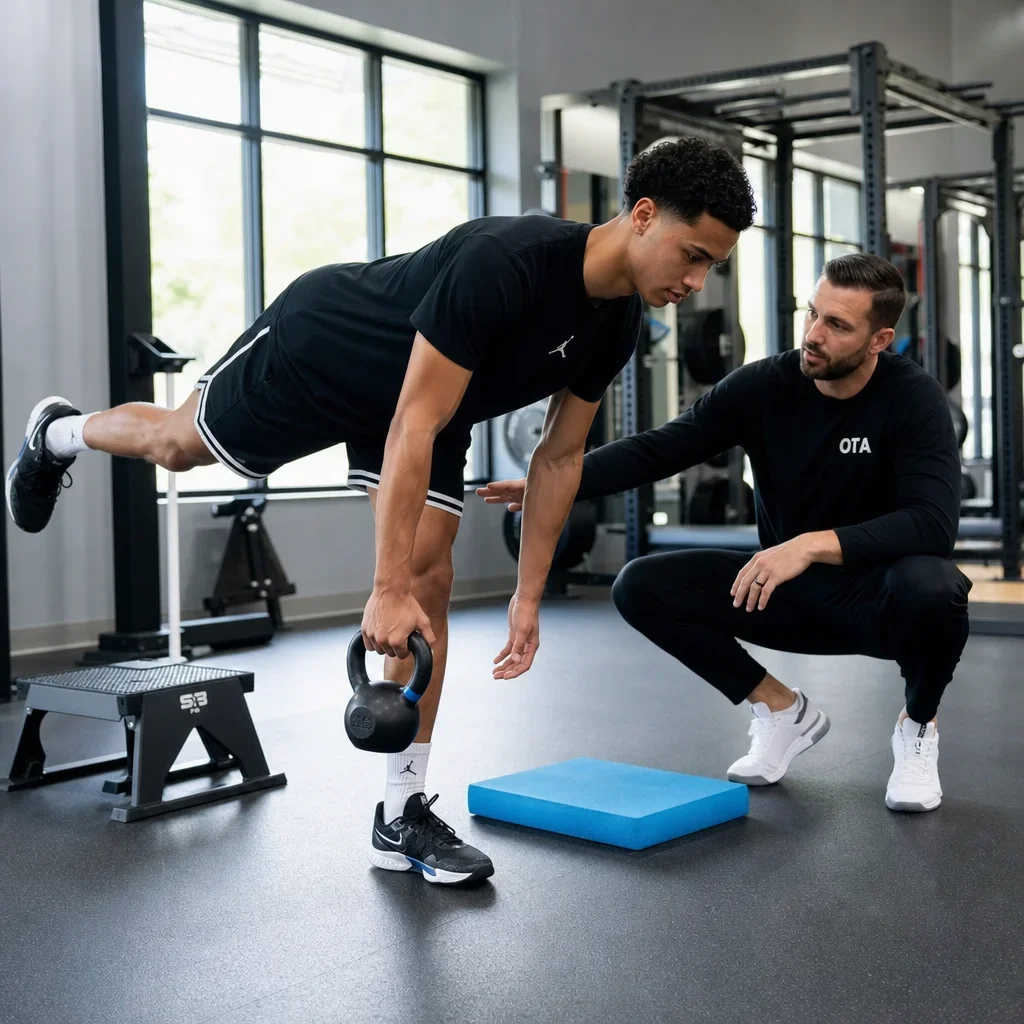
The core of a prevention plan is strength plus control, not balance alone. The most useful categories are ankle-foot strength, calf capacity, single-leg balance, hip strength, trunk control, landing skill, deceleration work, hamstring strength, and upper-body resilience.
For most players, 2 to 4 sets of 5 to 12 reps works well for strength drills, while holds usually fit in the 20 to 45 second range. Your exact program should match the player’s age, training history, pain status, and court volume, because this is general information, not an individualized rehab plan.
A practical drill library includes:
- Single-leg calf raises for calf and Achilles capacity
- Tibialis raises for lower-leg control
- Banded inversion and eversion for ankle support muscles
- Single-leg Romanian deadlifts for foot, hip, and trunk control
- Split squats and lateral lunges for knee and hip strength
- Hamstring bridge or curl variations for posterior-chain strength
- Copenhagen progressions for groin and pelvic control
- Pogo hops, snap-downs, and drop landings for elastic control
- Lateral bounds and stick holds for cutting readiness
- Pallof presses and carries for trunk stability
- Push-up and scapular control work for shoulder resilience
- Wrist, grip, and finger strengthening for contact and ball-handling demands
Novice players should start with slower, controlled versions and earn the more reactive drills later. A progression over 2 to 6 weeks is a practical way to build from stable holds and simple landings to faster hops, bounds, and basketball-specific change of direction.
Injury-specific prevention table
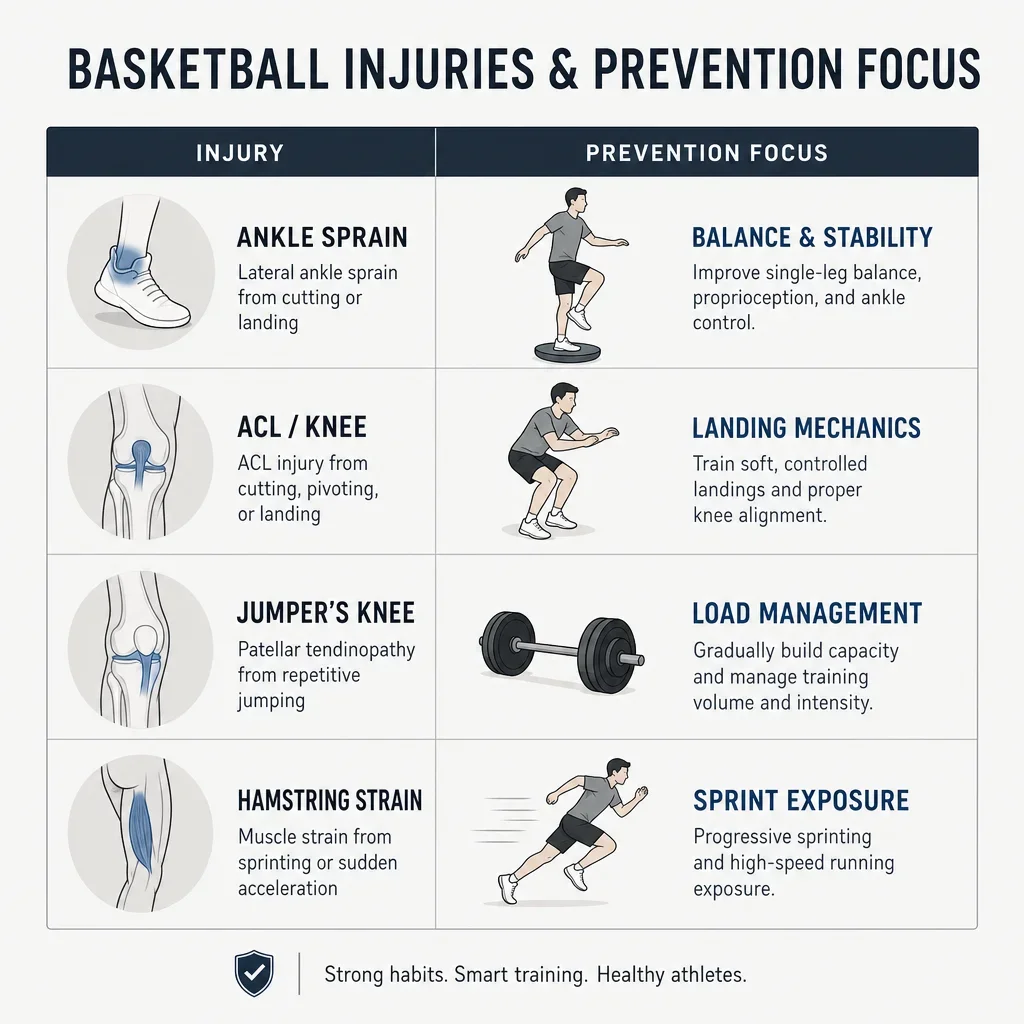
Different injuries need different prevention priorities. Generic prehab is better than nothing, but a more useful basketball injury prevention program separates ankle sprain work from ACL prevention, tendon loading, muscle strain prevention, and upper-body contact preparation.
| Injury type | Main risk to target | Prevention focus | Early warning signs |
|---|---|---|---|
| Ankle sprain | Poor balance, weak calf/peroneals, rushed landing or cutting | Calf strength, inversion/eversion work, single-leg balance, hopping progression, brace or tape discussion after prior sprain | Repeated rolling, swelling, giving-way |
| ACL or knee ligament stress | Poor deceleration, knee collapse, trunk drift, fatigue | Landing drills, deceleration mechanics, hip and trunk strength, symmetry work, fatigue management | Instability, pain with pivoting, loss of confidence |
| Jumper’s knee / patellofemoral pain | Excess jump load, low quad and calf capacity, poor landing strategy | Quad and calf loading, jump-volume monitoring, pain-guided loading, movement retraining | Pain at the front of the knee, pain after jumping |
| Hamstring or quad strain | Poor sprint exposure, weak eccentric strength, rushed return | Gradual speed exposure, strength progressions, full warm-up, staged return to high-speed work | Tightness, sharp pulling pain, loss of acceleration |
| Achilles pain | Low calf capacity, sudden jump increase, poor load progression | Heavy calf work, jump-load tracking, footwear review, early symptom response | Morning stiffness, pain after jumping |
| Finger, thumb, wrist, shoulder issues | Contact, falls, poor catching position, low upper-body resilience | Catching mechanics, fall strategy, grip and wrist strength, scap control, shoulder strength | Swelling, jammed fingers, pain on contact |
How to prevent ankle sprains, ACL problems, jumper’s knee, and muscle strains
The best exercises to prevent ankle sprains in basketball are the ones that rebuild both force and control. Single-leg calf raises, banded ankle work, balance reaches, line hops, lateral hops, and cutting drills with a stick landing all help because an ankle that is only taped, but still weak and poorly controlled, stays vulnerable.
Do ankle braces or ankle taping help prevent basketball injuries? They can help some players, especially after a prior ankle sprain, because they add external support during cutting and landing. They are not a replacement for rehab, and fit, comfort, skin tolerance, and the player’s history all matter, so if symptoms keep returning, get assessed rather than relying on support alone.
The best exercises to help prevent ACL injuries focus on landing, cutting, and deceleration. Snap-downs, drop landings, split squats, single-leg RDLs, lateral bounds, and planned change-of-direction drills teach the player to absorb force with the foot, calf, knee, hip, and trunk working together.
Jumper’s knee and patellofemoral pain respond best to load management plus capacity work. Players usually do better when jump volume is tracked, quad and calf strength are built steadily, and tendon pain is not ignored until it becomes a daily problem.
Hamstring and quad strains are less likely when sprinting exposure is built instead of skipped. Full-speed work should return gradually, because a player who only jogs in rehab but then tries to sprint, stop, and cut at game speed is usually underprepared.
Upper-body prevention matters more than most players think. Finger, thumb, wrist, and shoulder problems are common in rebounds, falls, and contact plays, so catching mechanics, push-up and scapular control, grip strength, and fall awareness belong in a complete program.
Landing, cutting, and deceleration mechanics that reduce risk
Safer mechanics usually look quieter, earlier, and more controlled. The common technique faults are stiff landings, uncontrolled knee collapse, poor trunk control, overstriding, late braking, and trying to cut from a weak body position.
Good landing mechanics use enough hip, knee, and ankle bend to spread force instead of dumping it into one structure. On a rebound, layup, or closeout, the goal is not a soft collapse but a controlled landing with the chest organized over the feet and the knee tracking with the line of the toes.
Good cutting mechanics start before the cut. If the player cannot decelerate first, the cut is already late, and the foot often lands too far ahead of the body with poor trunk control.
Video analysis can help because it slows down patterns the athlete cannot feel in real time. It is a useful tool for review of jumps, closeouts, and changes of direction, but it does not replace an assessment of strength, mobility, pain, and sport demands.
A step-by-step weekly basketball injury prevention program
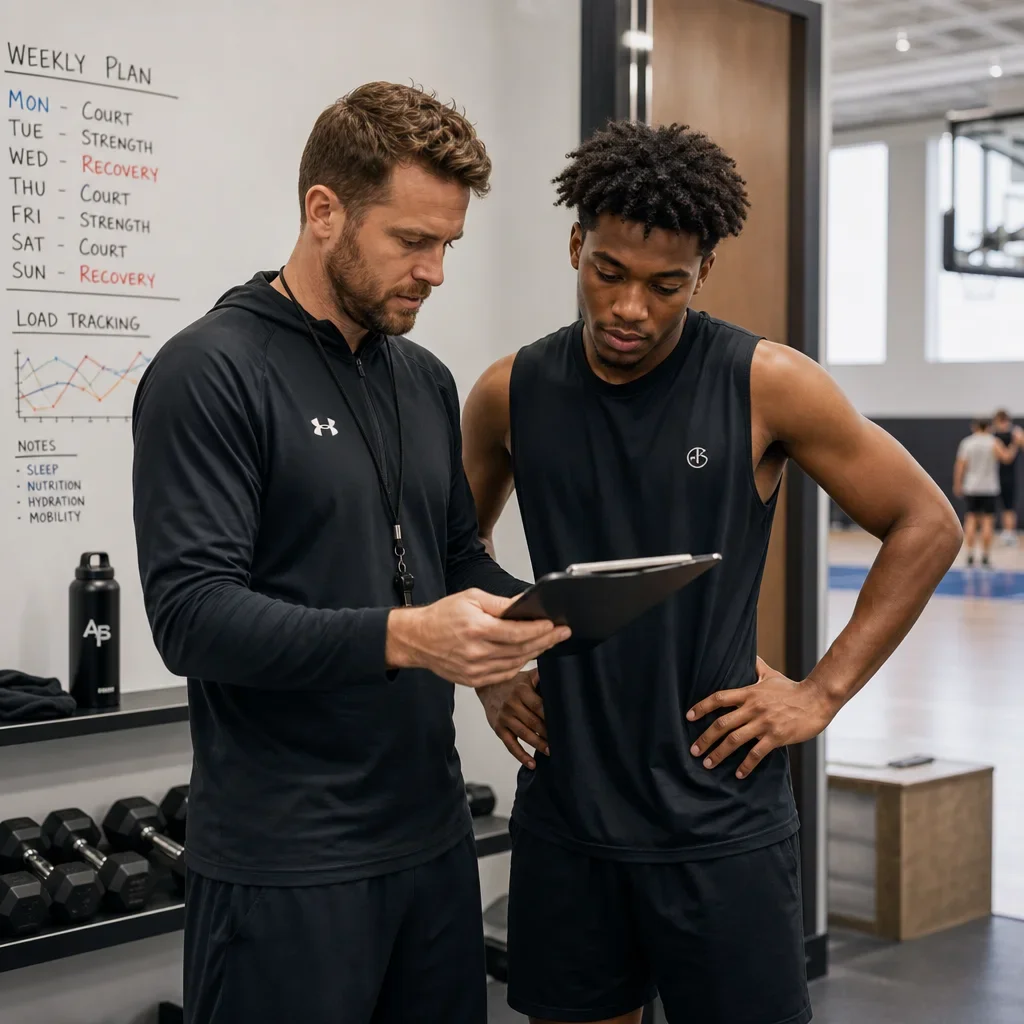
The weekly plan should be simple enough to repeat and short enough to keep doing. A workable example uses a warm-up before every court session, 2 to 3 focused strength or prehab sessions per week, small doses of landing or cutting control, and 1 lighter recovery day.
Here is a practical weekly template for a player with 3 court sessions per week. Use it as an example framework, not personal medical advice.
Day 1: Court session
- Full dynamic warm-up, 8 to 15 minutes
- Practice or game
- Post-session note: soreness, swelling, confidence, and session RPE
Day 2: Strength and prehab
- Calf raises, single-leg RDL, split squat, hamstring curl, Pallof press
- 2 to 4 sets each
- Finish with balance or light hopping if pain-free
Day 3: Court session
- Full warm-up
- Add 5 to 10 minutes of landing and deceleration drills before play
- Log jump volume or at least perceived workload
Day 4: Recovery or low-impact cross-training
- Walk, bike, mobility, or light upper-body work
- Keep it easy if soreness, swelling, or fatigue is building
Day 5: Strength and prehab
- Lateral lunge, calf work, hamstring bridge, Copenhagen progression, scap control
- 2 to 4 sets each
Day 6: Court session
- Full warm-up
- Short cut-and-stick or closeout prep before higher-speed drills
Day 7: Rest or mobility-focused recovery
- Full rest or low-load movement only
Players with 2 weekly court exposures can usually tolerate slightly more strength work, while players with 4 or more court exposures often need shorter prehab blocks and tighter load management. A 4 to 8 week block is a practical window to review progress, movement quality, symptoms, and whether the plan is still realistic.
If recurring ankle sprains, knee pain, or jump-related pain keep returning, a biomechanics-led assessment can help identify what the checklist missed. Studio Athletica offers physiotherapy and sports medicine assessment in downtown Toronto for players who need a more personalized prevention or return-to-sport plan.
How prevention should change in preseason, in-season, and off-season
Preseason should build capacity before competition gets dense. A 4 to 8 week buildup block is a practical way to restore strength, increase jump and sprint exposure gradually, and clean up old deficits from a prior season or past injury.
In-season training should maintain the essentials, not chase fatigue for its own sake. Warm-ups can be shorter only if the key elements stay in place, and strength work is usually better kept consistent at a lower dose than removed completely.
Off-season is the best time to rebuild what the season exposed. That can mean more strength work, better landing mechanics, calf and quad capacity, cross-training, and progressions that are harder to fit in once games and tournaments start stacking up.
Tournament weekends and compressed schedules need a more conservative approach. When court exposures spike, the goal shifts from adding more training to protecting movement quality, recovery, hydration, and symptom control between games.
Youth athletes vs adult recreational players
Young basketball players need protection from overuse as much as from one bad landing. Growth spurts, early specialization, year-round teams, and overscheduling can push volume higher than tissue capacity, especially when recovery and strength work do not keep up.
Parents and coaches should prioritize consistency over excess volume. A shorter program done 2 to 3 times per week is usually more useful than a long routine the athlete stops doing after one week.
Adult recreational basketball players have a different problem: sudden spikes. We see this with weekend athletes who sit all week, skip the warm-up, and then ask the body to sprint, jump, and cut at full speed for 90 minutes.
Adult rec players usually reduce injury risk most by extending the warm-up, rebuilding calf and hamstring capacity, respecting old ankle or knee injuries, and avoiding the trap of trying to play at last year’s speed on this year’s conditioning.
Position-specific considerations for guards, forwards, and centers
Guards usually need more repeat acceleration, deceleration, and change-of-direction capacity. Their programs often need extra ankle resilience, calf strength, cutting mechanics, and tolerance for repeated high-speed efforts.
Forwards sit in the middle of the demand profile. They still need strong landing control and hip or trunk strength, but they also deal with regular contact and mixed movement demands around drives, closeouts, and rebounds.
Centers usually absorb more contact and more traffic around the rim. Their programs often need extra attention to ankle and knee load tolerance, shoulder and finger protection, and controlled landings in crowded spaces.
Position helps guide the program, but the player’s actual movement profile matters more than the label. A guard with poor landing mechanics and a center with recurring ankle sprains both need the program built around what the body shows, not just where they line up.
Footwear, ankle braces, taping, and protective equipment
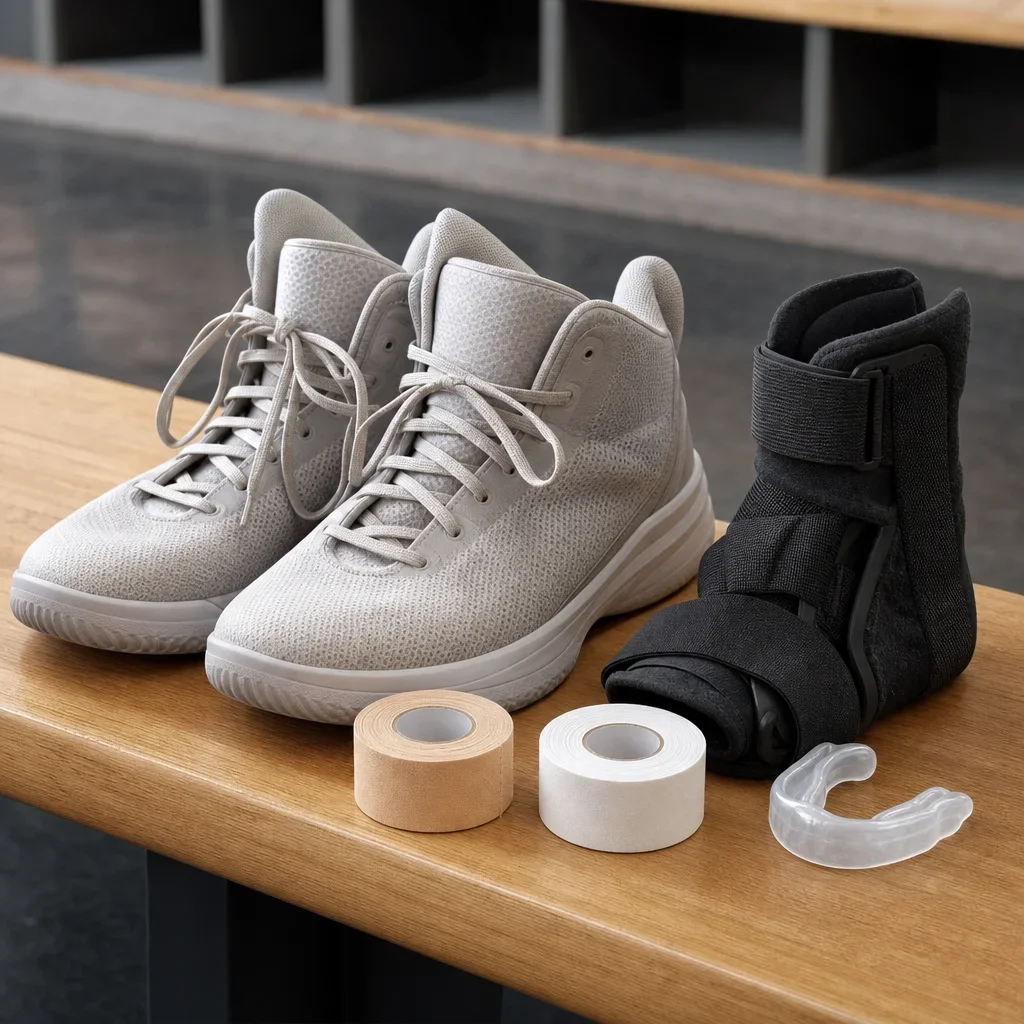
Basketball shoes reduce risk best when they fit well, match the court surface, and still have usable traction and structure. No shoe can guarantee safety, and I would avoid buying based on marketing claims alone if the shoe feels unstable, worn out, or wrong for your foot.
What matters most in basketball shoes is fit, comfort, traction, support, and condition. If the outsole is worn smooth, the upper is breaking down, or the heel feels loose, the shoe is not helping your movement quality anymore.
Ankle braces or taping can be worth discussing after a previous ankle sprain. Some players prefer the convenience of a brace, while others prefer the feel of taping, but either option should support a rehab plan rather than replace calf strength, balance retraining, and hopping progressions.
Protective habits matter too. Remove jewelry, use sports glasses if needed, keep nails managed for hand safety, and consider a mouth guard where contact risk is higher.
Court setup, environment, and emergency readiness
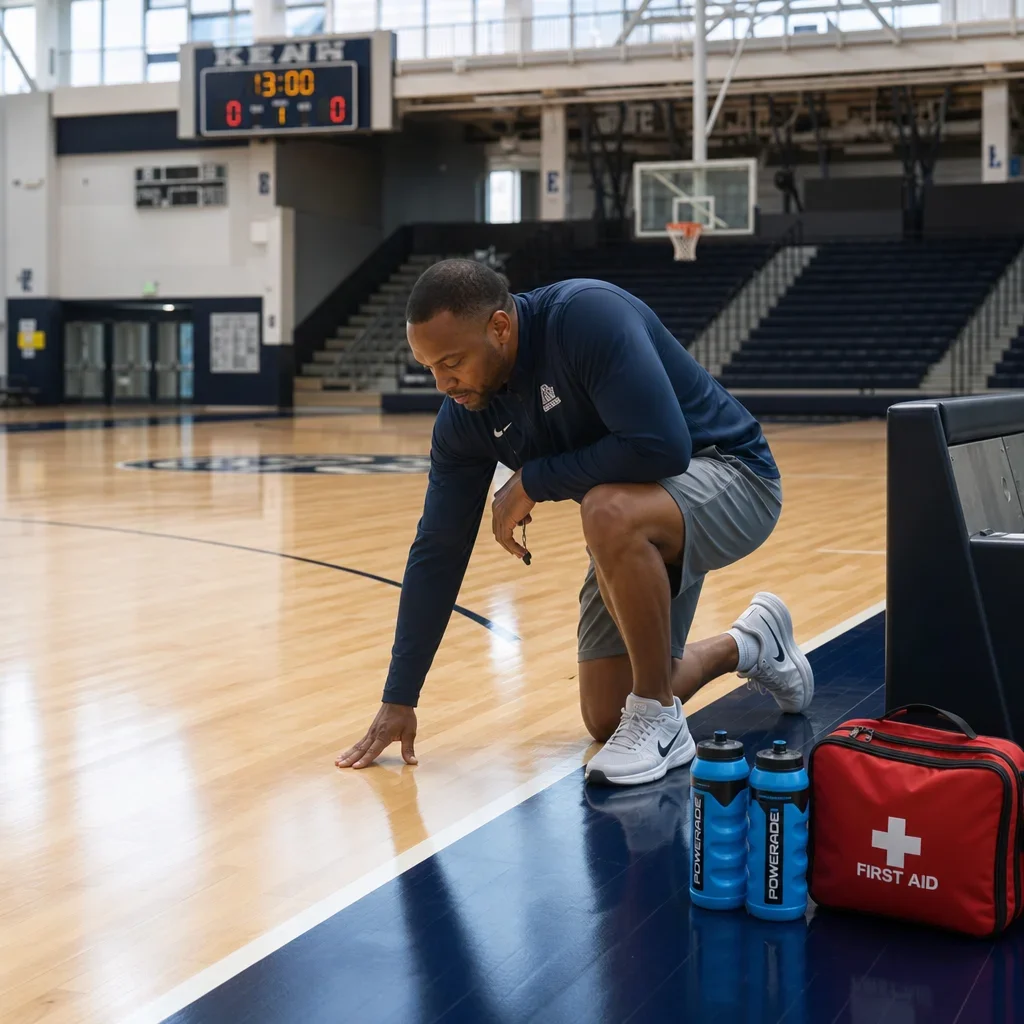
A safe court reduces avoidable risk before the warm-up even starts. The floor should be dry, clear of debris, well lit, and have enough space around baselines and sidelines for players to decelerate safely.
The playing environment should also support hydration and fatigue management. Easy water access, planned substitutions when movement quality drops, and attention to heat or ventilation issues matter more than most teams admit.
Coaches and team staff should be ready for injuries before they happen. That means first aid access, emergency contacts, awareness of concussion red flags, and a plan for what to do if a player cannot bear weight, has significant swelling, or shows head injury symptoms.
Load management, sleep, hydration, and recovery
Load management reduces injury risk by controlling how fast work increases. Sharp spikes in court time, jump volume, sprint exposure, or tournament density can overload tissues that were handling last week’s workload but are not ready for this week’s jump.
Simple athlete monitoring works better than complicated systems most of the time. Session RPE, soreness trend, swelling, sleep quality, motivation, and whether movement quality is falling off are all useful markers for adjusting the next session.
Sleep, hydration, and nutrition support both performance and tissue recovery. If a player is under-fuelled, under-hydrated, and repeatedly short on sleep, mechanics and decision-making usually deteriorate before the athlete realizes it.
Cross-training can protect recovery when impact needs to come down temporarily. Bike work, pool work, walking, or lower-load strength sessions can help maintain capacity while calming a tendon, sore knee, or overloaded lower leg.
When pain starts: treatment basics and return-to-play principles
The first step after a meaningful basketball injury is to stop the activity that is making it worse. If pain is severe, swelling builds quickly, the joint feels unstable, the player cannot bear weight, or there are concussion symptoms, the priority is assessment, not finishing the run.
Basketball injuries and treatment plans depend on what was injured and how the player moves afterward. Minor soreness after a hard session can settle with load reduction and recovery, but repeated giving-way, locking, major swelling, deformity, severe pain, or head injury symptoms need medical evaluation.
Return to play is safest when symptoms have settled, range of motion is restored, strength is adequate, hopping and cutting are tolerated, basketball-specific drills are controlled, and confidence is back. Online advice cannot clear you for return, because the same injury label can look very different from one player to the next.
If you are unsure whether the issue is simple soreness or something more, get assessed before pushing through it. Studio Athletica can assess basketball players in downtown Toronto for recurring ankle sprains, knee pain, jump-related pain, post-injury return-to-sport decisions, and movement analysis through physiotherapy or sports medicine care.
Common mistakes that make prevention programs fail
Most failed programs are not missing one magic exercise. They fail because the routine is rushed, too long, too random, or disconnected from how the player actually gets hurt.
The biggest mistakes include:
1. Skipping the warm-up or treating it as social time 2. Doing only stretching and calling it prevention 3. Ignoring prior ankle sprains or chronic knee pain 4. Progressing plyometrics too quickly 5. Adding exercises without fixing landing and deceleration mechanics 6. Ignoring fatigue, tournament density, and pain trends 7. Making the program so long that nobody follows it
I would rather see a player complete a focused 10 to 20 minute prevention block consistently than chase a perfect plan that only happens once. Consistency is what lets strength, control, and movement changes hold up under game speed.
Printable-style basketball injury prevention checklist
A useful on-page checklist makes the program easier to follow before practice and games. If you were looking for a basketball injury prevention program PDF, use this as a printable-style version instead.
- Warm-up completed before the session
- Shoes fit well and still have traction
- Brace or tape used if previously advised
- Court is dry, clear, and well lit
- Water is available
- Ankles, calves, knees, and hips feel ready after activation
- Weekly strength or prehab sessions completed 2 to 3 times
- No swelling, giving-way, or major pain ignored
- Sleep and fatigue checked before high-load sessions
- Jump and court volume not spiking suddenly
- Return-to-play decisions based on function, not pressure
FAQ
What is a basketball injury prevention program?
It is a structured routine that combines dynamic warm-up, strength work, balance, landing and cutting mechanics, load management, recovery, and return-to-play principles. The goal is to reduce modifiable risk, not guarantee zero injuries.
What are the most common basketball injuries?
Common injuries in basketball include ankle sprains, knee pain, jumper’s knee, ACL and MCL injuries, hamstring and quad strains, Achilles pain, and hand injuries like finger or thumb sprains. Concussion and shoulder injuries can also occur with falls and contact.
What should a basketball warm-up include?
A good warm-up usually lasts 8 to 15 minutes and includes pulse raise, dynamic mobility, activation, landing or deceleration prep, and basketball-specific movement rehearsal. Dynamic work is usually more useful than prolonged static stretching before play.
How often should basketball players do injury prevention exercises?
Warm up before every court session. Add focused strength or prehab work 2 to 3 times per week if the player’s schedule and recovery allow it.
Do ankle braces help prevent basketball ankle sprains?
They can help some players, especially after a prior sprain, because they add support during cutting and landing. They work best when paired with calf strength, balance retraining, and hopping progressions.
How can basketball players help prevent ACL injuries?
The main targets are landing mechanics, deceleration skill, hip and trunk control, single-leg strength, and fatigue management. Programs should teach force absorption, not just add generic hops.
How can I prevent jumper’s knee from basketball?
Track jump load, build quad and calf capacity, use pain-guided loading, and respond early to symptoms. Tendon pain usually gets harder to manage when a player keeps jumping through it without changing load or capacity.
What are the best shoes for basketball injury prevention?
The best shoes are the pair that fit well, feel stable, match the court surface, and still have reliable traction and structure. No specific brand can guarantee injury prevention.
How do adult recreational basketball players reduce injury risk?
Start with a longer warm-up, rebuild calf and hamstring strength, respect old injuries, and avoid weekend-only spikes in intensity. Adult rec players usually get in trouble by doing too much too fast after too little preparation.
When can I return to basketball after an injury?
Return is safer when pain is controlled, swelling is settled, range of motion and strength are restored, hopping and cutting are tolerated, and basketball-specific function has been tested. That decision should be based on an in-person assessment when symptoms are significant or recurring.
Compare your consistency, not just your motivation. If your warm-up is rushed, your knees or ankles keep talking back, or your return feels shaky after an injury, that is usually the point to get assessed rather than guess your way through another month.