What Is a Sports Medicine Doctor? What They Do and When You Need One
You pulled something in your knee playing soccer. Or your shoulder has been aching for months since you started lifting. Or you twisted your ankle on a trail run and it still doesn’t feel right six weeks later. Your family doctor says it’s probably fine. Your friend says you need to see a “sports medicine doctor.” But what is that, exactly?
Despite the name, a sports medicine doctor doesn’t only treat elite athletes. They treat anyone with a musculoskeletal injury or an exercise-related health issue — from competitive marathon runners to weekend hikers to office workers with chronic back pain from sitting at a desk all day. Here’s who they are, what they do, how they’re different from other healthcare providers, and when you should see one.
A Sports Medicine Doctor Is a Physician — Not a Physiotherapist or Chiropractor
This is the most common misconception, so let’s clear it up first. A sports medicine doctor is a licensed Medical Doctor (MD) who has completed additional specialized training in the diagnosis and management of injuries and conditions related to physical activity and sport.
In Canada, the credential to look for is the Diploma in Sport and Exercise Medicine (Dip. Sport Med.), awarded by the Canadian Academy of Sport and Exercise Medicine (CASEM). To earn this credential, a physician must first complete medical school and a residency in a base specialty — most commonly family medicine, but sometimes emergency medicine, paediatrics, or physical medicine and rehabilitation (physiatry). After that, they complete a 1- to 2-year fellowship specifically in sport and exercise medicine, followed by a rigorous practical certification exam administered by CASEM.
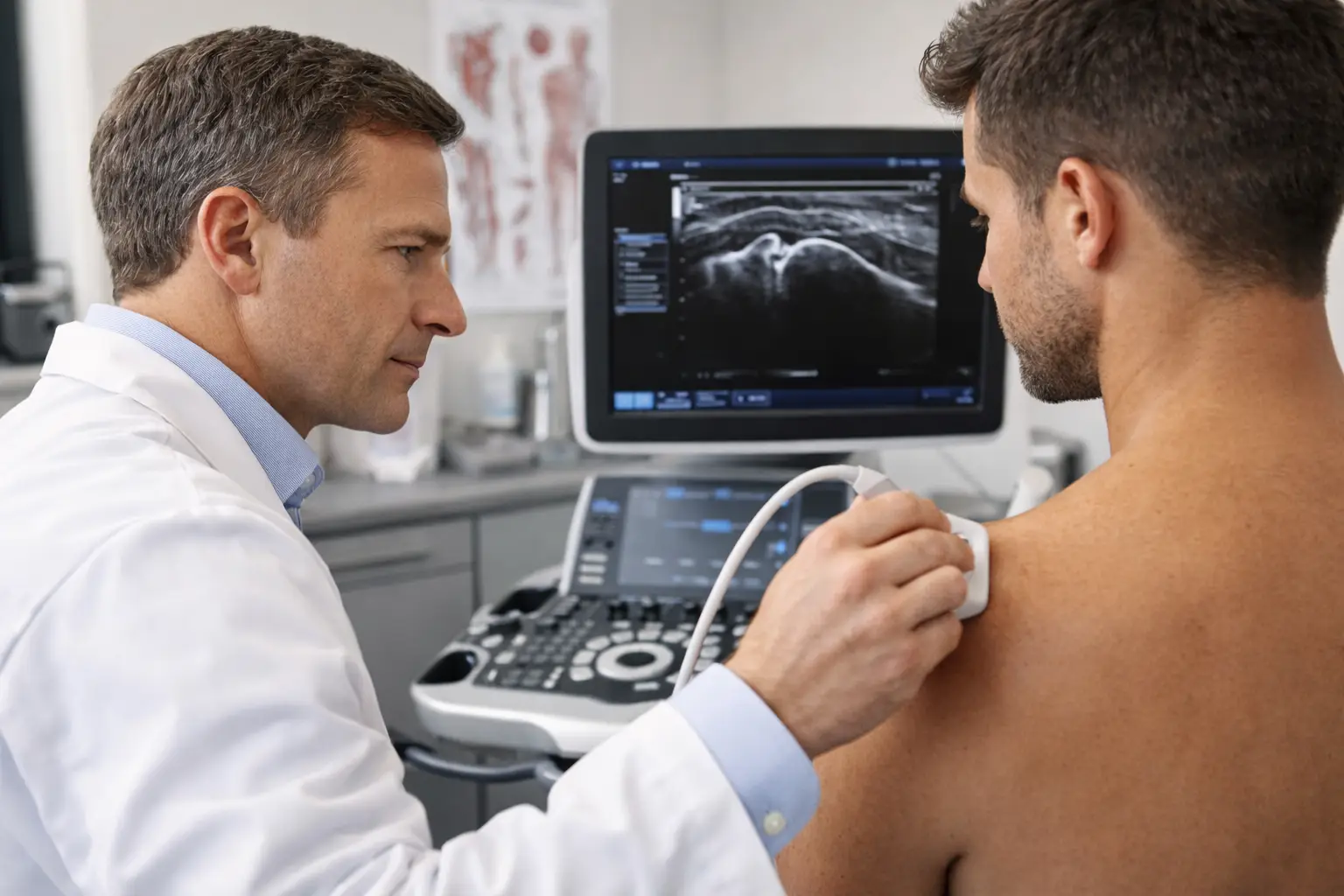
In Ontario, a sports medicine doctor must be registered with the College of Physicians and Surgeons of Ontario (CPSO). They can order diagnostic imaging (X-rays, MRIs, ultrasounds), prescribe medications, perform certain procedures (like cortisone injections or PRP therapy), and refer you to surgeons when necessary. This is what separates them from physiotherapists, chiropractors, and athletic therapists — who provide hands-on treatment but cannot independently diagnose through medical imaging or prescribe drugs.
What Does a Sports Medicine Doctor Treat?
A sports medicine physician’s scope covers the entire musculoskeletal system — bones, muscles, ligaments, tendons, and joints — plus the medical conditions that affect physically active people. Their scope of care includes:
Acute Injuries
- Sprains (ligament injuries — ankles, knees, wrists)
- Strains (muscle or tendon tears — hamstrings, rotator cuff, groin)
- Fractures (stress fractures, acute breaks from impact)
- Dislocations (shoulder, kneecap, finger)
- Concussions and post-concussion syndrome
Chronic and Overuse Conditions
- Tendinopathy (tennis elbow, Achilles tendinitis, patellar tendinitis)
- Plantar fasciitis
- IT band syndrome
- Shin splints (medial tibial stress syndrome)
- Chronic low back pain related to movement patterns
- Osteoarthritis management in active individuals
Exercise-Related Medical Issues
- Exercise-induced asthma
- Cardiac screening for athletes
- Return-to-activity decisions after illness (e.g., mono, COVID-19, pneumonia)
- Diabetes, hypertension, and obesity management through exercise prescription
Pre-Participation Assessments
Sports medicine doctors perform pre-season physical assessments for athletes at all levels — from youth hockey players to university varsity teams to recreational leagues. These assessments identify pre-existing conditions, injury risks, and cardiovascular issues before the athlete begins training or competition.
Sports Medicine Doctor vs Physiotherapist vs Orthopaedic Surgeon
One of the biggest sources of confusion for patients is understanding which provider to see for a musculoskeletal problem. Each plays a different role:
| Sports Medicine Doctor | Physiotherapist | Orthopaedic Surgeon | |
| Credential | MD + Dip. Sport Med. (CASEM) | MPT or BScPT (registered with College of Physiotherapists of Ontario) | MD + FRCSC (fellowship in orthopaedics) |
| Primary role | Diagnose, prescribe, inject, refer | Hands-on treatment and rehabilitation | Surgical repair and reconstruction |
| Can order imaging | Yes (X-ray, MRI, ultrasound) | No (can refer for imaging in some provinces) | Yes |
| Can prescribe medication | Yes | No | Yes |
| Performs surgery | No | No | Yes |
| OHIP covered in Ontario | Yes | Limited (see below) | Yes (with referral) |
| Best for | Diagnosis, non-surgical management, return-to-sport decisions | Rehabilitation, exercise programs, manual therapy, ongoing recovery | ACL reconstruction, joint replacement, fracture repair |
In most cases, the pathway works like this: the sports medicine doctor diagnoses the problem, then refers you to a physiotherapist for treatment and rehabilitation. If the injury requires surgery (a torn ACL, a severely damaged rotator cuff, a complex fracture), the sports medicine doctor refers you to an orthopaedic surgeon. After surgery, you return to physiotherapy for recovery. The three providers work as a team, not as competing alternatives.

Do You Need a Referral to See a Sports Medicine Doctor in Ontario?
No. In Ontario, you do not need a referral from your family doctor to see a sports medicine physician. You can book an appointment directly. Sports medicine consultations are covered by OHIP for Ontario residents with a valid health card, just like a visit to any other physician. You will need to present your health card at the appointment.
However, there are a few situations where a referral from your family doctor can be helpful:
- If the sports medicine clinic has a waitlist, a referral from your GP may expedite the process
- If you need an MRI, the sports medicine doctor can order it directly, but wait times for publicly funded MRIs in Ontario can be several weeks to months
- If your extended insurance requires a physician referral for coverage of related treatments (physiotherapy, orthotics, etc.)
When Should You See a Sports Medicine Doctor Instead of Your Family Doctor?
Your family doctor is a great starting point for general health concerns. But a sports medicine physician brings specialized diagnostic skills that a general practitioner may not have. Consider seeing a sports medicine doctor when:
- An injury hasn’t improved after 2–4 weeks of rest and basic self-care (ice, anti-inflammatories, modified activity)
- You have a recurring injury that keeps coming back — the same ankle, the same knee, the same shoulder. This usually means the root cause hasn’t been identified.
- You need a return-to-sport or return-to-work decision after a concussion, a fracture, or a significant muscle/ligament injury. Sports medicine doctors are specifically trained to make these calls safely.
- You want a non-surgical treatment option explored first — such as injection therapy (cortisone, PRP, hyaluronic acid), bracing, or a structured rehabilitation program before considering surgery.
- You’re an active person with a chronic condition (diabetes, heart disease, obesity) and want an exercise prescription that’s medically supervised and tailored to your specific limitations.
How Sports Medicine and Physiotherapy Work Together
This is where the real value of a multidisciplinary approach shows up. A sports medicine doctor gives you the diagnosis — what’s wrong, why it’s happening, and whether it needs imaging, medication, or a procedure. A physiotherapist then gives you the treatment plan — the exercises, manual therapy, and progressive rehabilitation that actually get you moving again.
Neither one replaces the other. A physiotherapist can’t order an MRI to confirm that your knee pain is actually a meniscus tear and not just patellofemoral syndrome. A sports medicine doctor can’t spend 45 minutes with you three times a week guiding you through a return-to-running program. You need both.
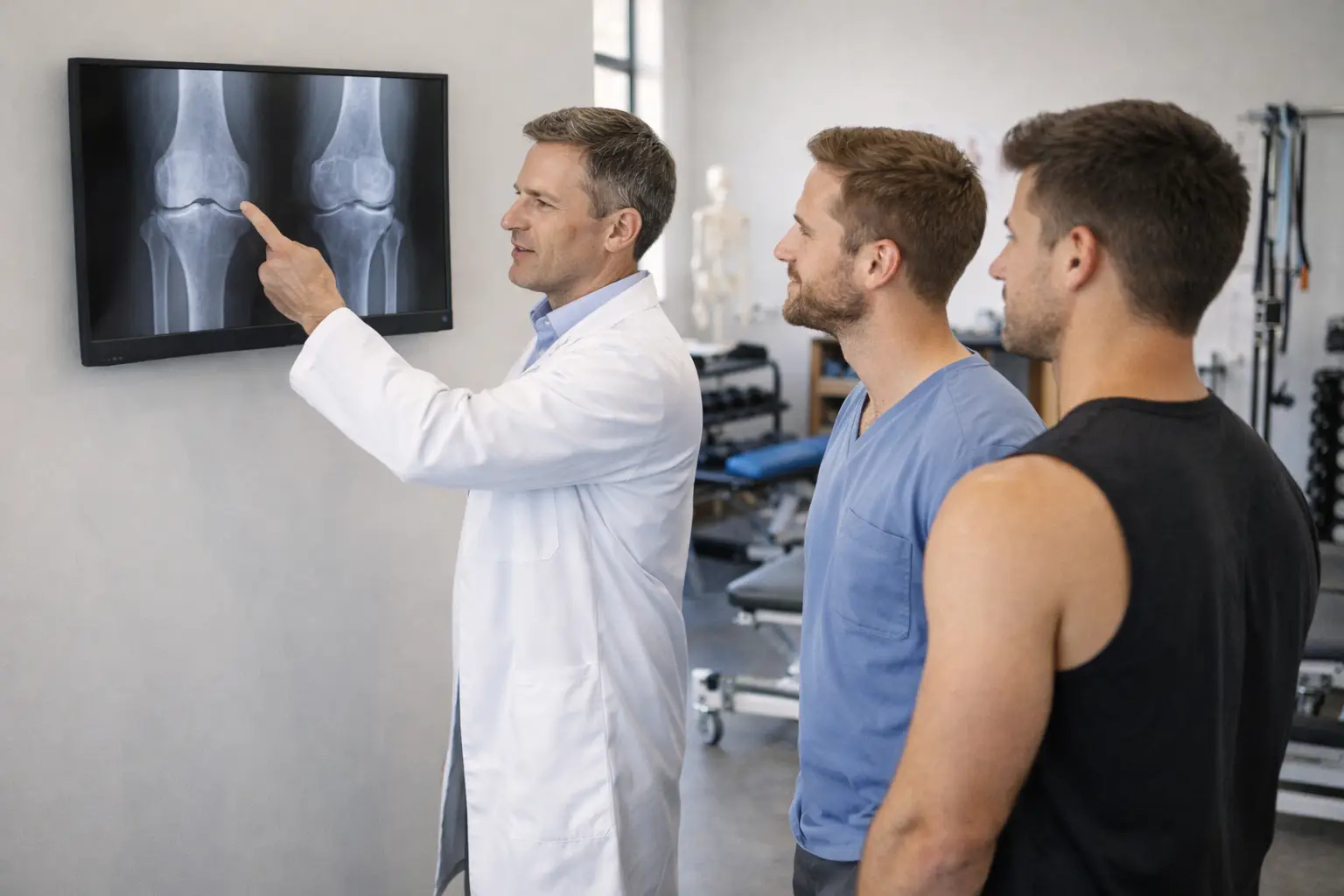
Focus Physiotherapy operates as a Registered Physiotherapist-owned clinic across multiple GTA locations, working directly alongside physicians and specialists to deliver coordinated care. Whether your sports medicine doctor has referred you for post-surgical ACL rehabilitation, concussion recovery, chronic pain management, or a return-to-sport program after a motor vehicle accident, Focus Physiotherapy’s team builds individualized, evidence-based treatment plans using advanced tools like the Alter G Anti-Gravity Treadmill for patients who can’t tolerate full weight-bearing exercise. Direct insurance billing is available for most major providers. You can book an assessment at focusphysiotherapy.com or call any of their GTA clinic locations directly.