
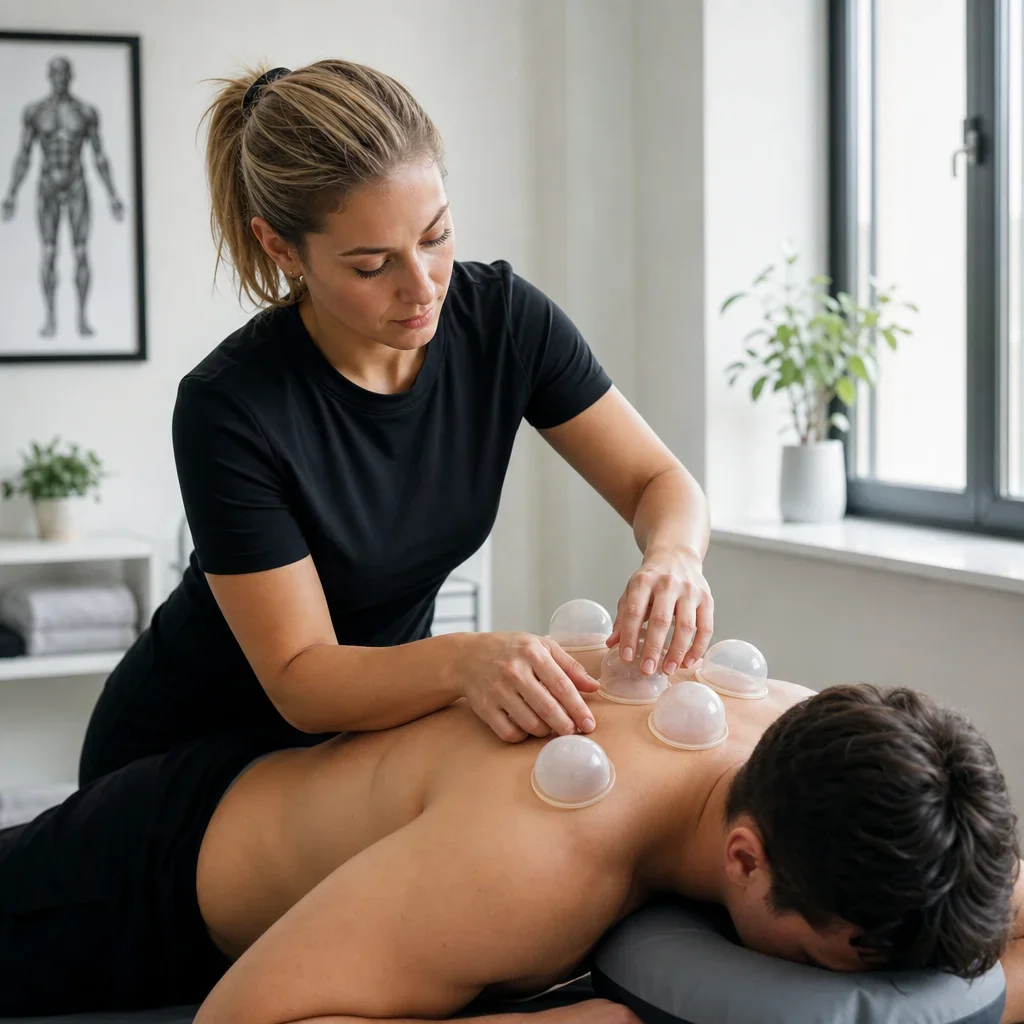
Sports cupping massage is not a miracle recovery tool. It is a manual therapy technique that may help some athletes feel less tight, more comfortable, and easier to move for a short period, especially when it sits inside a broader rehab plan.
What Is Sports Cupping Massage?
Sports cupping massage uses cups to create suction on the skin and superficial soft tissue as part of a treatment session. In a sports setting, the goal is usually short-term symptom relief, movement comfort, or better tolerance to rehab work rather than a stand-alone cure.
Dry cupping is the version most people mean in rehab and athletic care. It uses suction only. Wet cupping involves skin piercing or small incisions, which brings different infection-control and scope considerations, so it should not be assumed to be part of a typical sports clinic visit.
At a biomechanics-led clinic, cupping therapy makes the most sense as one tool among others. We would pair it with assessment, exercise selection, load management, and hands-on care when it fits the problem in front of us. This is general information, not a treatment recommendation for your situation.
How Does Cupping Therapy Work?
Cupping works by lifting the skin and superficial tissue with suction, which may change local pressure and how the area feels during movement. That change in sensation is one reason some people report less tightness, less pain, or easier motion right after treatment.
The mechanism is still debated, and the evidence is mixed. It is reasonable to say cupping may help with short-term symptom relief, but it is not accurate to say it reliably repairs tissue, fixes biomechanics on its own, or removes toxins from the body.
Claims that cupping pulls out toxins are not supported by good clinical reasoning. The circular marks that can appear are a skin response to suction, not proof that harmful substances were extracted.
Does Sports Cupping Massage Actually Work for Athletes?
For some athletes, massage cupping does help with short-term soreness, tightness, or pain. What it has not clearly proven is consistent long-term performance improvement or structural healing by itself.
That distinction matters. A runner may feel calf tightness ease after sports cupping and then tolerate drills better, but that does not mean the underlying training error, tendon overload, or strength deficit has been solved.
Cupping really helps athletes when it makes the next useful step easier. That could mean better tolerance to exercise therapy, less guarding during manual work, or enough symptom relief to restore normal movement. Significant pain, strength loss, joint instability, or suspected injury still need proper diagnosis.
Evidence snapshot
The best case for cupping therapy is temporary symptom relief. Evidence for durable athletic performance gains is limited or mixed, so we treat it as an adjunct, not the centre of a rehab plan.
What Sports Cupping May Help With
Cupping may help with muscle soreness, perceived tightness, and some movement restriction when those symptoms are soft-tissue driven. Athletes sometimes use it around training blocks when back, neck, or shoulder discomfort starts to build and they want movement to feel less restricted.
It may also be used as an add-on in rehab for issues like runner’s calf or hip tightness, hamstring strain support, tennis elbow symptom management, low-back flare-ups, and shoulder stiffness. The key word is add-on. The treatment should follow assessment, not a generic cupping placement chart pulled from the internet.
For headaches, the more accurate framing is narrower. Cupping may help some people when neck and upper-back tension contributes to symptoms, but it is not a universal headache treatment.
Deep hip, groin, or abdominal symptoms need more caution. The psoas sits in a deep region with sensitive structures, so self-treating that area with cups is not a good idea. If someone is searching where to use cupping therapy for psoas pain, the better next step is a professional assessment.
When Athletes Should Use Cupping: Before Training, After Training, or During Rehab
Before training, sports cupping should only be used if you already know your body responds well to it and it does not leave soreness or marks that distract movement. A first session right before a race, heavy lift, or game is a poor test day.
After training, cupping can make sense when the goal is recovery comfort rather than a performance boost. If it reduces the feeling of tightness and does not irritate the skin, it may fit alongside sleep, nutrition, hydration, and sensible loading.
During rehab, cupping is often most useful as a support tool. If it lowers guarding or discomfort enough for someone to tolerate strengthening, mobility work, or hands-on treatment, it has done a practical job.
Competition day calls for a conservative approach. Marks, tenderness, or skin sensitivity can be distracting, so same-day use is usually best reserved for athletes who have tried it before and know exactly how they respond.
What a Session Feels Like and What to Expect

Cupping usually feels like pulling, pressure, tightness, or warmth on the skin. It can feel intense, but it should be tolerable and adjustable. If it feels sharp, alarming, or too strong, the provider should change the suction or stop.
A typical visit includes assessment, a review of goals and contraindications, cup placement, a short period under suction, reassessment, and aftercare advice. Session length for cupping-inclusive care often runs about 10 to 60 minutes depending on whether it is a focused add-on or part of a broader treatment plan.
Some providers leave cups in one spot. Others use gliding techniques with lotion or oil to create massage cupping across a larger area. Safe placement depends on anatomy, skin health, symptoms, and training, which is why online diagrams and any cupping placement chart should not be treated as self-treatment instructions.
Marks can happen, and they are usually circular. They are not the same as a traumatic bruise, although patients often describe them that way. Marks commonly fade in about 3 to 14 days. Your response can differ based on skin sensitivity, suction level, and how long the cups stay on.
How Often Should You Get Cupping and How Many Sessions Might You Need?
There is no one right schedule for sports cupping. Frequency depends on your goal, skin response, training load, symptom irritability, and whether it is being used for recovery comfort or as part of rehab.
A cautious consumer range is every few days to every few weeks, but only if the skin has settled and the treatment is proving useful. I would not treat cupping as something an athlete needs indefinitely.
Some people notice a short-term change after one session. Others need a short trial of about 2 to 4 sessions to see whether there is a pattern of benefit worth keeping. If function, pain, or movement are not improving within a reasonable trial, the plan should change. Your actual treatment plan depends on assessment findings, not a generic schedule.
Dry Cupping vs Wet Cupping

Dry cupping uses suction only. That is the version most associated with sports cupping and rehab settings.
Wet cupping involves skin piercing or incisions along with suction. Because that raises infection-control and regulatory questions, readers should confirm exactly what a provider is trained and authorized to perform in Ontario rather than assuming all forms of cupping are interchangeable.
If you are comparing dry cupping with wet cupping for sports recovery, the practical point is simple. Sports and rehab clinics commonly discuss dry cupping, while wet cupping belongs in a much narrower conversation with stricter safety considerations.
Sports Cupping vs Massage, Foam Rolling, Dry Needling, and Physiotherapy

Cupping gives a different mechanical feel than massage therapy. Massage applies compression and glide through the therapist’s hands, while cupping creates suction and lift on the surface tissues. One is not automatically better. They suit different preferences and goals.
Foam rolling is the cheaper and more convenient self-management option. Its trade-off is less individualized dosing and no clinical assessment. For athletes who want a home option between visits, it often fills a different role than cupping.
Dry needling and acupuncture are separate approaches with different training pathways, sensations, and proposed mechanisms. They should not be treated as the same thing as cupping just because all may be used for pain or movement complaints.
Physiotherapy covers diagnosis, exercise progression, movement assessment, and rehab planning. That is why cupping therapy can support physiotherapy, but it does not replace it, especially when someone has persistent pain, weakness, or a return-to-sport goal.
| Option | Main sensation | Best fit | Limits | When to combine |
|---|---|---|---|---|
| Sports cupping | Suction, pulling, pressure | Short-term relief of tightness or discomfort | Marks, skin sensitivity, mixed evidence for performance | Pair with rehab exercise or manual therapy |
| Massage therapy | Compression, kneading, glide | General soft-tissue work and relaxation | May not change the larger rehab plan alone | Combine with exercise-based care |
| Foam rolling | Self-pressure | Home recovery and self-management | Less precise dosing, no assessment | Use between sessions |
| Dry needling or acupuncture | Needle-based sensation | Selected pain or muscle complaints | Not for everyone, different scope and training | Combine when clinically indicated |
| Physiotherapy | Assessment plus active rehab | Injury diagnosis, recovery planning, return to sport | Not a one-technique treatment | Often the base plan that adjuncts support |
Risks, Side Effects, and Who Should Avoid Cupping
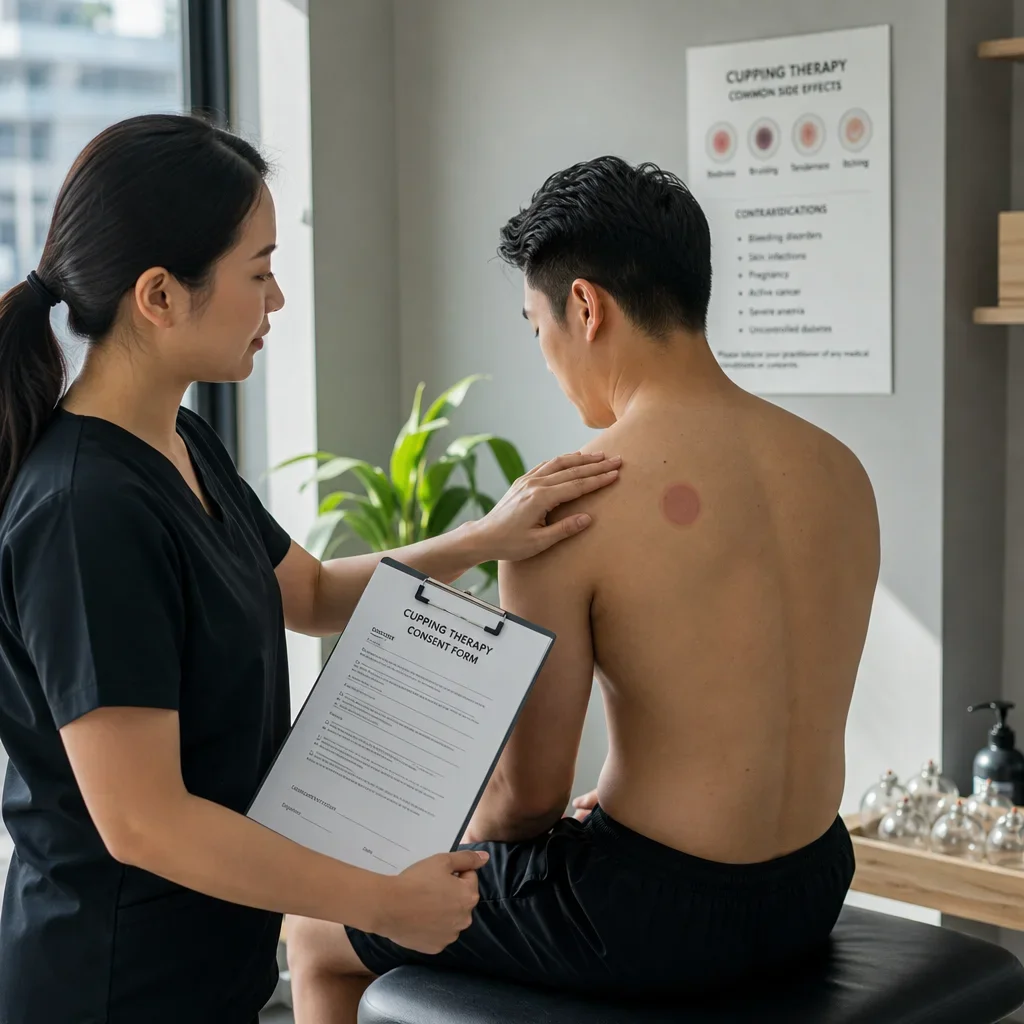
The expected short-term side effects are marks, temporary tenderness, mild soreness, skin sensitivity, and occasional lightheadedness. Those responses are usually self-limited, but they still matter when you are planning around training or competition.
Cupping should be avoided or postponed over broken skin, irritated skin, active skin infection, recent burns, or areas with severe skin fragility. Extra caution is also needed for people with anticoagulant use, bleeding disorders, certain vascular issues, reduced sensation, acute fever or illness, or anyone unable to report discomfort accurately.
Pregnancy should be disclosed before treatment because some areas and positions may need to be modified. The same goes for any history of fainting, strong skin reactions, or medical conditions that change circulation or healing.
Some body regions should not be treated casually. Areas near vulnerable structures, deep abdominal zones, and the groin require anatomy-based judgment, not self-experimenting based on where shouldn’t you do cupping searches online. That is one reason the dangers of cupping rise when people treat themselves without proper screening.
Increasing redness, heat, severe swelling, spreading rash, fever, major blistering, or signs of infection are not normal aftercare findings. Those symptoms should be assessed promptly, and urgent medical help may be appropriate depending on severity.
Aftercare: Showering, Exercise, Hydration, and Managing Marks
Aftercare is mostly about not irritating already sensitive skin. Providers differ in the details, but the common theme is to avoid piling heat, friction, or hard loading onto a freshly treated area.
Very hot showers, saunas, and aggressive scrubbing right after treatment may aggravate the skin, which is why some practitioners tell people to wait or keep the water warm rather than hot. The better explanation is skin sensitivity, not detox.
Light movement is usually reasonable if it feels good. Hard training right away may be a poor call if the area feels sore, tender, or distracting. Athletes should match the next session to how the tissue and skin actually feel.
Hydration advice should stay practical. Resume normal fluid habits rather than trying to flush out supposed toxins. For the marks, do not pick, scrub, or keep irritating the skin. Let them settle on their own.
Aftercare checklist
- Keep the treated skin clean and avoid aggressive rubbing.
- Choose warm rather than very hot showers if the area feels sensitive.
- Skip sauna or heavy heat exposure if the skin is reactive.
- Use light movement first, then judge training by symptoms.
- Contact the clinic if a reaction looks unusual or keeps worsening.
How to Choose a Qualified Sports Cupping Provider in Toronto
The right provider should assess the problem before reaching for the cups. In a rehab setting, that means reviewing injury history, training load, symptom behaviour, contraindications, and goals before deciding whether cupping belongs in the plan.
For people searching cupping therapy near me in downtown Toronto, convenience matters, but continuity of care matters more. It helps when cupping can be integrated with physiotherapy, chiropractic, massage therapy, or sports medicine assessment instead of being offered as an isolated add-on.
Ask how the treatment fits into the larger plan. A provider who can explain when cupping helps, when it does not, and what comes next is usually giving you better care than someone selling cups as the answer to everything.
Cost, Insurance, and Direct Billing
Cupping therapy price usually depends on the service around it, not just the cups themselves. Some clinics include it within a massage therapy or physiotherapy visit, while others may treat it as a focused add-on.
Insurance coverage often depends on the regulated service being billed rather than the word cupping. That means coverage may turn on whether the visit is billed under massage therapy, physiotherapy, or another insured service. Readers should confirm with the clinic and their own plan because I cannot tell you what your insurer will reimburse.
If cost or billing is a deciding factor, check the booking page or front desk for current details rather than relying on generic online pricing. The same goes for direct billing, since clinics and insurers do not all handle claims the same way.
FAQ: Quick Answers Athletes Commonly Search
Sports cupping massage is dry suction-based manual therapy used to support symptom relief and movement comfort in recovery or rehab. It is not a stand-alone fix for injury.
Cupping really may help some athletes, but the most honest expectation is temporary relief rather than proven performance gains.
The downsides of cupping are mainly skin marks, tenderness, soreness, and the fact that it can be oversold. Those marks commonly last about 3 to 14 days.
Cupping therapy is generally safe when a screened patient is treated by a qualified provider working within scope. It is less safe when people ignore contraindications or self-treat sensitive regions.
Athletes should usually avoid a first cupping session right before an event. If a session leaves marks or tenderness that distract performance, the timing was probably poor.
You should not self-cup deep abdominal, groin, or psoas regions. Those areas need proper assessment because the pain source may not be a simple soft-tissue restriction.
Cupping can be combined with massage therapy or physiotherapy when it has a clear job in the plan. In most rehab cases, that job is to make exercise, movement, or manual care easier to tolerate.
If you are weighing sports cupping against other recovery options in downtown Toronto, start with an assessment. That is the cleanest way to see whether it fits your symptoms, schedule, and sport.