
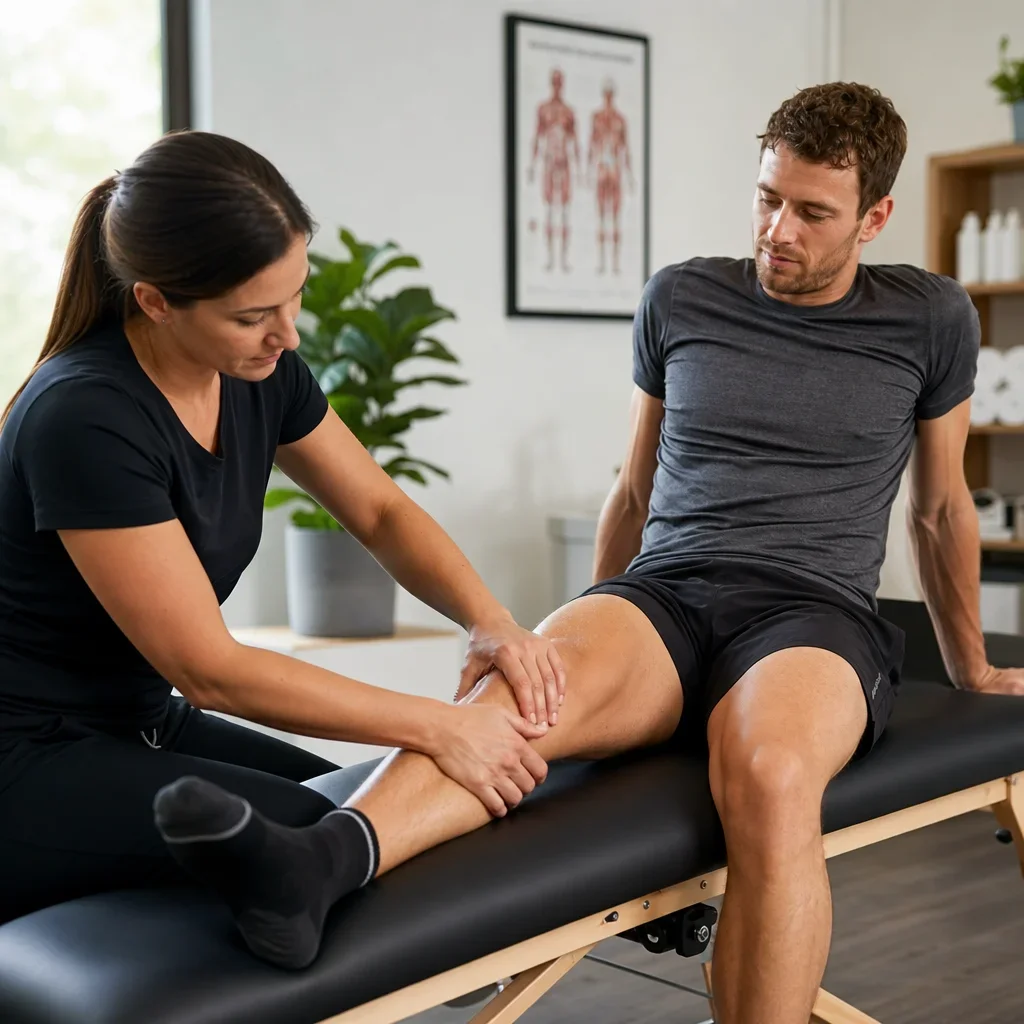
Athletic recovery massage is not just a harder massage. It is a goal-based treatment for active people who want help with soreness, movement comfort, and recovery between training sessions.
What athletic recovery massage is and who it is for
Athletic recovery massage is a focused form of massage for athletes and active adults, built around training load, tissue stress, and movement demands rather than simple relaxation. Sports massage therapy, athletic massage, and recovery massage usually overlap in practice, but the exact treatment depends on the assessment, the body area involved, and whether the goal is pre-event preparation, post-event recovery, or ongoing maintenance.
Sports massage is not defined by pressure alone. A useful session may be light, moderate, or deep depending on symptom irritability, recent training, and how the tissue responds on the day of treatment. Deep pressure is a style choice, not the treatment goal.
Massage for athletes can fit runners, cyclists, lifters, swimmers, climbers, court-sport players, field-sport athletes, desk workers who train hard, and some post-injury or post-surgical patients when their stage of recovery allows it. Persistent pain, recurrent strains, radiating symptoms, or return-to-sport planning usually need a physiotherapy assessment as well.
What athletic recovery massage may help with
Athletic recovery massage may help most with short-term symptom relief. Athletes often notice less perceived tightness, easier movement, and reduced soreness after heavy training blocks, races, tournaments, or repeated gym sessions, but the effect is individual and it does not replace load management or rehab.
Massage can help DOMS, but mainly as a comfort and symptom-management tool rather than a guaranteed fix. DOMS means delayed onset muscle soreness, which usually peaks about 24–72 hours after unfamiliar or high-load exercise. Sports massage may reduce how sore you feel and improve willingness to move, but it should not be framed as a way to eliminate soreness or speed tissue healing in every case.
Massage may improve flexibility and range of motion in the short term, especially when a muscle feels guarded or sensitive. Those changes are usually best maintained when massage is paired with mobility work, strength work, and sensible training progression rather than used on its own.
Sports massage can also help with chronic tightness, stiffness, or local pain when the issue is driven by soft-tissue overload, repeated positioning, or recovery debt. If the real driver is tendon irritation, joint instability, nerve irritation, or a training error that keeps repeating, symptom relief from massage may be temporary unless the movement or loading problem is also addressed.
Massage is not a guaranteed injury-prevention tool and not a reliable performance booster by itself. Some athletes feel looser, calmer, or more ready to move after treatment, but evidence for direct performance gains or injury prevention is mixed, so we treat it as one recovery input among several. This is general information, not a recommendation for your specific injury or training plan.
Athletic recovery massage vs deep tissue vs regular massage vs physiotherapy
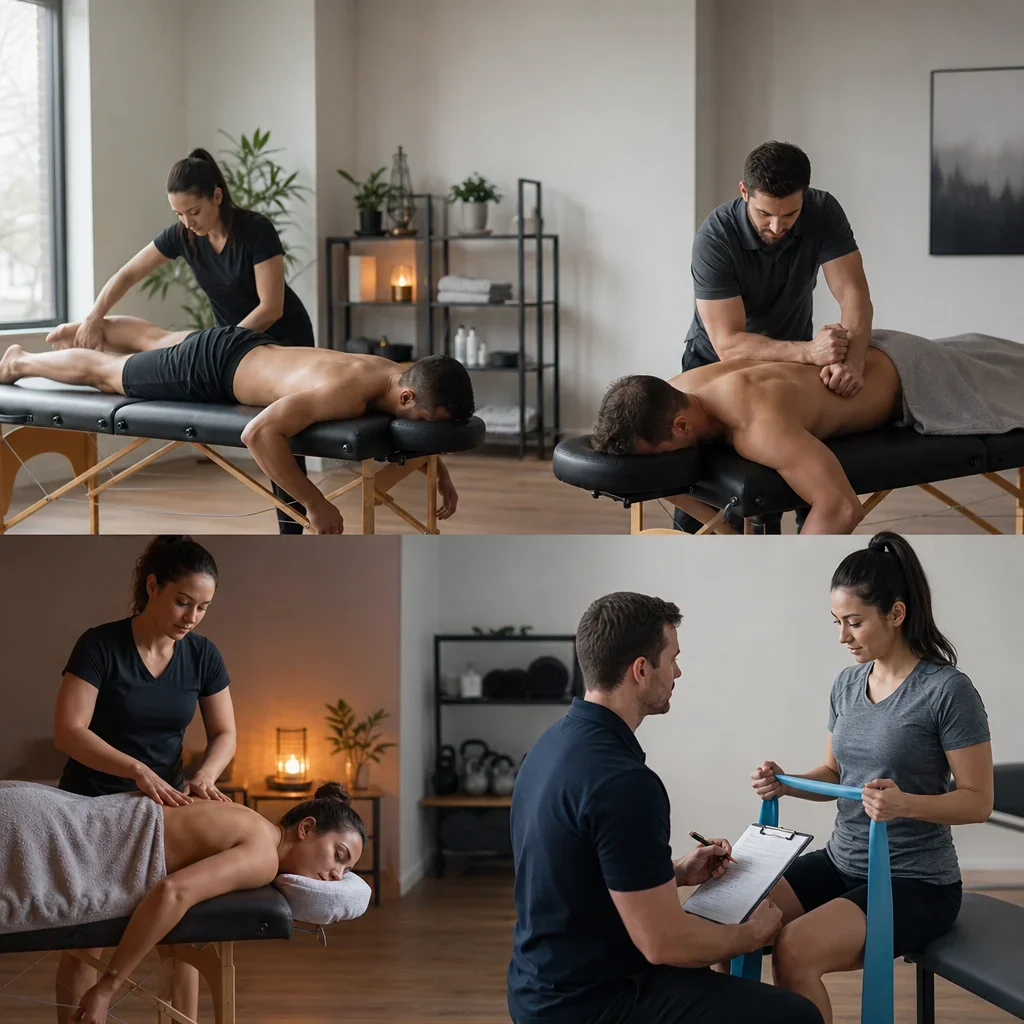
Athletic recovery massage differs from regular massage because the treatment is organized around a training goal, a sport demand, or a recovery problem. A regular relaxation massage is usually broader and aimed at general stress reduction, while sports massage targets specific regions, movement restrictions, or post-training symptoms that matter to performance and recovery.
Deep tissue massage is a pressure description, not a full clinical category. Athletic massage may use deep tissue techniques, but it can also use lighter work, myofascial release, trigger point therapy, or movement-based treatment depending on timing and symptoms.
Physiotherapy serves a different role. Massage therapy focuses on soft-tissue treatment and symptom relief, while physiotherapy assesses pain drivers, loading tolerance, strength deficits, movement quality, and a rehab plan. In Ontario, physiotherapists assess function and build exercise-based rehabilitation, while RMTs provide massage treatment within their professional scope.
| Service | Main goal | Best fit | Less ideal when |
|---|---|---|---|
| Athletic recovery massage | Recovery-focused soft-tissue care | Post-workout soreness, local tightness, heavy training fatigue | Symptoms are severe, unexplained, or clearly injury-driven |
| Deep tissue massage | Firm pressure into dense or sensitive areas | People who tolerate pressure well and need focused local work | Tissue is very irritated, inflamed, or close to competition |
| Regular massage | General relaxation and stress relief | Whole-body tension, non-sport wellness goals | You want sport-specific treatment planning |
| Physiotherapy | Assessment, diagnosis-informed rehab, return-to-sport planning | Recurrent injury, tendon pain, weakness, instability, post-surgical rehab | You only want recovery-focused soft-tissue care |
A simple decision rule helps. Choose massage when the main issue is recovery, soreness, or localized tightness after training. Choose physiotherapy first when pain keeps returning, a strain will not settle, the area feels weak or unstable, or symptoms include numbness, tingling, radiating pain, or a recent acute injury. Using both can make sense when you need hands-on relief plus a clear rehab plan.
Techniques used in athletic recovery massage
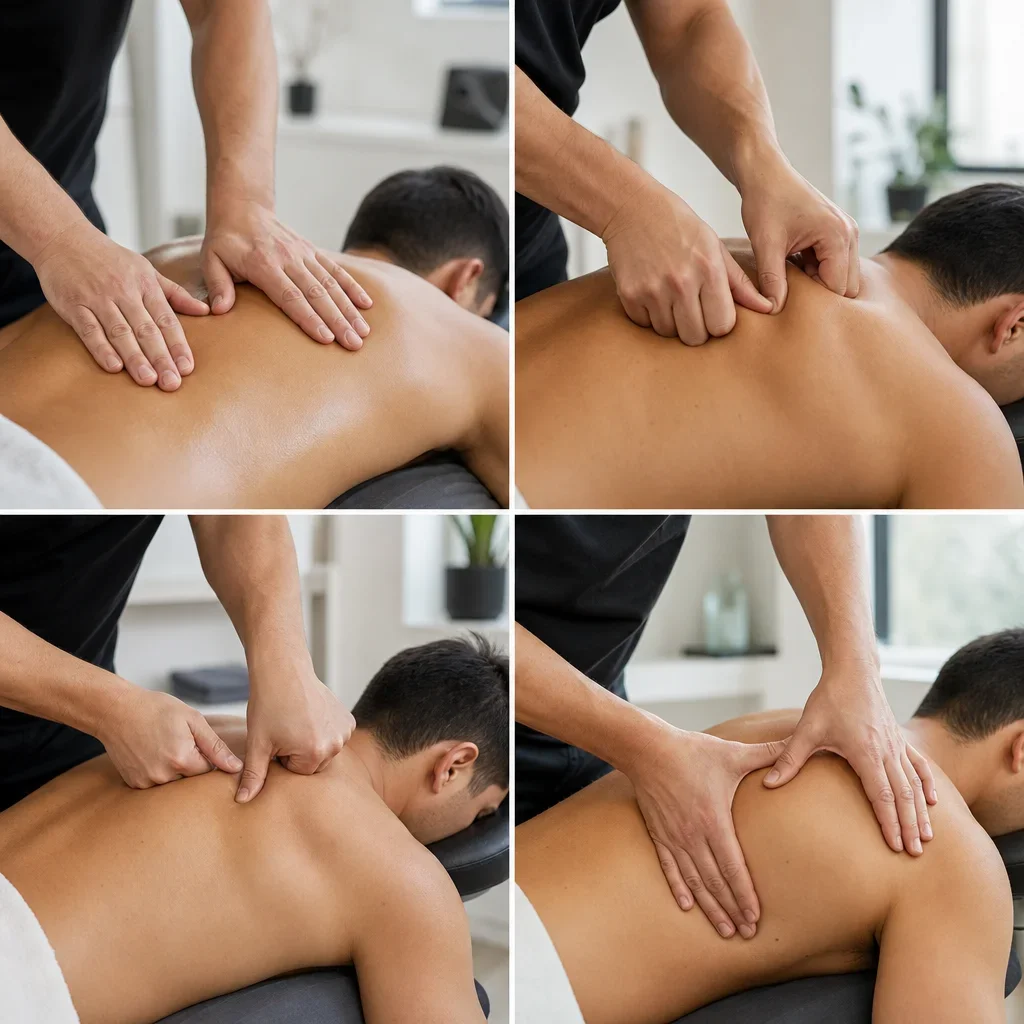
Athletic recovery massage uses a mix of techniques rather than one fixed method. The treatment plan should match the sport, body region, current symptoms, and where the athlete is in a training cycle.
Effleurage means smooth gliding strokes that warm tissue, spread lotion, and help the therapist assess tone and sensitivity. Petrissage means kneading and lifting the tissue to work through broader areas that feel stiff or congested from training.
Deep tissue massage uses slower, more focused pressure into deeper layers or denser regions. It can be useful for stubborn local tightness, but more pressure is not automatically better, especially when tissue is already irritated or an event is close.
Myofascial release is hands-on work aimed at improving comfort and movement in tissue that feels restricted or guarded. In plain terms, it is often used when an area feels bound up, sticky, or hard to lengthen, even if the exact tissue mechanism is not something you can feel directly.
Trigger point therapy targets sensitive spots in a muscle that may reproduce familiar local or referred discomfort. It is commonly used when an athlete points to one specific knot or band that keeps flaring with certain movements.
Cross-fiber friction is a small, targeted technique applied across the grain of a tendon or muscle area rather than along it. It is used cautiously to address local sensitivity and tissue tolerance, not as a guaranteed way to break up scar tissue.
Pre-event, post-event, and maintenance massage
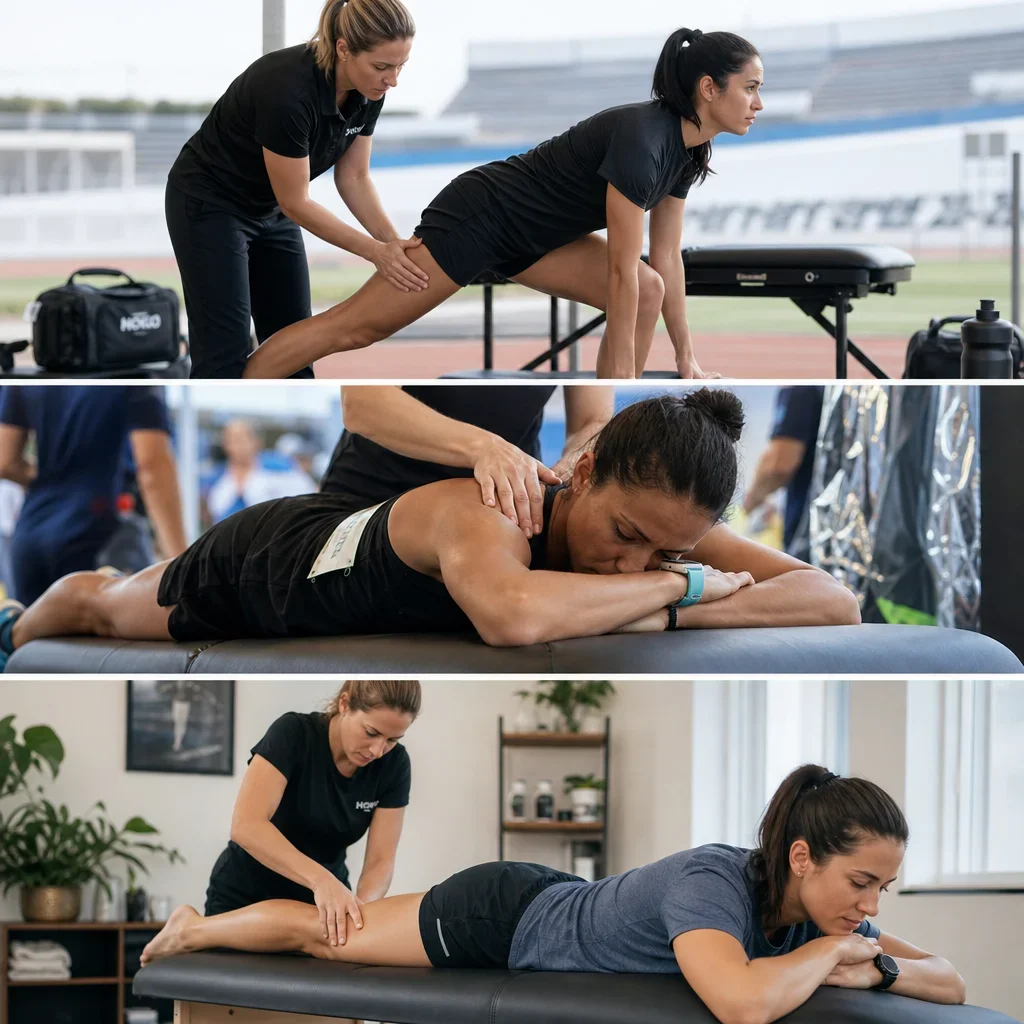
Pre-event massage is meant to prepare, not exhaust. The usual goal is to help the athlete feel ready to move with treatment that is lighter, brisker, and more activating than a recovery session, and it should not leave the body sore or flat before competition.
Post-event massage is aimed at down-regulation and comfort after hard effort. The work is usually gentler and more selective because tissue may be tender, fatigued, or inflamed after a race, tournament, or maximal training session.
Maintenance massage fits between those two extremes. It is scheduled around training cycles, recurring hotspots, or movement restrictions that tend to build up over time, and it works best when the timing matches the athlete’s actual load and not just a calendar habit.
The exact timing of pre-event and post-event massage is not one fixed rule. Sport type, event duration, symptom irritability, and the athlete’s past response all matter, so exact timing should be individualized rather than copied from a generic online chart. Aggressive work right before competition or over very inflamed tissue after competition can be counterproductive.
How often should you get athletic recovery massage?
Massage frequency should follow training load, injury history, symptom irritability, and budget rather than a rigid formula. If soreness resolves normally, movement feels good, and your warm-up restores you well, maintenance may be enough. If the same area keeps tightening, movement quality drops, or recovery is lagging for days, more regular care may make sense alongside a look at training and rehab.
A simple starting framework works better than a hard rule:
| Training level | Practical starting point | What may change it |
|---|---|---|
| Occasional exerciser | Book as needed around spikes in soreness or training | New program, race prep, old injury history |
| Moderate trainee | Consider periodic maintenance during heavier blocks | Recurrent hotspots, limited recovery time |
| Competitive athlete | Consider more regular treatment during demanding phases | Competition schedule, travel, high volume, rehab needs |
The better guide is pattern, not perfection. Lingering soreness that lasts beyond your usual recovery window, repeated calf or hip tightness, or training that keeps feeling more restricted are stronger signals than any fixed schedule.
What to expect at your first sports massage session
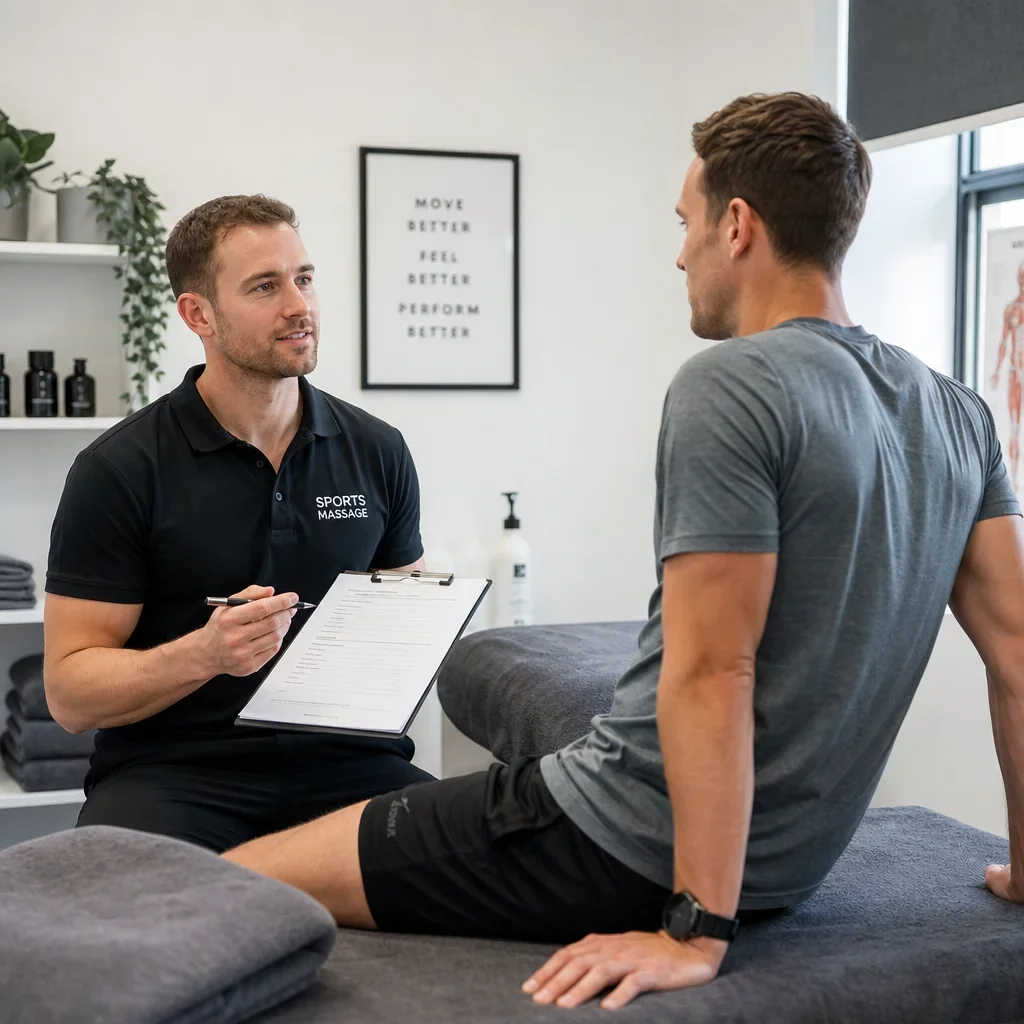
A first sports massage session usually starts with intake, consent, and a focused conversation about training, symptoms, and goals. The therapist will ask what sport you do, what areas bother you, what your recent load looks like, and whether the goal is recovery, pain relief, or support during rehab.
The session may feel more clinical than spa-like because the treatment is targeted. An RMT may reassess how an area feels or moves during the visit, then adapt the plan based on sensitivity, tissue response, and your feedback.
Sports massage should feel purposeful, not unbearable. Some techniques can be intense, especially trigger point therapy or deeper local work, but effective treatment does not require gritting your teeth through the whole session and pressure should be adjusted when your body starts guarding.
You should wear whatever allows access to the body region being treated while still feeling comfortable. Draping means only the area being worked on is exposed, and professional consent and privacy standards apply throughout the session.
Massage appointments commonly run 30–90 minutes depending on the clinic and treatment goal. Shorter sessions suit one or two focused areas, while longer sessions may allow a broader recovery treatment or multiple regions. You should check the booking page for the current options at the clinic.
Mild tenderness or fatigue afterward can be normal for about 24–48 hours. Sharp pain, significant bruising, worsening neurological symptoms, or anything that feels out of proportion should be reported to the clinic promptly.
How to prepare before and after a sports massage
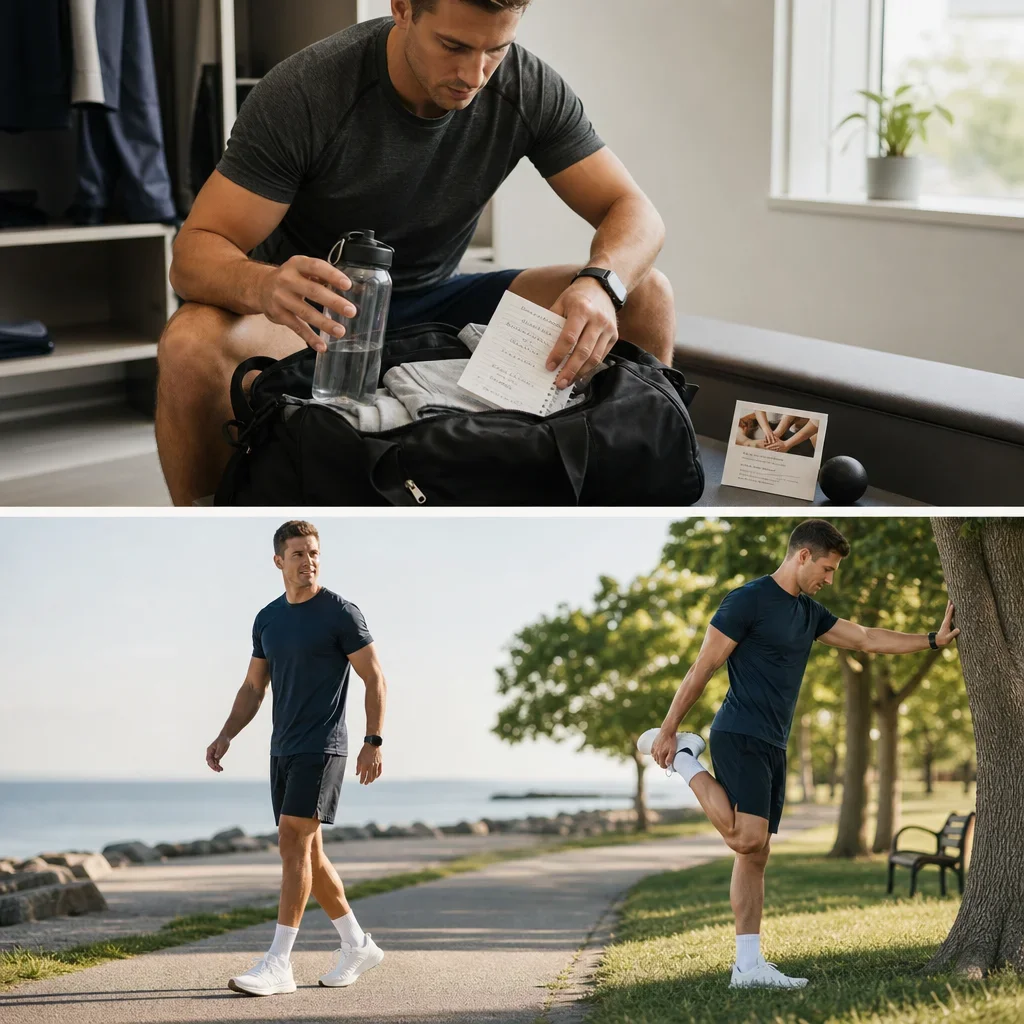
Good preparation improves the value of the session. Arrive knowing your recent training load, event date, main symptoms, and the body regions that matter most, because that lets the treatment stay specific instead of general.
Normal hydration, a sensible meal for the day, and clear communication about medications, recent injuries, skin issues, or medical conditions matter more than any special pre-massage ritual. If it is your first sports massage, avoid booking an aggressive session immediately before a major race or competition.
Aftercare should match how your body responds over the next 24–48 hours. If an area feels tender, avoid using that same day to test max effort or dramatically increase load. Massage can support recovery, but it should not replace rehab exercises, proper sleep, adequate fueling, or a cooldown strategy.
A simple aftercare checklist helps:
- Note how the treated area feels later that day and the next day.
- Keep movement easy if the tissue feels worked but not irritated.
- Resume training based on symptoms, not ego.
- Pair treatment with sleep, nutrition, hydration, and strength work.
- Follow any home care or rehab plan already in place.
Who should be cautious or avoid sports massage
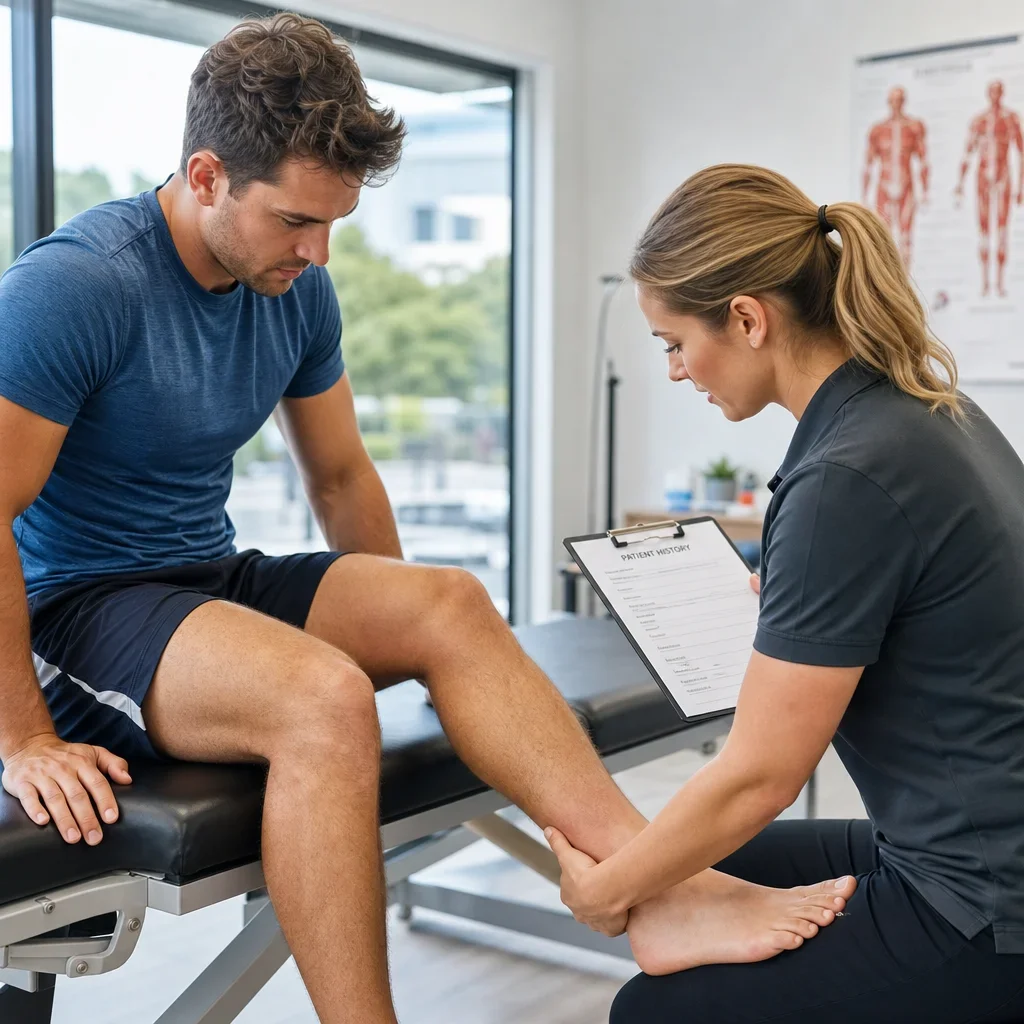
Sports massage is not appropriate for every person or every moment. Acute injury, severe inflammation, fever, infection, suspected fracture, open wounds, unexplained swelling, and possible deep vein thrombosis are clear reasons to stop and get the right medical assessment first.
High blood pressure does not automatically rule out massage, but it changes the screening conversation. Whether massage is appropriate can depend on how well it is controlled, what symptoms are present, what medications you take, and whether your healthcare team has raised concerns.
Professional boundaries are part of safe care. Treatment is always consent-based, draped, and limited to clinically appropriate areas, and sensitive or restricted regions are not treated casually or without a clear therapeutic reason.
Radiating pain, numbness, weakness, major loss of motion after trauma, and symptoms that are worsening need a physiotherapy or medical assessment first. Massage may still have a role later, but it should not be the starting point when red flags are present. This is general information, not individual medical advice.
Can massage help with piriformis symptoms, old injuries, or scar tissue?
Massage may help some people with buttock or hip tightness that feels like piriformis-area pain, especially when the problem is local muscle tenderness or overload. That said, so-called piriformis syndrome is not always the true source of symptoms, and back-related or nerve-related pain can feel very similar.
If pain travels down the leg, comes with numbness or tingling, or clearly worsens with spinal movements, physiotherapy is usually the better first step. Massage can calm local sensitivity, but it cannot sort out every source of referred pain on its own.
Old injuries and scarred areas may respond to massage when the goal is better comfort, improved tissue tolerance, and more confidence moving. The result depends on the type of injury, how long ago it happened, the current rehab stage, and whether strength and loading have been rebuilt. Claims that massage will simply break up scar tissue are too simplistic.
Athletic recovery massage in a complete recovery plan
Massage works best as one tool in a broader recovery system. Sleep, nutrition, training load, warm-up quality, cooldown habits, mobility work, and strength training usually matter more for long-term resilience than any single hands-on treatment.
The best use of sports massage is often to make the next useful thing easier. If calves feel less guarded after a run, you may move better in your mobility work. If hip or upper-back tension drops after treatment, strength work may feel cleaner and more productive.
Sport-specific examples help. Runners often seek recovery massage for calves, hamstrings, and hips after high mileage. Lifters often want help around the hips, glutes, lats, and upper back. Cyclists commonly notice neck, low back, hip flexor, or quad overload. Court and field athletes often need adductors, calves, or shoulder girdle work depending on position and volume.
When symptoms are recurring or performance keeps dropping, a biomechanics-led plan adds more value than hands-on care alone. That is where combining massage with physiotherapy, chiropractic care, or sports medicine can make sense, because the question shifts from where you feel tight to why the same region keeps overloading.
Athletic recovery massage in Toronto: cost, coverage, and booking
Toronto massage pricing depends on session length, the clinic, and whether you are booking with a registered massage therapist. Massage appointments in the city commonly fall into 30–90 minute options, and the current rate should always be checked on the clinic’s live booking page rather than assumed from a guide.
Extended health coverage often applies only when the provider is an RMT Toronto patients can claim under their plan. Coverage rules, annual maximums, referral requirements, and direct billing all vary by insurer and employer plan, so it is worth confirming those details before you book.
If you want sports massage Toronto athletes usually look for, book massage when the main goal is recovery-focused soft-tissue care. If you are not sure whether the issue is training soreness or an actual injury, book physiotherapy first so the problem can be assessed and the right path chosen. In a downtown Toronto clinic with an integrated team, that can make the handoff between services much simpler.
FAQ
What is a sports recovery massage?
A sports recovery massage is a massage session aimed at helping an active person recover from training or competition. It usually targets sore or overloaded areas, tries to improve comfort with movement, and is shaped by the athlete’s recent workload rather than done as a general relaxation treatment.
What is the difference between athletic massage and deep tissue massage?
Athletic massage is goal-driven and sport-specific. Deep tissue massage is a style of pressure and technique. A sports massage may include deep tissue work, but it may also use lighter methods depending on timing, sensitivity, and the reason for treatment.
Does athletic recovery massage help DOMS?
It can help with perceived soreness and movement comfort during DOMS, which commonly peaks 24–72 hours after hard or unfamiliar exercise. It should not be sold as a guaranteed way to stop DOMS or fully restore performance by itself.
When should I get a massage before a race or competition?
Pre-event massage should be timed and dosed so you feel ready, not sore. Because the best window depends on your event, your body, and how you respond to treatment, the safer rule is to avoid any heavy first-time session close to competition.
When should I get a massage after a race or hard workout?
Post-event massage is often most useful when the treatment is gentle and matched to how worked-up the tissue feels. The exact timing is individual, so it is better to choose based on symptom irritability and schedule than follow one universal online rule.
How often should athletes get massage therapy?
There is no single schedule that fits everyone. Frequency should reflect training volume, competition demands, old injuries, symptom pattern, and budget rather than a fixed promise that weekly or monthly is always correct.
What should you not do after a sports massage?
Do not assume you should test maximum effort right away if the treated area feels tender. Do not ignore unusual pain or bruising, and do not swap out your rehab exercises, sleep, nutrition, or strength work for massage alone.
Can you get a massage if you have high blood pressure?
Sometimes yes, but not automatically. The answer depends on control, symptoms, medications, and practitioner screening, and some people may need medical guidance first.
Can massage help with piriformis syndrome?
Massage may help local buttock and hip muscle tension, but not every case labeled piriformis syndrome is actually caused by the piriformis. If symptoms radiate down the leg or include numbness or tingling, book an assessment first.
Should I book massage or physiotherapy first?
Book massage first when you mainly want recovery care for soreness, tightness, or training fatigue. Book physiotherapy first when pain is persistent, keeps returning, follows an acute injury, involves weakness or instability, or includes radiating symptoms.
When to book
If you want targeted athletic recovery massage in Toronto, book an RMT when the goal is recovery-focused soft-tissue care after training, racing, or a heavy block. If pain is persistent, symptoms are recurring, or you are not sure whether you are dealing with normal soreness or an injury, book physiotherapy first and let the assessment guide the plan.