
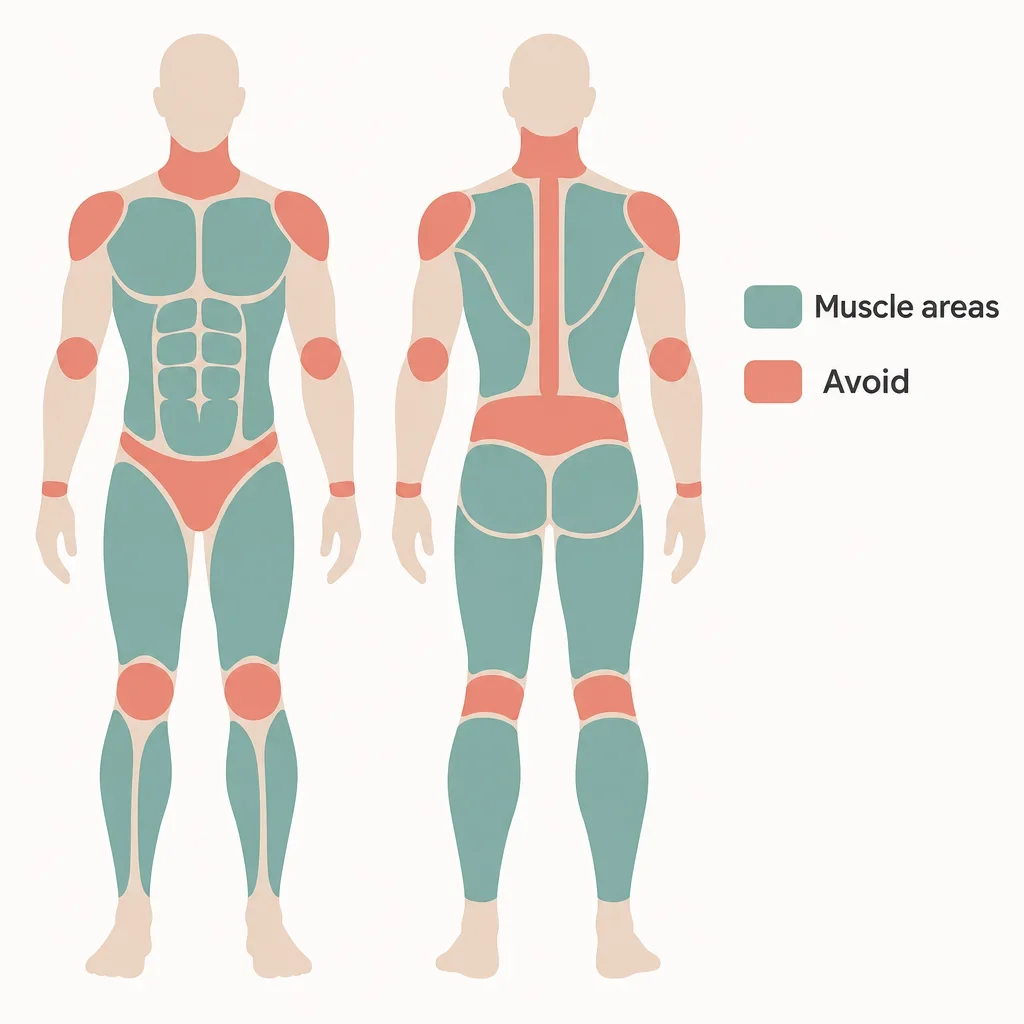
Foam rolling for myofascial release means using a roller to apply pressure to soft tissue. It may help you move a little more freely for a short time. That does not mean the roller breaks up adhesions or permanently reshapes fascia. Start with pressure you can control, not the hardest pressure you can tolerate.
What Foam Rolling for Myofascial Release Can and Cannot Do
Fascia is connective tissue that surrounds and runs between muscles and other structures. People use fascia release and myofascial release loosely, sometimes to mean the same thing. Here, self-myofascial release means applying pressure yourself with a roller or ball. It is not a diagnosis or the same as hands-on treatment from a clinician.
The best-supported foam rolling benefits are short-term. Studies in healthy adults suggest that rolling can temporarily increase range of motion, meaning how far a joint can comfortably move. It may also make post-exercise soreness feel less noticeable. Neither effect shows that tissue heals faster, flexibility lasts longer, or strength or performance improves reliably.
You may feel looser as soon as you get off the roller. One possible explanation is that pressure briefly changes how your nervous system responds to sensation. That is not proof that anything physically released. Retest a movement you care about, such as a comfortable squat or shoulder reach. There is no established timeline for lasting change from rolling alone.
When and Where Not to Foam Roll
Keep direct pressure on broad, comfortable muscle areas. Stay off joints, bony points, the neck, lower back, back of the knee and groin. Skip tissue that is newly injured, acutely painful, inflamed, bruised, wounded or infected. A roller can aggravate an injury, bruise tissue or irritate a nerve, especially if you lean hard into a small area.
Get medical advice before rolling if you take blood thinners or have a bleeding or clotting disorder. Pressure can leave bruises or cause bleeding under the skin. After recent surgery or a new injury, follow your care plan rather than rolling the healing area. Fragile bones change what pressure is safe, and reduced sensation makes it harder to judge when pressure is too much.
| Symptom or situation | What to do |
|---|---|
| Mild pressure that stays local and lets you breathe normally | Continue gently if it stays comfortable. |
| Pressure makes you tense up, or the area feels more tender later | Ease off or end the session. Once it settles, try less body weight or a shorter bout. |
| Sharp, electric or spreading pain, numbness, tingling, bruising or worsening symptoms | Stop. Do not reroll the area to test it. Seek assessment if symptoms persist or recur, or if bruising is unexplained or increasing. |
| Suspected fracture or a hot, red, swollen joint with fever | Do not roll. Seek urgent medical care. |
| Newly swollen, warm, painful calf | Do not roll or massage it. Seek urgent medical assessment. |
| Sudden chest pain or shortness of breath | Call emergency services. |
| Back pain with new bladder or bowel changes, numbness around the groin or saddle area, or progressive leg weakness | Go to emergency care. |
How to Foam Roll: Pressure, Speed and Position
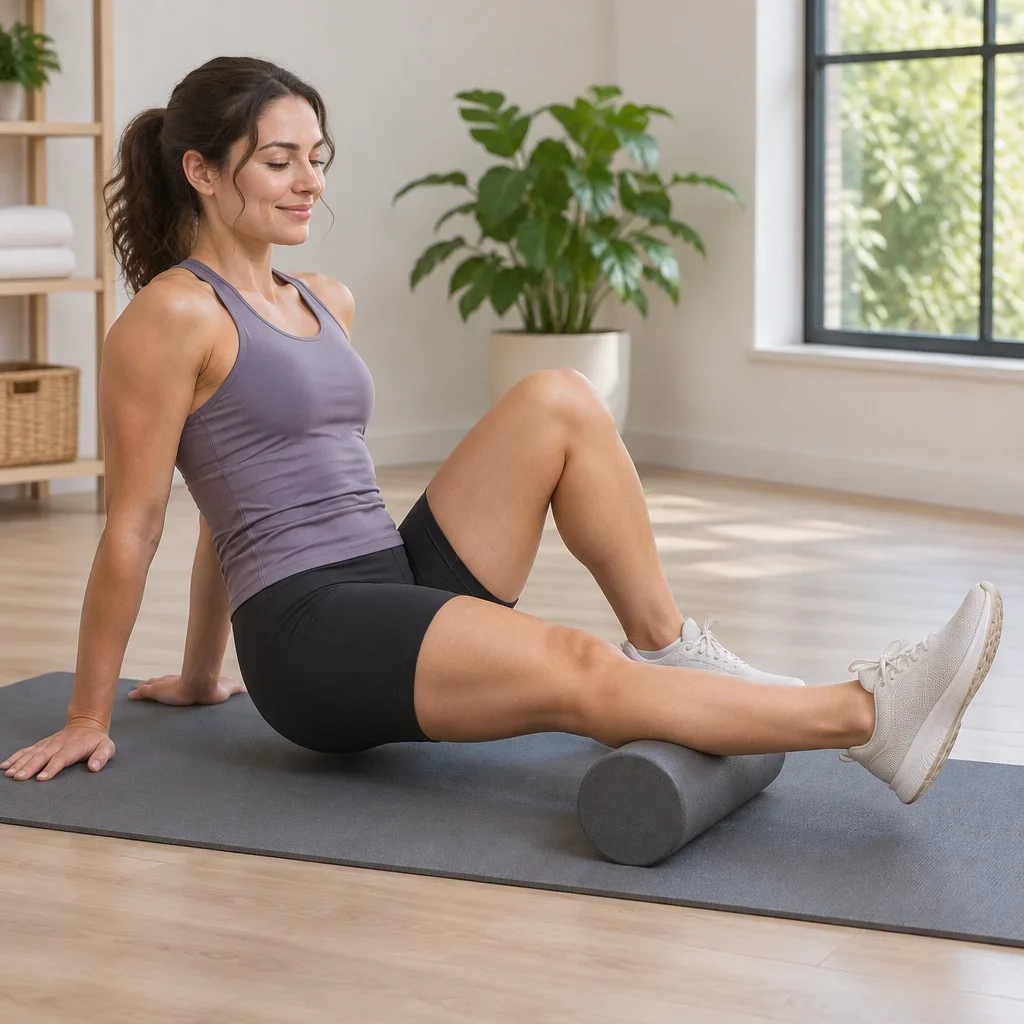
- Start on a broad part of the muscle. Look for an area that feels stiff during a familiar movement. A trigger point is a term people use for a tender spot. Tenderness under a roller does not tell you what caused it, and you do not need to find the sorest spot.
- Support some of your weight. Use your hands, forearms or free foot as the position allows. For some areas, leaning into a roller against a wall is easier than working on the floor. Start light enough to breathe normally and keep the muscle relaxed. There is no established pressure target for releasing fascia.
- Make short, slow passes along the muscle. Stay between the joints rather than rolling the full limb. Move slowly enough to stop as soon as the pressure changes. You can pause briefly on a mildly tender spot, but there is no required hold time. Ease off if tenderness builds instead of trying to wait it out.
- Change the setup before adding pressure. Start with the muscle relaxed. A small change in joint angle can change muscle length and how pressure feels. Moving the joint or contracting the muscle is optional, not a better way to release fascia. If light rolling feels useful and causes no flare later, you can shift a little more weight onto the roller. More pressure is not the goal.
Foam Rolling Exercises for Legs, Glutes and Upper Body
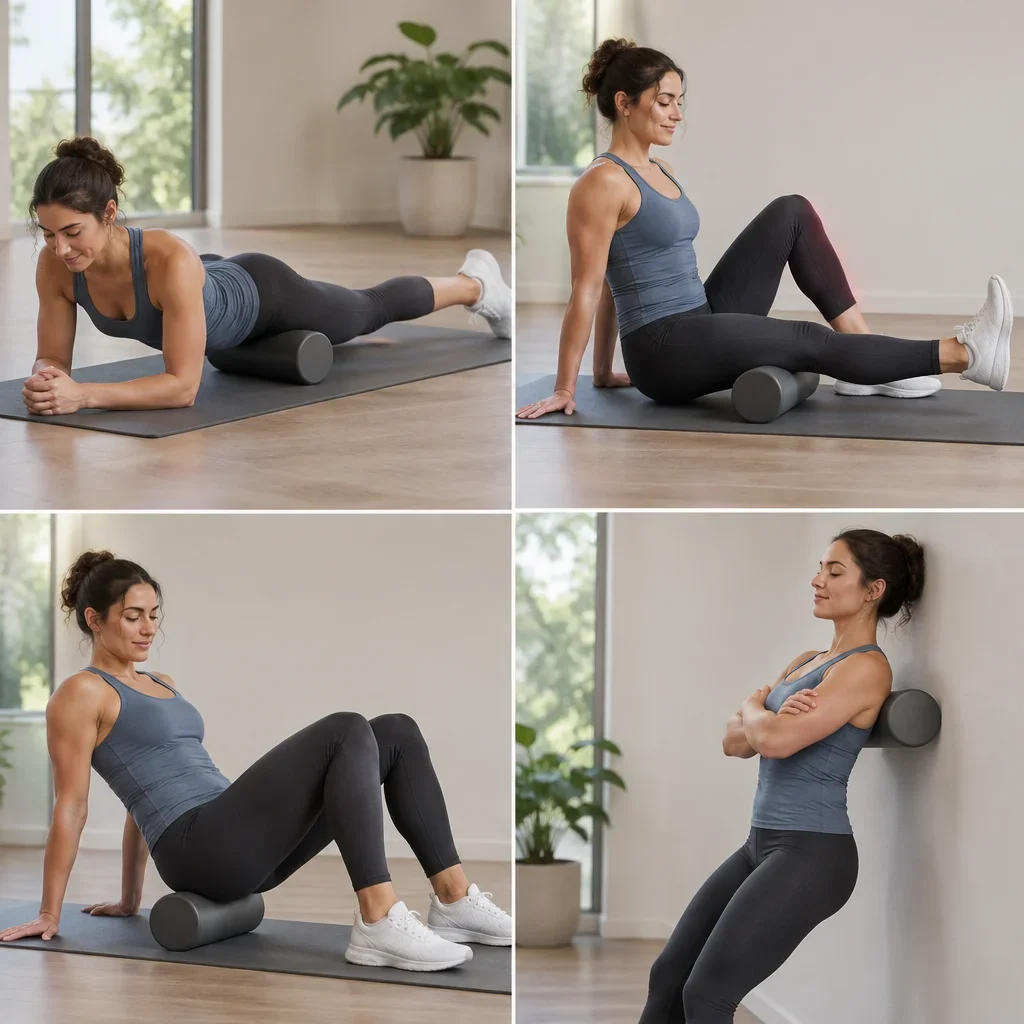
Start with an area that matches the movement you want to make easier. These setups are for general stiffness or post-exercise soreness, not injured tissue. If getting to the floor or leaning through your wrists or shoulders is uncomfortable, choose a wall or seated option. Skip any setup you cannot support comfortably.
| Target area | Starting position | Short rolling path | Easier option | Areas to avoid |
|---|---|---|---|---|
| Quadriceps (front thigh) | Lie face down, supported on your forearms. Put the roller under one thigh and use the other foot to take some weight. | Roll along the fleshy middle of the front thigh. | Keep more weight through the free foot, or use a handheld stick while seated. | Kneecap, front of the hip and bony hip points. |
| Hamstrings (back thigh) | Sit with the roller under one thigh, hands behind you and the opposite foot planted. | Move along the middle of the back thigh. | Keep more weight on the planted foot, or use a handheld stick while seated. | Sitting bone and back of the knee. |
| Calves | Sit with the roller under the fleshy calf, hands supporting you and the other foot planted. | Make a short pass along the calf muscle. | Keep your hips down and let only the leg rest on the roller. | Back of the knee, shin bone and Achilles tendon. Never roll a newly swollen, warm, painful calf. |
| Glutes (buttock muscles) | Sit on the roller with both feet down and hands supporting you. Shift slightly toward one buttock. | Move over the broad, fleshy area. | Lean lightly into a soft ball against a wall. | Tailbone, sitting bone and bony point at the side of the hip. |
| Inner thigh | Lie face down on your forearms. Angle a bent leg out and place the roller under the inner thigh. | Make a short pass along the middle of the inner thigh. | Keep more weight through the forearms and opposite leg. Skip it if the setup strains your hip or shoulders. | Groin and inside of the knee. |
| IT band region (outer thigh) | The IT band is a strip of connective tissue, not a muscle. If you want to work nearby, use a supported glute setup or sit with a handheld stick. | Use light pressure on the nearby glute or front-outer thigh muscle, not a hard pass along the band. | Use the stick lightly or skip pressure work. | Bony outer hip and outside of the knee. This is not a treatment for outer knee pain. |
| Thoracic area (upper back) | Lie with a soft roller across the upper back, feet planted and head supported with your hands. | Use small leg movements for a short pass across the upper-back area. Keep your neck relaxed and avoid arching your low back. | Stand with a roller upright against a wall and lean lightly into the muscle beside the upper spine. | Neck, lower back and direct pressure on prominent spinal bones. |
| Rear shoulder or upper outer back | Stand with a soft ball between the wall and the fleshy back of the shoulder. Keep the arm relaxed. | Use a small knee bend to move the ball a short distance over the muscle. | Lean less into the wall or skip it if you cannot keep pressure on muscle. | Armpit, ribs and bony edges of the shoulder blade. |
Foam Rolling for Your Back: Upper Back vs. Lower Back
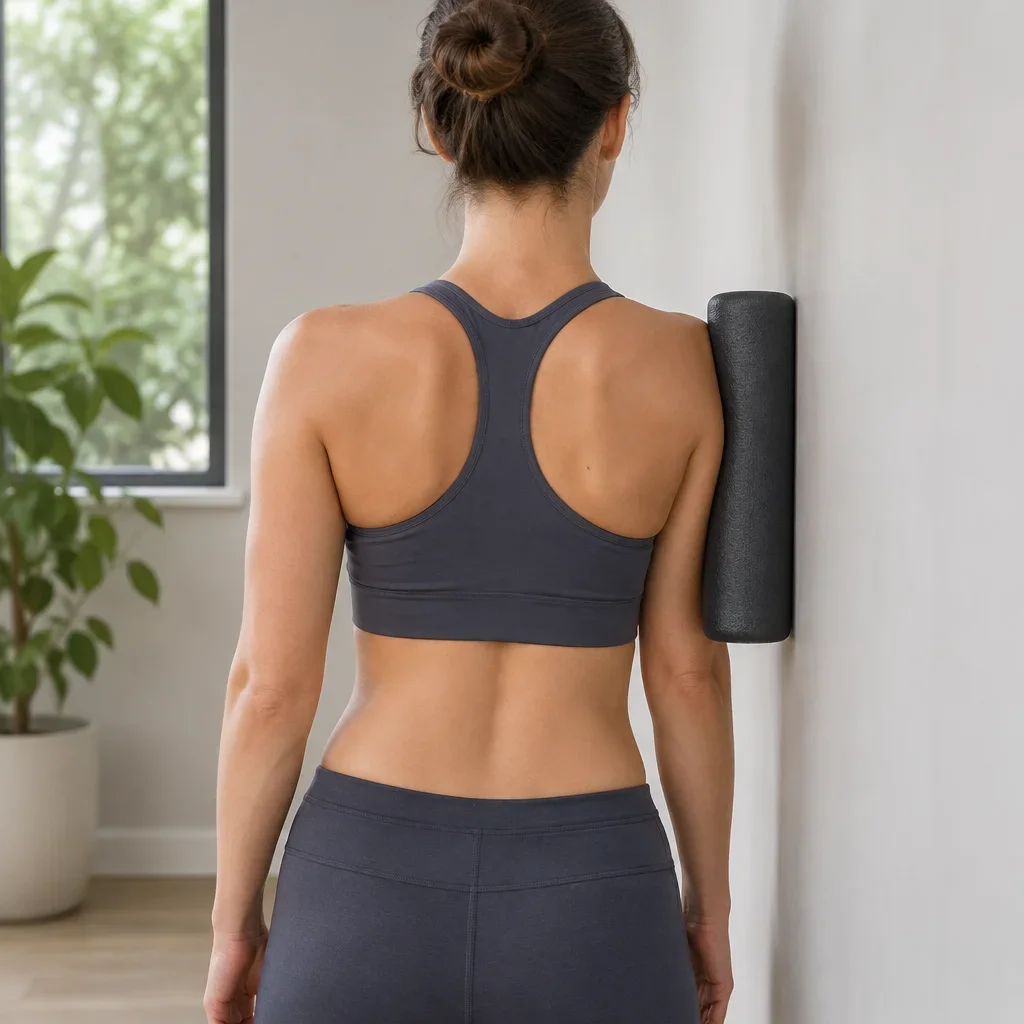
Gentle, supported pressure around the upper back is different from rolling directly on the lower back. The wall setup lets you control the load on the muscles beside the upper spine. Avoid using a foam roller directly on the lumbar spine, the lower part of your back. Putting your body weight there can force an uncomfortable arch or provoke symptoms. Keep the roller off the neck, too.
A roller does not decompress your spine. Spinal traction applies a pulling force; a roller applies local pressure. Lying down in a comfortable position can reduce the load on your back and temporarily ease symptoms. That does not show that a disc or nerve problem has been treated.
There is no single worst movement for every type of back pain. Avoid forcing a position that makes pain spread or intensify, and do not use rolling to delay care. Get prompt medical assessment for new severe pain, unexplained weight loss with back pain, or night pain that will not ease. For persistent, non-urgent back or neck pain, a physiotherapy assessment can test which movements you tolerate and guide a gradual return to activity.
How Long and How Often to Foam Roll
For a healthy beginner, a light trial of 30–60 seconds per comfortable muscle area is a reasonable starting example. It is not a safety threshold or a dose you need to reach. Start with the area that matters to your next activity. Retest a comfortable movement afterward. If it feels no different, there is no need to add more pressure, time or body areas. You do not need a full-body session.
There is no required weekly frequency, and daily rolling is optional. Repeating it every day may repeat a short-lived effect, but that does not mean the benefits build up. Repeated pressure can leave an area more sensitive or bruised. Keep it only if the change is useful and the area feels no worse later. Reduce the load or time if it feels more tender, and stop if symptoms worsen.
Before a run or gym session, brief rolling is optional if it makes a movement feel easier. Follow it with an active warm-up, such as brisk walking before a run or unloaded practice sets before lifting. After exercise, light rolling is an option for comfort. Gentle stretching can come before or after rolling if it feels comfortable; neither order is required.
In rehab, rolling is an optional part of a home exercise program. It does not rebuild strength or replace graded loading, where you gradually increase the work a muscle or joint can handle. After surgery, your postoperative instructions take priority over general rolling advice.
Choosing a Foam Roller or Another Tool
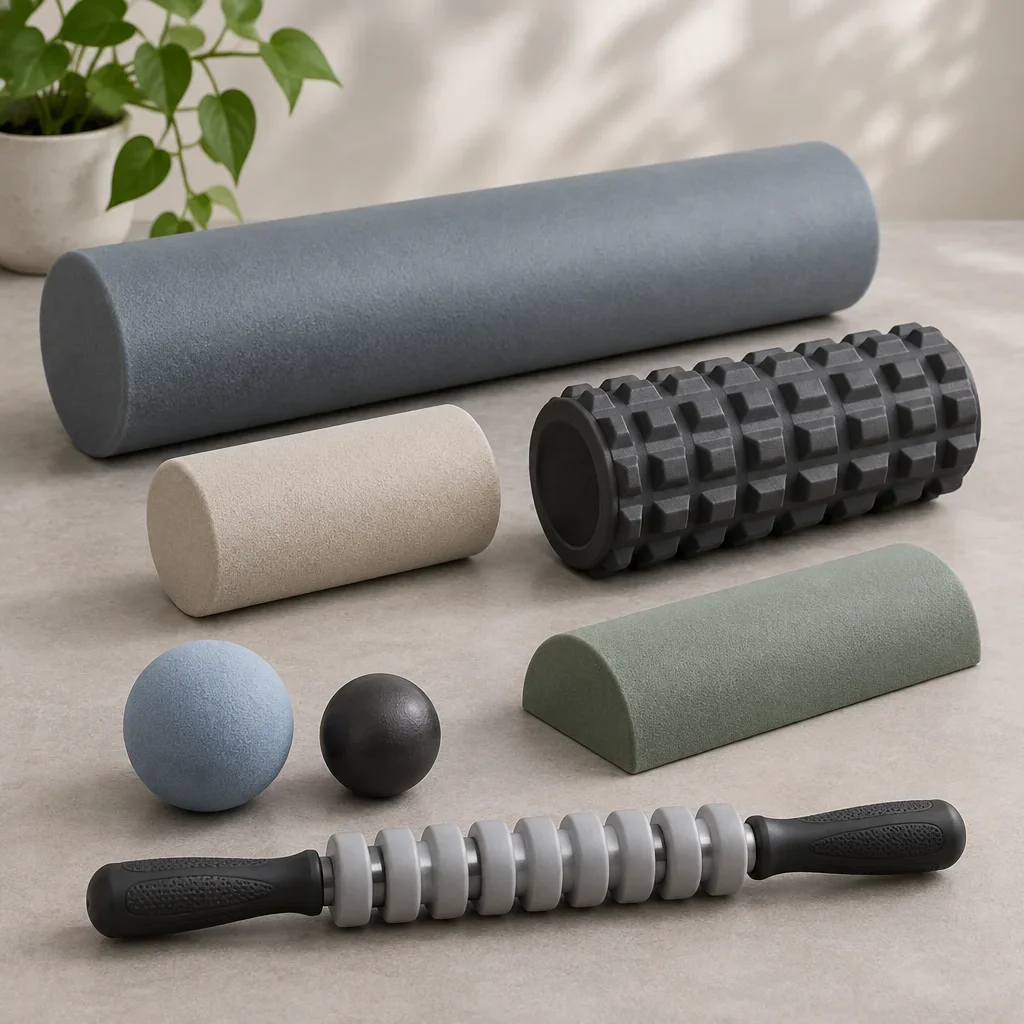
A soft, smooth roller is a practical starting point because it spreads pressure over a broad area without raised bumps. A longer roller gives you more room to position your body for broad support. A compact roller takes up less space and can work for a smaller area, but gives you less room to shift. Choose a tool you can control rather than one that feels more intense.
| Tool | How it feels and where it fits |
|---|---|
| Soft, smooth roller | Broad contact with some give. A useful starting choice for larger muscle areas. |
| Firm, smooth roller | Broad contact with less give. Use hand, foot or wall support to keep the pressure manageable. |
| Textured roller | Raised ridges or bumps concentrate pressure in smaller spots. Useful only if you prefer that feel and can stay relaxed. |
| Half-round roller | A flat base is more stable on the floor. It works for supported positioning or gentle weight shifts, not continuous rolling. |
| Vibrating roller | Adds vibration to the pressure. It has not been shown to deliver better structural fascia release than a plain roller. |
| Massage ball or lacrosse ball | Smaller contact area for a specific muscle spot. A soft ball against a wall is easier to unload; a hard lacrosse ball concentrates pressure and can feel more intense. |
| Handheld roller stick | You control pressure with your hands instead of body weight. It can work on reachable leg muscles from a chair. |
| No equipment | Walking, comfortable joint movement or a light warm-up lets you test movement without direct pressure. Choose this if rolling is awkward or irritating. |
Pressure mapping shows where and how strongly you load a sensor-equipped roller or mat. It can show how pressure shifts when you change position. It cannot show that fascia has released or tell you which pressure is therapeutic. A basic tool is enough if you want to try rolling.
Common Foam Rolling Mistakes and When to Get Help
- Rolling too quickly: Shorten the path and slow down enough to stop precisely.
- Leaning into pain: Shift weight onto your hands or free foot, or try the wall.
- Holding your breath: Ease off until you can breathe normally and relax the muscle.
- Stacking your limbs too early: Keep the other foot planted rather than stacking it on the working leg. Stacking adds load without necessarily adding benefit.
- Going back over a bruise: Leave the area alone. Rolling over a bruise adds pressure to already irritated tissue.
- Forcing an awkward floor position: Switch to a seated or wall-supported option, or skip the exercise.
Use a before-and-after movement check rather than judging by tenderness alone. Repeat a comfortable squat, step or reach after rolling, then notice how it feels later. Continue if movement feels easier and there is no flare. Modify the setup if the pressure is too intense or leaves the area mildly tender. Stop for spreading pain, altered sensation, bruising or worsening symptoms.
If tightness keeps returning, pain persists or training is hard to resume, book a physiotherapy assessment at Focus Physiotherapy. A registered physiotherapist assesses how you move before recommending treatment. We build the plan around clinic-based treatment, education and an individual home program, then retest as you progress. Rolling belongs in that plan only if it serves a purpose you can identify.
Foam Rolling FAQs
Can foam rolling be used for fascia release?
Yes, if you mean self-applied pressure that may temporarily make movement feel easier. It has not been shown to break up adhesions or permanently reshape fascia.
How hard should I press when foam rolling?
Press lightly enough that you can breathe normally and keep the muscle relaxed. If you brace or pull away, take weight off the roller rather than pushing through.
How many times a week should I foam roll?
There is no required weekly schedule. Use it only when it makes a useful difference to movement or comfort without making symptoms worse later.
What happens if you foam roll every day?
You may notice the same short-term effect, no clear benefit, or more tenderness from repeated pressure. Daily use is not necessary for flexibility or recovery.
Can foam rolling make an injury worse?
Yes. Direct pressure can irritate healing tissue and increase soreness or bruising. Leave a new injury alone until it has been assessed or you have guidance in your rehab plan.
What part of your back should you not foam roll?
Do not roll directly over the lower back or neck. If you want to try the upper back, use supported positioning and keep pressure off prominent bones.
Can you decompress your spine with a foam roller?
No. Rolling applies local pressure, not spinal traction. Feeling more comfortable when you lie down or change position does not mean a disc or nerve has been decompressed.
Is a flat or bumpy foam roller better?
A smooth roller is usually easier to start with because it spreads the load. A bumpy surface puts more pressure on smaller areas, but it is not necessary for a useful effect.
What is better than a foam roller?
It depends on the task. A soft ball at the wall is easier to aim at a small muscle area. If pressure feels irritating, comfortable movement without a tool is the better choice.
Do chiropractors recommend foam rollers?
Some chiropractors suggest them as home tools. Whether rolling fits depends on the person’s symptoms, how they tolerate pressure and what they want to get back to doing.