
DOMS vs muscle strain is not always obvious, especially after a hard leg day, race, bootcamp, or return to sport. Delayed, broad soreness is more consistent with DOMS, while sudden focal pain, weakness, swelling, bruising, or a pop during activity raises concern for a muscle injury.
No online checklist can diagnose a tear or rule out a tendon, joint, bone, or nerve injury. This guide explains the patterns clinicians use, but an assessment is appropriate when pain changes how you walk, lift, run, or work.
Seek urgent medical assessment now for severe pain, a visible deformity, inability to bear weight or use the limb, rapidly increasing swelling, numbness, weakness that is worsening, or dark cola-coloured urine with severe muscle pain or illness. These symptoms can indicate a significant injury or a medical emergency.
DOMS vs Muscle Strain: The Quick Answer
DOMS is delayed-onset muscle soreness after unfamiliar or demanding exercise, while a muscle strain is an injury involving muscle fibres or the muscle-tendon unit. DOMS usually develops about 12–24 hours after exercise and commonly peaks around 24–72 hours.
A sore muscle is usually broad, achy, stiff, and felt in the muscle groups you trained. A pulled muscle versus sore muscle pattern is more concerning when pain started during one rep, sprint, jump, slip, or change of direction.
A strain is more likely when pain is sharp, localized, catching, or associated with weakness, bruising, swelling, or pain during both contraction and stretching. Muscle soreness versus strain cannot be separated by pain intensity alone, because DOMS after unfamiliar eccentric work can feel severe.
Self-Check: Is It DOMS, a Muscle Strain, or Something Else?
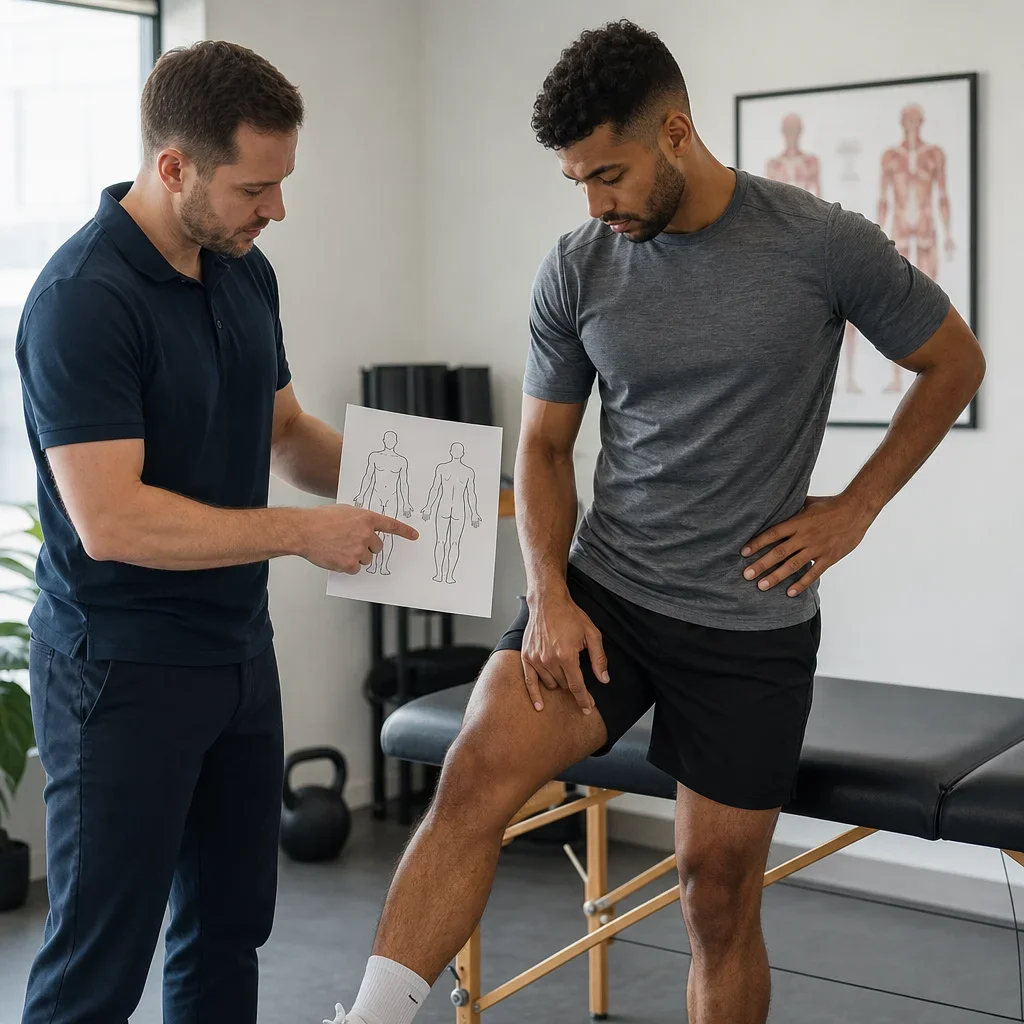
Use the timing, location, and effect on function together. A single sign, including soreness severity, cannot reliably identify a strain or tear.
Pain started suddenly during one movement, impact, sprint, lift, or slip?
│
├─ Yes → Localized sharp pain, pop, weakness, bruising, swelling, or limping?
│        ├─ Yes → Stop the painful activity and arrange clinical assessment.
│        └─ No  → Protect the area, use pain-limited movement, and monitor closely.
│
└─ No → Soreness started later after new or increased exercise load?
         │
         ├─ Yes → Broad or symmetrical soreness with mostly normal movement?
         │        ├─ Yes → Likely DOMS pattern; modify training and recover actively.
         │        └─ No  → Book an assessment if pain is focal or function is limited.
         │
         └─ No → Joint pain, bony tenderness, instability, tingling, or pain after impact?
                  └─ Seek assessment; this may not be straightforward muscle soreness.
Pain centred at a joint line, tendon attachment, bone, or ligament is less consistent with uncomplicated DOMS. Instability, locking, numbness, tingling, radiating pain, and focal bony tenderness need a clinician to assess the involved structure.
DOMS vs Muscle Strain vs Tear: Signs Compared Side by Side
| Feature | Acute muscle soreness | DOMS | Mild muscle strain | Possible significant tear or other injury |
|---|---|---|---|---|
| Typical onset | During exercise or immediately after | About 12–24 hours later | Often sudden during activity | Sudden during activity or after trauma |
| Common trigger | Fatigue or intense effort | New volume, eccentric loading, downhill running, lowering weights | Sprint, lift, stretch, jump, or rapid deceleration | High-force event, fall, collision, or explosive movement |
| Pain pattern | Burning, fatigue, temporary heaviness | Diffuse ache, stiffness, tenderness | Focal sharp, pulling, or catching pain | Severe focal pain, pop, major weakness, deformity |
| Location | Working muscle groups | Often broad and sometimes symmetrical | One specific area | One specific area, sometimes with a visible contour change |
| Bruising or swelling | Uncommon | Uncommon | Can occur | More concerning when marked or increasing |
| Strength and function | Returns with rest | Usually reduced by stiffness, but movement remains possible | Painful weakness or compensation may occur | Major weakness or inability to use the limb normally |
| Best next step | Cool down and recover | Light movement and temporary load reduction | Stop painful loading and seek assessment if symptoms persist or limit function | Urgent assessment for major loss of function, deformity, or severe symptoms |
A pulled muscle is a common non-technical term for a strain. A torn muscle usually means a more substantial disruption of fibres, but symptoms alone cannot confirm the grade or rule out another injury.
Timing Matters: Acute Soreness, DOMS, and Injury Timelines
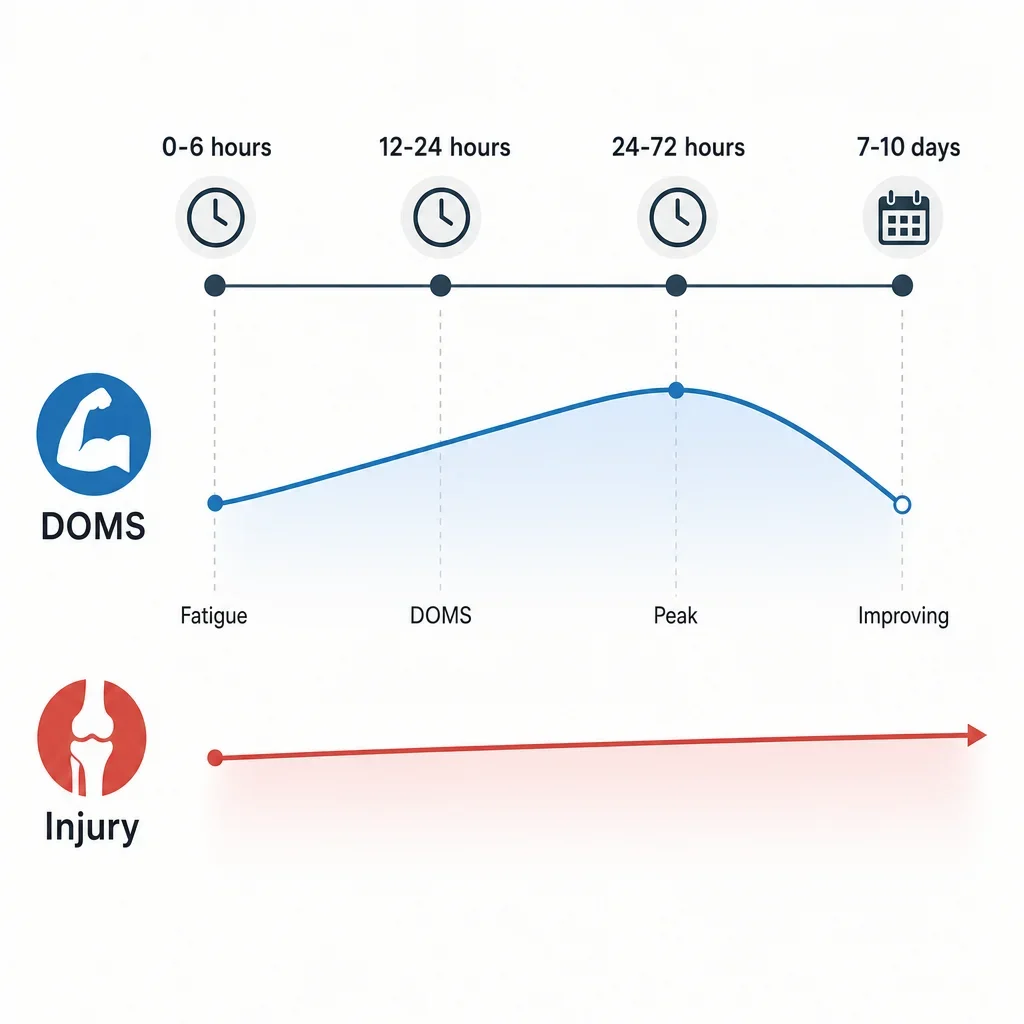
Acute muscle soreness is discomfort felt during exercise or immediately afterward, usually linked to exertion and temporary fatigue. It is not the same as DOMS, which appears later after exercise.
DOMS can be more noticeable on day two because the body’s response to unfamiliar loading develops after the workout ends. Eccentric loading, such as lowering a weight, running downhill, decelerating, or landing, commonly triggers this pattern.
Lactic acid does not remain in muscles long enough to explain next-day DOMS. Delayed soreness is linked to a complex response to unfamiliar exercise stress, including temporary changes in muscle tissue and pain sensitivity.
| Time after activity | More consistent with soreness or DOMS | More concerning for injury |
|---|---|---|
| 0–6 hours | Temporary fatigue, burning, or mild exertional discomfort | Sudden sharp pain, a pop, immediate weakness, major swelling, or inability to continue |
| 12–24 hours | DOMS may begin after unfamiliar training | Focal pain that worsens with use, stretch, or contraction |
| 24–72 hours | DOMS commonly peaks, especially after hard eccentric work | Bruising, increasing swelling, limp, loss of strength, or reduced range of motion |
| Beyond 7–10 days | Symptoms should be clearly trending better | Persistent, worsening, recurrent, or function-limiting pain needs assessment |
Barely walking three days after leg day can still fit a DOMS pattern if soreness is broad, symmetrical, and improving. A limp caused by sharp focal pain, weakness, or compensation is a reason to stop training and arrange assessment.
What Does a Muscle Strain Feel Like? Grades, Symptoms, and Healing
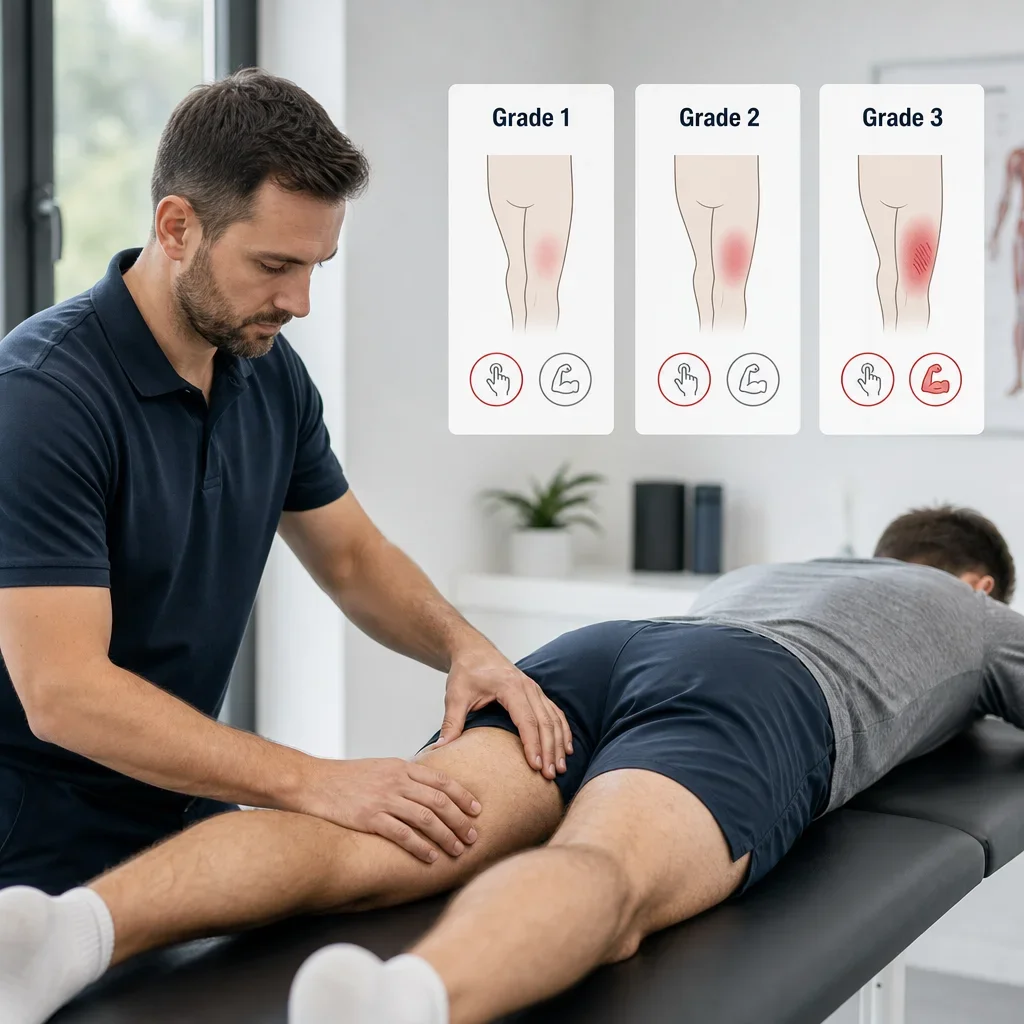
A muscle strain commonly causes sudden localized pain, tenderness, pain with stretching or contraction, and reduced strength or confidence using the muscle. A pop, bruising, swelling, or a noticeable loss of function increases concern for a more significant injury.
Clinicians may describe strains using a three-grade framework. Grade 1 usually involves a mild fibre injury with pain and tenderness but relatively preserved strength; Grade 2 involves greater fibre disruption and more functional limitation; Grade 3 describes a complete or near-complete rupture requiring prompt medical assessment.
Grade 1 muscle strain recovery time can range from days to a few weeks, while moderate injuries can take weeks and severe tears may take months. Recovery depends on the muscle involved, injury severity, previous injury, training demands, and whether loading progresses appropriately.
Many mild strains improve with protection, gradual loading, and rehabilitation. A suspected significant tear, a visible muscle contour change, a major strength loss, or persistent inability to return to normal activity needs medical assessment rather than a wait-and-see approach.
What to Do Now: Recovery for DOMS and a Suspected Mild Strain

Likely DOMS usually responds best to comfortable movement, normal daily activity as tolerated, adequate sleep, hydration, food intake, and reduced training load. Complete inactivity is not usually necessary when movement remains controlled and symptoms are not worsening.
A suspected mild strain needs relative rest from the painful movement, not aggressive stretching or repeated testing. Gentle pain-limited movement can begin when tolerated, while sprinting, jumping, heavy lifting, and explosive direction changes should wait until the muscle can handle them without focal pain.
Compression, elevation, cold, and heat can help some people manage symptoms, but none repairs a tear or replaces progressive rehabilitation. Current soft-tissue management emphasizes protection from further aggravation and a gradual return to loading.
Massage and foam rolling may feel useful for uncomplicated DOMS, but deep massage is not appropriate over an acutely painful, bruised, swollen, or suspected torn muscle. Pain that increases during treatment is a reason to stop.
Over-the-counter pain medication may not be suitable for every person because of medical conditions, allergies, interactions, and other medications. A pharmacist or clinician can advise on safe options for your circumstances.
Ice or Heat for Sore Muscles and Strains?
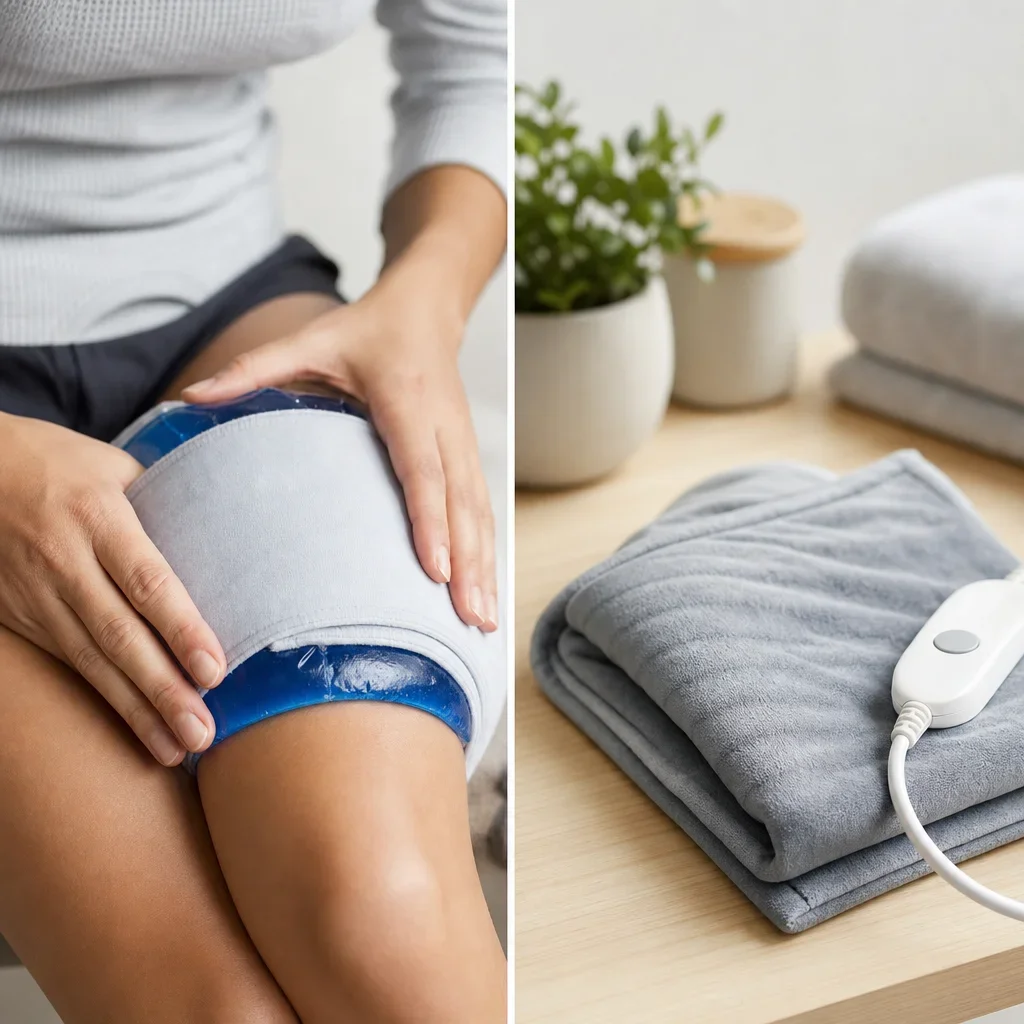
Cold may help short-term comfort when a fresh injury feels painful or swollen. Use a cloth barrier and limit a cold application to 10–20 minutes at a time.
Heat may feel helpful for stiffness before gentle movement when there is no concerning acute swelling, numbness, or loss of sensation. Heat should feel comfortable, not intensely hot, and should not increase symptoms.
| Situation | Option that may help comfort | Key safety point |
|---|---|---|
| Fresh pain with swelling after a suspected strain | Cold pack for 10–20 minutes with a cloth barrier | Do not place ice directly on skin |
| DOMS with stiffness before gentle movement | Gentle heat may feel relieving | Stop if heat increases pain or swelling |
| Bruising, sharp focal pain, or suspected tear | Assessment and protection matter more than temperature therapy | Do not use heat or ice to justify returning to high-load activity |
| Reduced sensation or circulation concerns | Speak with a clinician before using hot or cold therapy | Avoid burns and skin injury |
Neither ice nor heat repairs a tear. The practical test is whether the option improves comfort without increasing pain or encouraging an early return to demanding training.
Should You Train Through DOMS or Stop Exercising?
Mild, symmetrical DOMS with normal movement quality may allow active recovery, lower-intensity exercise, or training a different body region. The goal is to maintain movement without repeatedly loading a painful muscle beyond its tolerance.
Stop the painful exercise when pain is sharp, localized, worsening with repetitions, causing a limp, changing technique, or reducing strength or control. These patterns fit sore muscles versus injured muscles more poorly than a straightforward DOMS pattern.
Avoid sprinting, jumping, maximal lifting, aggressive stretching, and explosive direction changes when a suspected strain produces focal pain. Repeatedly testing the muscle at high load can prolong symptoms or worsen an injury.
The “2-hour pain rule” is sometimes used as a rehabilitation monitoring concept, not as a diagnosis or universal clearance rule. Symptoms should not significantly escalate during activity or remain meaningfully worse after an appropriate recovery period.
Recurrent pain after the same workout deserves a review of training load, technique, strength capacity, sleep, recovery, and prior injury. Soreness is not a reliable scorecard for muscle growth or workout quality.
Myth check: DOMS does not prove you had a better workout, built more muscle, or need to repeat the same training load. “No pain, no gain” is poor guidance when pain is sharp, focal, worsening, or changing movement mechanics.
When Muscle Pain Is Probably Not DOMS
Pain after a fall, direct impact, collision, or twist may involve structures beyond muscle. Ligament, tendon, joint, bone, and nerve injuries require a different assessment than routine post-workout soreness.
Joint instability, locking, a sensation of giving way, focal bone tenderness, deformity, numbness, tingling, or radiating pain should be assessed clinically. These symptoms can occur with injuries that are not safely identified through a self-check.
DOMS versus rhabdo requires particular caution after extreme exertion. Severe muscle pain, swelling, or weakness combined with dark or cola-coloured urine, markedly reduced urination, fever, confusion, or feeling acutely unwell requires urgent medical care.
When to See a Physiotherapist, Sports Medicine Clinician, or Urgent Care
A physiotherapy or sports medicine assessment is appropriate when pain is focal, recurrent, not clearly improving within 7–10 days, limits work or sport, follows a pop, or makes return to activity uncertain.
A biomechanics-led assessment can include the injury history, recent training load, movement quality, range of motion, strength, and task-specific testing. A clinician can then build a graded exercise plan or recommend medical evaluation when imaging or further investigation may be appropriate.
Urgent care or emergency services are the right path for severe red flags, rather than waiting for an outpatient appointment. Serious weakness, deformity, inability to bear weight, escalating swelling, neurological symptoms, and systemic illness need timely medical assessment.
For active people in downtown Toronto, Studio Athletica provides physiotherapy, chiropractic care, massage therapy, and sports medicine-informed rehabilitation where appropriate. An assessment can examine movement, load tolerance, strength, and return-to-sport demands without assuming every sore muscle is a strain.
Prevent DOMS and Muscle Strains Without Chasing “No Pain, No Gain”
DOMS is more likely after a new exercise, a large increase in volume, a return to training after time away, or high eccentric loading. Returning to running after winter, adding squat volume, starting a bootcamp, or downhill running are common examples.
Gradual progression, sport-specific preparation, strength development, sound movement technique, sleep, and recovery planning can reduce avoidable overload. No universal percentage increase fits every athlete because training history, injury history, and total life stress affect load tolerance.
Pain that returns in the same location is not a signal to push harder. Repeated focal pain is a reason to assess the movement and loading pattern before it becomes a larger interruption to training.
FAQ: DOMS, Sore Muscles, Pulled Muscles, and Tears
Am I sore or did I strain a muscle?
Broad soreness that develops later after an unfamiliar workout is more consistent with DOMS. Sudden focal pain during activity, weakness, bruising, swelling, a pop, or limping is more concerning for a muscle strain and should be assessed if it limits function.
How can I tell if it is DOMS or a muscle strain?
DOMS commonly starts about 12–24 hours after exercise and peaks around 24–72 hours. A strain more commonly begins during a specific movement and is localized, sharp, or painful with stretch and contraction.
Can DOMS feel like a pulled muscle?
Severe DOMS can feel intense, especially after unfamiliar leg training or eccentric exercise. The distinction is that DOMS is usually broader and delayed, while a pulled muscle versus sore muscle pattern is more focal and often linked to a specific event.
What is the difference between acute muscle soreness and DOMS?
Acute muscle soreness occurs during or immediately after exertion. DOMS is delayed soreness that develops later, commonly after unfamiliar loading or a sharp increase in exercise demand.
How long does DOMS usually last?
DOMS commonly peaks within 24–72 hours and should then trend toward improvement. Symptoms that remain significant beyond 7–10 days, worsen, or limit normal function should be assessed.
What does a grade 1 strain feel like?
A Grade 1 strain can involve localized tenderness, discomfort with stretching or contraction, and mild strength reduction without a major loss of function. Grade labels are clinical tools, so an in-person assessment is needed to determine severity.
Will a pulled muscle heal on its own?
Many mild strains improve with protection from painful loading and gradual rehabilitation. Significant weakness, bruising, deformity, inability to use the limb normally, or persistent symptoms need assessment because a more substantial tear or another injury may be present.
How long will a pulled muscle take to heal?
Mild strains may improve over days to a few weeks, moderate injuries can take weeks, and severe tears may take months. A fixed return-to-sport date is not safe because recovery depends on the injured muscle, injury severity, function, and sport demands.
Should you push through DOMS or rest?
Mild DOMS with normal movement can usually be managed with lighter activity, active recovery, or training another area. Sharp, focal, worsening pain or altered movement is a stop signal, not soreness to push through.
Should I massage a strained muscle?
Gentle massage may feel comfortable for uncomplicated soreness, but deep massage is not appropriate for an acutely painful, bruised, swollen, or suspected torn muscle. Stop if pressure increases pain and seek assessment when function is limited.
What is the fastest way to heal a muscle strain?
There is no safe overnight cure for a strain. Protecting the muscle from painful loading, maintaining pain-limited movement, and progressing strength and sport-specific activity in stages gives recovery the best conditions.
What can be mistaken for a muscle strain?
Tendon, ligament, joint, bone, nerve, and referred pain can resemble a strain. Instability, joint locking, bony tenderness, numbness, tingling, radiating pain, or pain after impact requires a broader clinical assessment.
How can I tell if a muscle is pulled or torn?
A tear may involve a pop, major weakness, bruising, swelling, visible contour change, or inability to use the muscle normally. Symptoms cannot confirm tear severity, so prompt assessment is appropriate when these signs are present.
When should I see a physiotherapist for muscle pain?
See a physiotherapist when pain is focal, recurrent, limits work or training, follows a pop, changes your movement, or is not clearly improving within 7–10 days. For severe symptoms, dark urine with systemic illness, deformity, or inability to bear weight, seek urgent medical care instead.
This FAQ content answers common search questions, but structured FAQPage markup should be reviewed against current search-engine eligibility policies before implementation.