
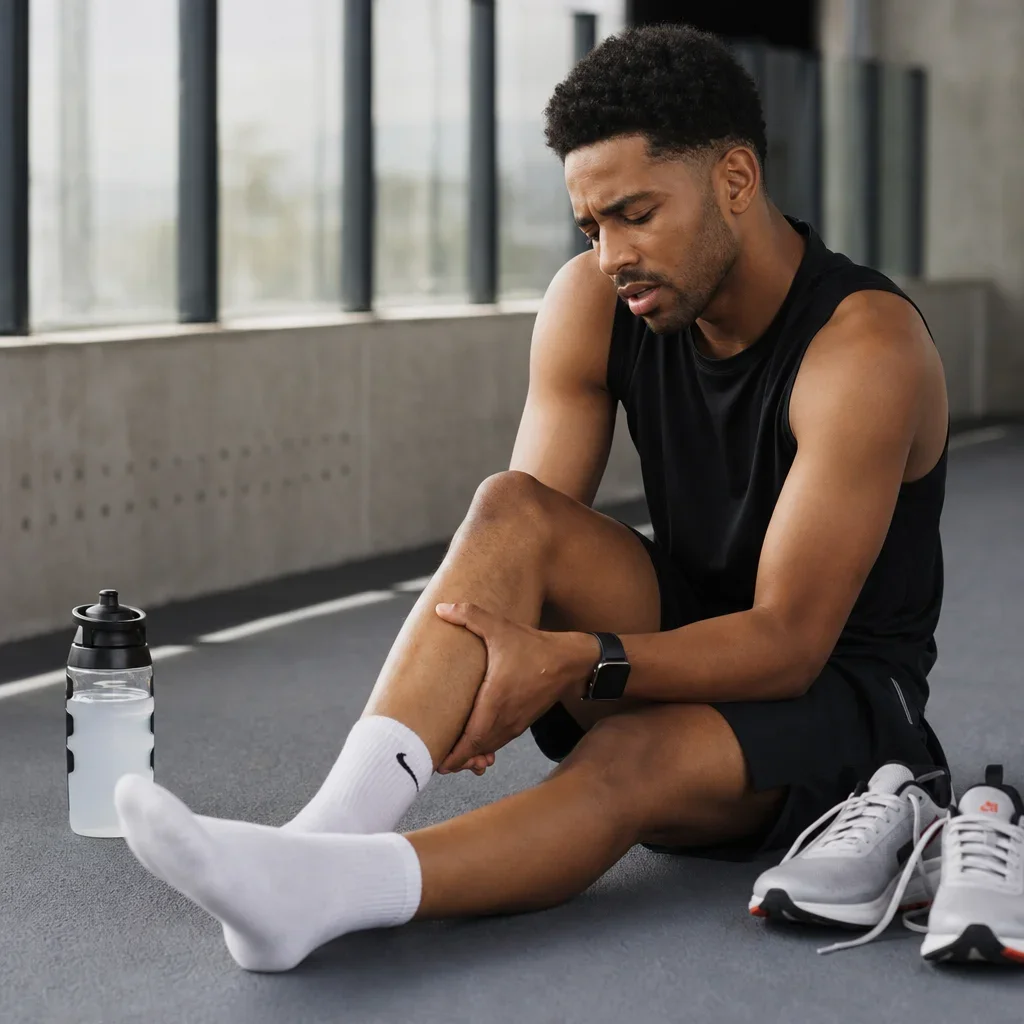
The hype is the problem, not the tool. Theragun running recovery can help runners feel less stiff, move a bit easier, and warm up or wind down more comfortably, but it does not replace sleep, sensible training load, strength work, or an injury assessment when pain keeps coming back.
Quick answer: can a Theragun actually help runners?
A massage gun can be useful for runners when the goal is short-term comfort, mobility, and routine consistency, not miracle recovery. It works best as an add-on before a run for tissue prep and after a run for soreness management, especially during harder training blocks. A casual runner doing 2–3 runs per week may do just fine with simpler tools and good habits . A high-mileage runner may get more value because convenience makes regular recovery more likely.
A Theragun is usually worth considering if you run regularly, feel noticeably stiff before or after sessions, and will actually use it. It is less worth it if you already recover well with a warm-up, easy mobility work, sleep, nutrition, and a foam roller. This is general information, not a treatment recommendation for your situation.
What running recovery actually means
Running recovery means getting your body ready for the next session while it adapts to the last one. After a harder run, common effects include muscle soreness, stiffness, reduced range of motion, local tenderness, and general fatigue. A recovery tool only fits if it helps you return to training without masking a problem that needs attention.
Recovery matters because runners improve between sessions, not during them. If you stay under-recovered, your stride can change, easy runs can stop feeling easy, and small overload issues can flare into stubborn problems. That is one reason overuse injuries show up in runners who stack sessions without enough rest, strength work, food, or sleep.
How percussive therapy works for runners
A Theragun uses percussive therapy, which means rapid repeated mechanical stimulation to soft tissue. In plain language, it delivers fast pulses into a muscle area to change how that area feels and how easily you can move it. The likely benefit is short-term symptom relief and easier movement, not a permanent change to tissue quality.
That is why percussive therapy for runners is best framed as a comfort and mobility tool. Some runners feel less tightness in the calves, quads, glutes, or hips after a short session. The more honest view is that it may improve how you feel and move in the moment, while the bigger recovery drivers are still training load, sleep, hydration, and fuelling.
Vibration therapy and a massage gun are related but not identical. Broad vibration tools usually deliver lower-force stimulation across a wider area, while a massage gun gives more targeted, pulsing input to a smaller spot. The practical difference is simple: vibration is more general, while a Theragun can be more precise for a calf, glute, or hip area.
Research summary: useful, but not magic
The evidence is best described as promising but mixed. Percussive devices may help with short-term soreness relief, warm-up comfort, and range of motion, but they are not proven to fix the root cause of recurring pain or directly prevent running injuries. If a device helps for an hour and the same pain returns every run, that usually points to a load, strength, mobility, or technique issue that needs a proper assessment.
When to use a Theragun before a run
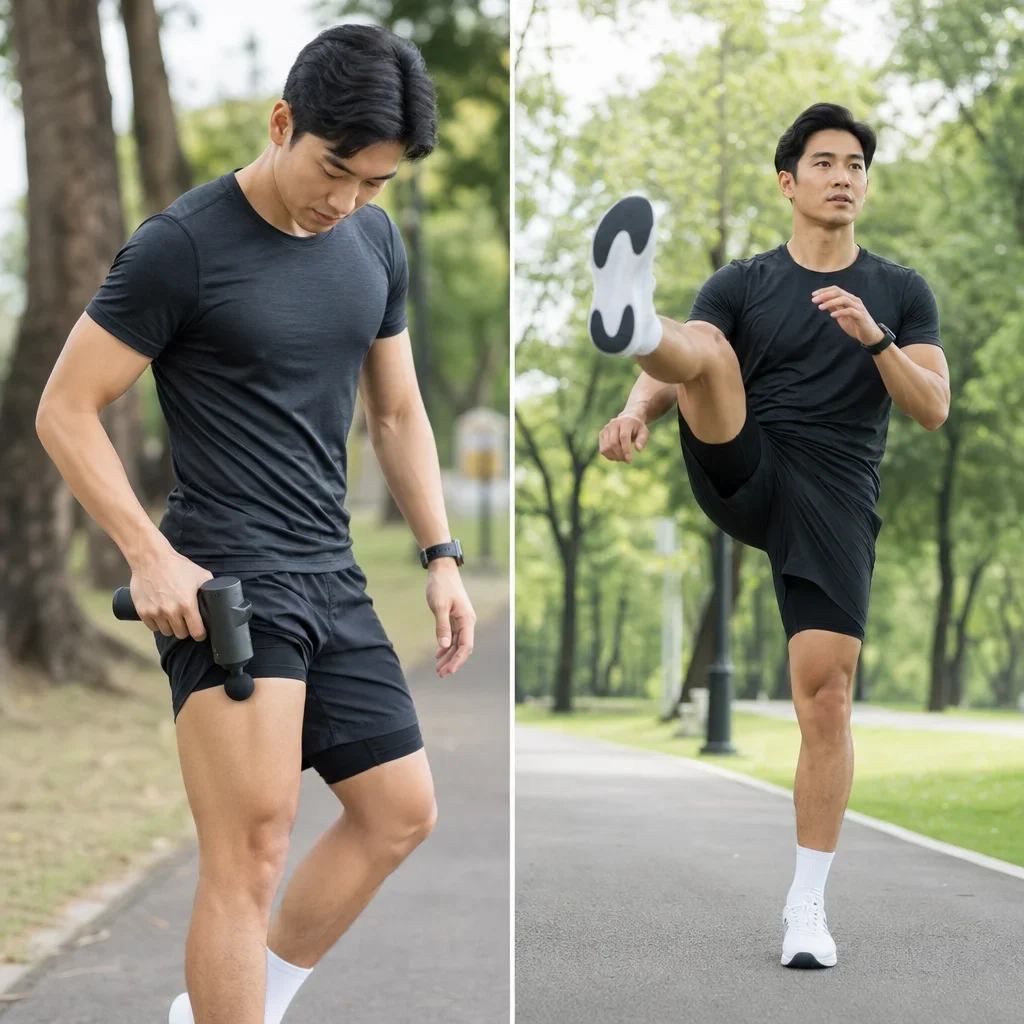
A pre-run Theragun warm-up can help when you feel stiff, especially before intervals, hills, or a cold-start morning run. It should support a warm-up, not replace it. A useful pre-run routine is usually about 2–5 minutes total , followed by dynamic movement such as leg swings, calf raises, marching, skips, or easy strides.
The safest pre-run use is light to moderate pressure with the head kept moving. Spend about 15–30 seconds on each target area . Good areas for runners are calves, quads, hamstrings, glutes, and hip flexors. Some runners also tolerate a brief pass under the foot, but that area can be sensitive and should stay gentle.
A proper warm-up still needs movement. If you only use a device and skip dynamic prep, your tissues may feel looser but your body is not fully ready to run. That is one of the most common mistakes we see in active adults using recovery gadgets.
Simple pre-run Theragun routine for runners
Use the device briefly, then move.
- Calves: 15–30 seconds each side
- Quads: 15–30 seconds each side
- Hamstrings: 15–30 seconds each side
- Glutes: 15–30 seconds each side
- Hip flexor area: 15–30 seconds each side, staying off bony points
- Then do 2–5 minutes of dynamic warm-up drills
How to use a Theragun after running
Yes, it is generally fine to use Theragun after running if the goal is soreness relief and downshifting. Post-run use is usually more comfortable than pre-run use because you are not trying to stimulate tissues for performance. A useful post-run Theragun recovery session is often about 5–10 minutes total with about 30–90 seconds per major muscle group .
The best post-run targets for most runners are calves, quads, hamstrings, glutes, and hips. Moderate pressure is enough. You should not feel sharp pain, bruised tenderness, or electric nerve-type symptoms. If symptoms get more irritated as you use it, stop.
Hard sessions change how helpful it feels. After an easy run, you may not need it at all. After intervals, hills, long runs, or races, the same short routine can feel more useful because stiffness is usually higher. That still does not mean more pressure is better. Aggressive deep-tissue work right after every run can leave already-loaded tissues more irritated.
Simple post-run Theragun routine for runners
Keep the pressure moderate and the head moving.
- Calves: 30–60 seconds each side
- Quads: 30–60 seconds each side
- Hamstrings: 30–60 seconds each side
- Glutes: 30–90 seconds each side
- Lateral hip muscles: 30–60 seconds each side
- Foot arch or plantar surface: brief, gentle passes only if tolerated
Theragun routines by run type
Different sessions load different areas, so the routine should match the run. A short prep before quality sessions and a calm recovery pass after harder efforts makes more sense than using the device the same way every day.
| Run type | Pre-run use | Post-run use | Areas to prioritize | Notes |
|---|---|---|---|---|
| Easy run | Usually optional | Optional | Calves, hips if stiff | Skip it if you already feel good |
| Intervals | 2–5 minutes | 5–10 minutes | Quads, glutes, calves | Helpful when legs feel loaded |
| Tempo run | Brief prep | Short recovery pass | Calves, hamstrings, glutes | Keep both sessions moderate |
| Long run | Optional brief prep | Usually useful | Calves, feet, hamstrings, glutes | Focus on comfort, not depth |
| Hill repeats | Brief prep | Usually useful | Calves, hip flexors, glutes, quads | Hills often load calves and hips more |
| Race day | Very light only | Gentle later, if helpful | Calves, glutes | Less is more during race week |
| Rest day | Only if stiff | Optional | Tight areas only | Do not chase every sensation |
Portability matters on travel weekends and race days. That is one reason some runners lean toward a smaller device like a Theragun Mini if they want something they will actually carry.
Where runners should and should not use a Theragun
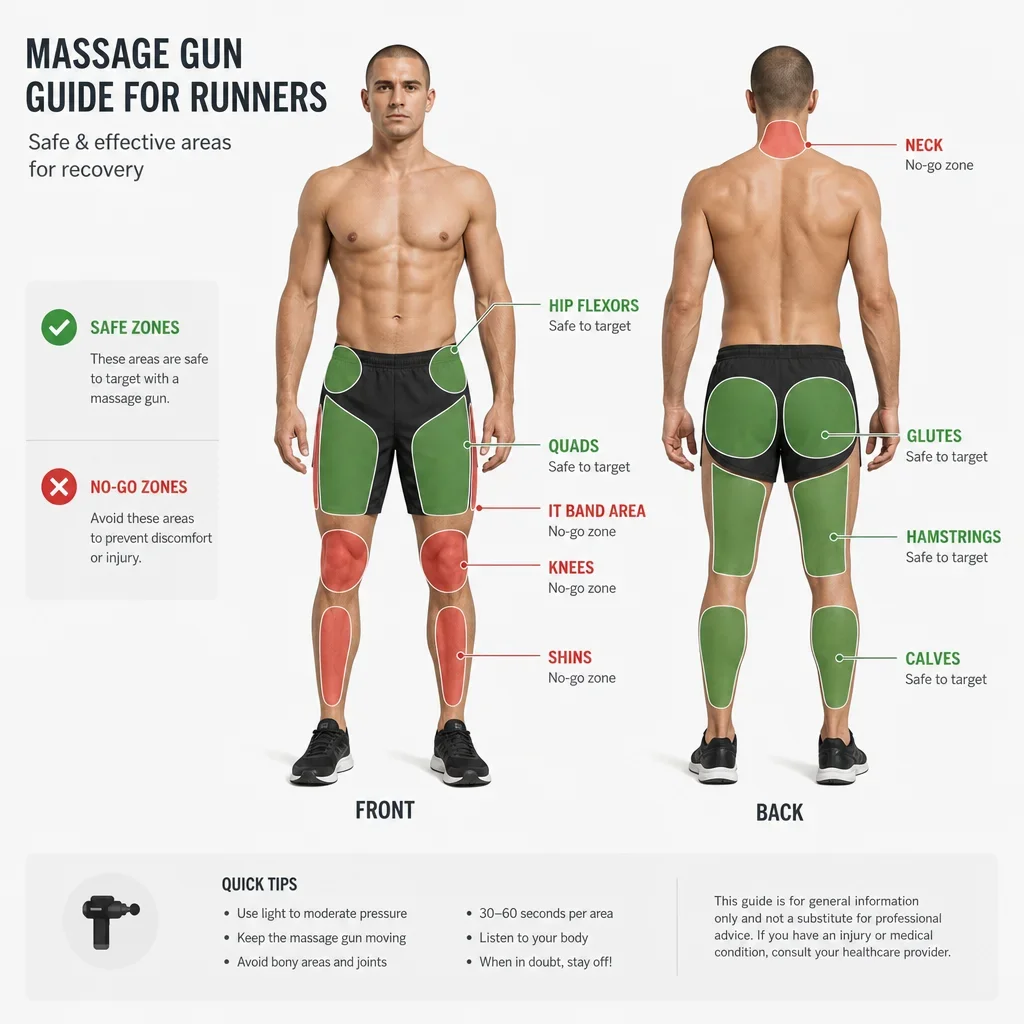
Runners can usually use a massage gun on larger muscle groups like calves, quads, hamstrings, glutes, and parts of the hip musculature. The plantar foot surface can also be treated lightly if it feels good and the area is not highly irritable. These are the spots where Theragun for runners tends to make the most practical sense.
Runners should avoid bony areas, joints, the front or side of the neck, acute bruises, severe swelling, and sharply painful spots. The shin area needs extra caution because the front of the lower leg has less soft tissue and a lot of runners already have irritated structures there. If you suspect a stress injury, do not percussion over it.
The IT band is the classic misuse area. Runners should not hammer directly on the IT band itself. It is dense tissue, not a big contractile muscle belly, and direct aggressive pressure there often feels awful without solving much. It is usually better to treat surrounding areas such as the glutes, lateral quad, and hip musculature instead.
Nerve-type symptoms are another stop sign. If pain is burning, shooting, numb, tingling, or electric, do not use a Theragun over that path. A device is not the right tool for suspected sciatica or other nerve irritation without proper guidance.
Common Theragun mistakes runners make
The biggest mistake is using too much pressure. More force does not mean better recovery. If you brace, hold your breath, or tense against the device, the input is probably too aggressive.
The next mistake is holding the device on one painful point for too long. A practical pass is measured in seconds, not several minutes on one spot. For most runners, 15–30 seconds pre-run or 30–90 seconds post-run on one area is plenty.
Another mistake is treating an injury like normal soreness. Typical post-run soreness usually settles over 24–72 hours . Pain that gets sharper, keeps returning in the same place, changes your stride, or hurts with hopping or stairs is a different problem.
A fourth mistake is replacing actual recovery basics with a gadget. A massage gun can support recovery. It cannot replace sleep, fluids, fuelling, progressive mileage, easy days, and strength work.
The last mistake is buying a premium device before thinking about real use. If you run occasionally and already recover well, a cheaper massage gun, a foam roller, or no device at all may be enough. That matters when people ask is Theragun worth it for runners. The answer depends less on the logo and more on your habits.
Theragun vs foam rolling, stretching, massage therapy, compression, and physio
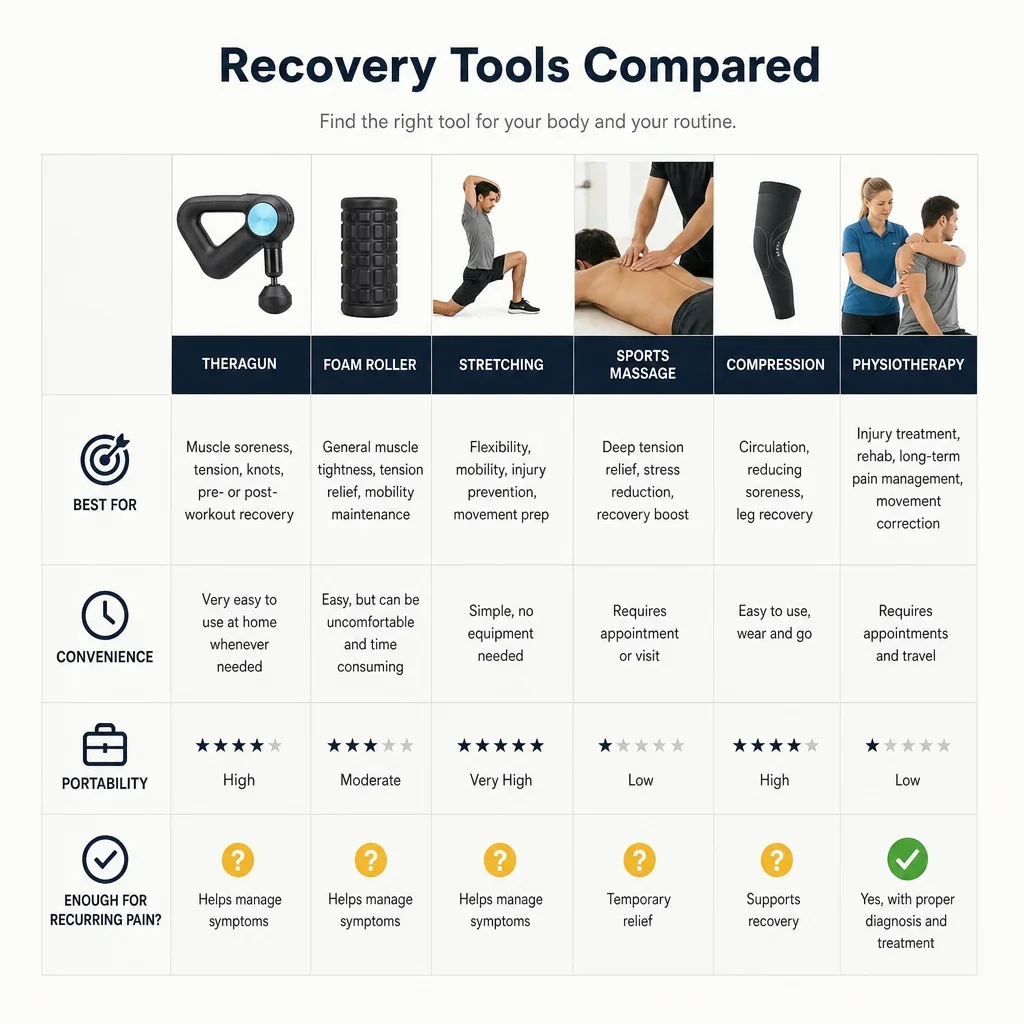
No single recovery tool wins every category. The right choice depends on whether you want quick relief, targeted pressure, movement prep, hands-on treatment, or an actual diagnosis and rehab plan.
| Tool | Best for | Convenience | Portability | Pressure control | When it is not enough |
|---|---|---|---|---|---|
| Theragun or massage gun | Quick targeted relief, tissue prep | High | Moderate to high | Good | Recurrent pain, gait changes, suspected injury |
| Foam rolling | Broad-area pressure, low cost | High | Moderate | Moderate | Very specific trigger areas or irritable spots |
| Stretching | Movement-specific mobility | High | High | N/A | When strength, load, or diagnosis is the issue |
| Sports massage therapy | Hands-on individualized treatment | Lower | Low | Excellent by therapist | Not practical for daily self-care |
| Compression | Passive support and comfort | High | High | Low | Does not address movement limits or pain cause |
| Physiotherapy | Assessment, diagnosis support, rehab plan | Moderate | Low | Individualized | Not a quick gadget substitute |
Foam rolling is cheap and broad. A massage gun is quicker and more targeted. Stretching is useful when the goal is movement, not pressure. Sports massage gives individualized hands-on treatment but is less convenient. Physiotherapy matters most when pain is recurrent, one-sided, changing your gait, or tied to a specific injury history. That is where a sports physio can look at biomechanics, strength deficits, training load, and return-to-run planning rather than just calming symptoms.
Best Theragun for runners: a plain-English buying guide
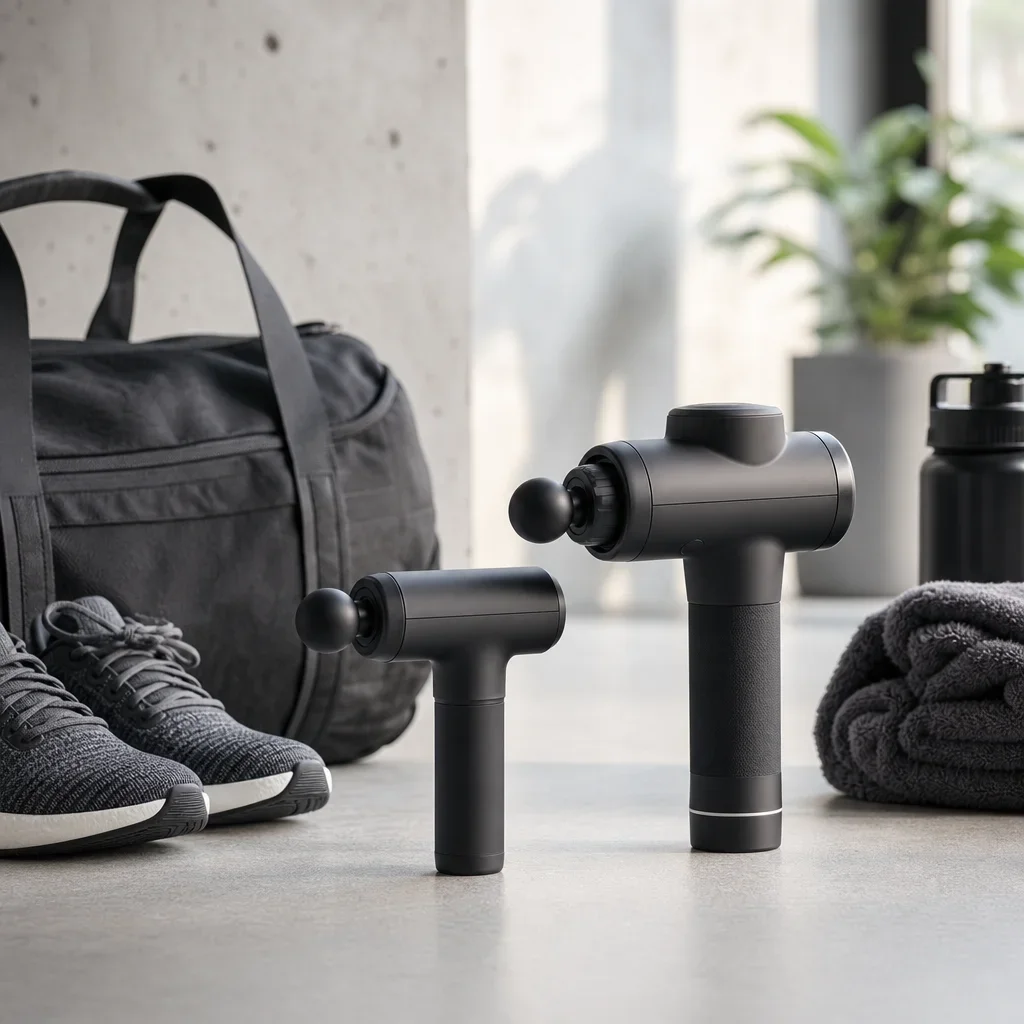
The best Theragun for runners is the one you will use consistently, not the most expensive model on paper. Start with a simple framework: budget, portability, handle comfort, noise, attachment simplicity, travel needs, and how often you realistically run.
A casual runner doing 2–3 runs per week may not need a premium device. A marathon trainee, commuter runner, or high-frequency runner may value convenience enough to justify spending more. If you mainly want something for race weekends, commuting, or a gym bag, a smaller unit may fit better than a larger one.
A compact option like the Theragun Mini can be enough for runners who want portability first. It will not match larger units for every feel preference, but many runners do not need a big device to do short calf, quad, glute, and hip sessions. If your main goal is quick pre-run prep or a short post-run routine, smaller can be practical.
If you are deciding between Theragun and another brand, look past marketing language. Focus on whether the device is easy to hold on your calves and glutes, whether it is quiet enough that you will use it, whether the attachments are simple, and whether the size fits your routine. You may not need a premium model if a mid-range massage gun plus a physio-guided plan solves the actual problem better.
Who should avoid percussive therapy or get advice first
Self-treatment is not appropriate over a suspected stress fracture, severe swelling, marked bruising, acute calf pain with unexplained swelling, progressive numbness or tingling, fever, inability to bear weight, or a new post-surgical area with restrictions. Those situations need medical or rehab guidance, not a recovery device.
Extra caution is sensible for people with reduced sensation, bleeding or clotting issues, anticoagulant use, bone fragility concerns, or a strong inflammatory flare. In those cases, get individual advice before using a massage gun.
Sciatica and nerve-related pain need a careful approach. A Theragun should not be used directly over an irritated nerve pathway, and it should not be treated as a fix for nerve symptoms. If pain shoots down the leg, you have numbness, or symptoms worsen with sitting, running, or coughing, a proper assessment makes more sense than repeated self-treatment.
If you are not sure whether the soreness is normal or whether a run has tipped into injury, a biomechanics-led sports physio assessment can sort that out. For runners in downtown Toronto, that is often the difference between chasing symptoms and actually fixing the load, strength, mobility, or movement issue underneath.
The recovery basics that matter more than any device
The biggest recovery wins still come from basics. Sleep, hydration, eating enough after hard sessions, sensible mileage progression, easy days, and strength work do more for long-term running durability than any gadget.
Active recovery is often enough for mild soreness. A cooldown walk, easy spin, short mobility session, gentle calf and hip work, and a normal evening of food and sleep can do more than an aggressive recovery routine. The device is an adjunct, not the foundation.
A practical runner recovery stack is simple: short cooldown, fluids and food, a brief massage gun session if it helps, later mobility, then sleep. That is a better frame for massage gun running recovery than chasing the strongest setting and hoping it fixes everything.
When a runner should stop self-treating and see a physiotherapist
A runner should book an assessment when pain lasts beyond normal soreness, keeps coming back in the same place, hurts with stairs or hopping, feels worse in the morning, changes cadence or stride, or comes with swelling, numbness, or tingling. Those patterns suggest the issue may be more than routine post-run stiffness.
This is where sports physiotherapy helps more than another recovery tool. A running assessment can look at movement, training load, strength, range of motion, symptom behaviour, and return-to-run planning. Common problems include Achilles pain, plantar heel pain, runner’s knee, hip pain, hamstring issues, and shin pain.
If Theragun helps only temporarily, that is useful information. It means the symptoms may be modifiable, but it does not tell you why they keep returning. For runners and active adults in downtown Toronto, a sports physio can build a personalized plan around biomechanics and training demands instead of guessing.
FAQ
Is a massage gun good for running recovery?
Yes, it can be. A massage gun can help with short-term soreness relief, warm-up comfort, and the feeling of reduced stiffness. It is not a substitute for sleep, fuelling, load management, or injury rehab.
Is it good to Theragun after running?
Usually yes, if the area is muscular and not sharply irritated. Post-run use is generally best kept moderate, with about 30–90 seconds per major muscle group and a total routine around 5–10 minutes .
Is Theragun worth it for runners?
It can be worth it for runners who train regularly and will use it consistently. It is less compelling for occasional runners who already recover well with simple tools and habits.
Which Theragun for runners?
The right choice depends on portability, budget, comfort in the hand, and how often you run. Smaller options suit runners who travel or want quick routines. Larger devices may suit heavier users who want a different feel.
Is Theragun Mini enough for runners?
For many runners, yes. If your routine is short, targeted, and focused on calves, glutes, quads, and hips, a compact model may be enough.
How long should you use a Theragun on calves after running?
A reasonable starting point is about 30–60 seconds per calf with moderate pressure and constant movement. Stop if the area feels sharp, bruised, or more irritated.
Can you use a Theragun before a run?
Yes. Keep it brief and pair it with a dynamic warm-up. About 15–30 seconds per area and 2–5 minutes total is a sensible starting structure.
Can a Theragun help shin splints or Achilles pain?
It may help nearby muscle tightness feel better, but it should not be treated as the solution for shin pain or Achilles pain. Those problems often need load modification and a rehab plan.
Should you use a Theragun on the IT band?
Directly on the IT band, usually no. It is better to work around the area, especially the glutes and lateral hip muscles.
When should a runner see a physiotherapist instead of self-treating?
Book an assessment if pain lasts more than a few days, keeps recurring, changes your stride, hurts with hopping or stairs, or comes with swelling or nerve symptoms. If you want help sorting normal soreness from a real running injury, that is a good time to book a running assessment.